

Can't I just repair the faucet instead of replacing it?
Repair or Replace Your Faucet? Here's How to Decide
Free Estimate
So, your kitchen faucet drips. Or maybe the handle in your bathroom feels a bit loose these days. The first thing you're probably asking yourself is, "Can't I just repair this thing instead of tearing it out and putting in a whole new one?" That's a really common question we get here at Brightwater Plumbing of Oviedo. And it’s a perfectly fair thought, believe me.
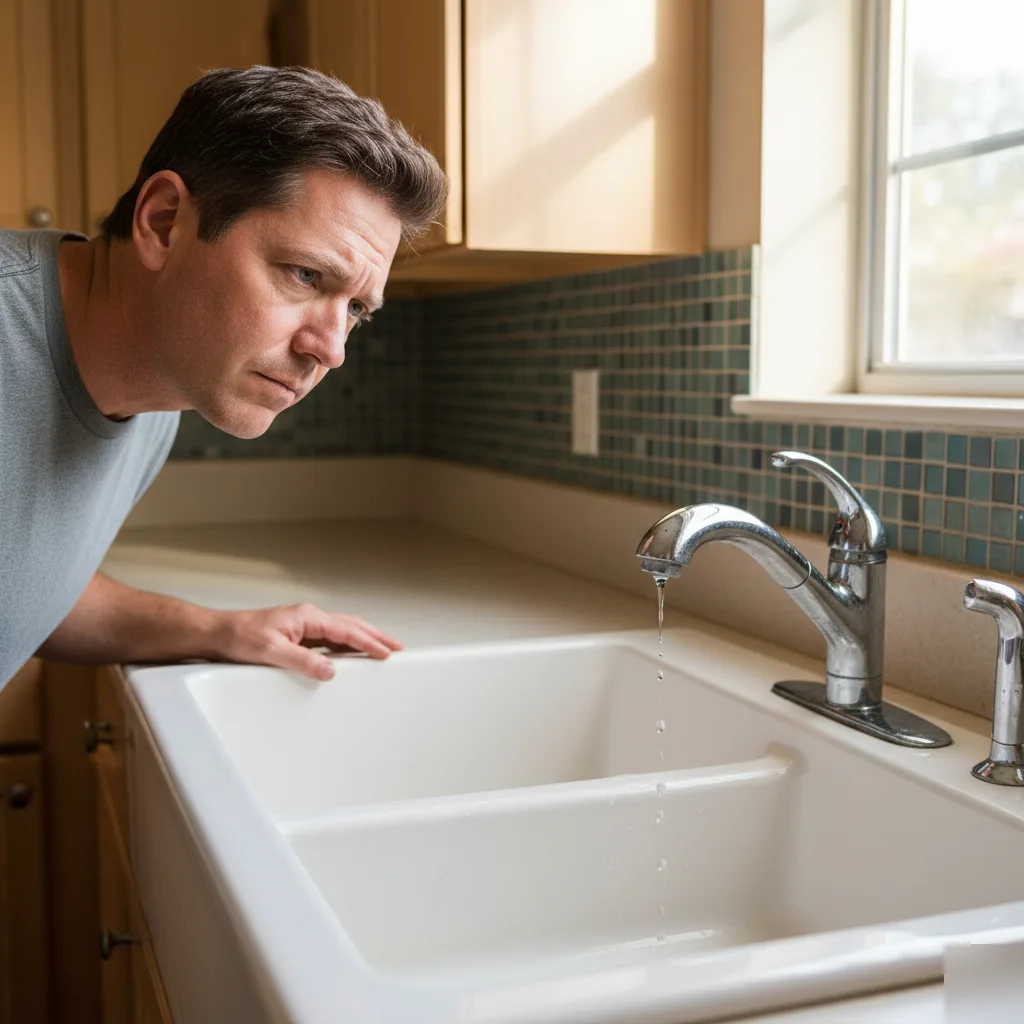
The straightforward answer, as with most things in plumbing, depends on a few specific details. We can walk through them together, right now. It helps to understand the difference. You see, a faucet repair makes good sense when the problem is on the smaller side. And the fixture itself is still in overall good shape. We're often talking about things like a washer that's worn down too much. Or a bad O-ring that's lost its seal. Maybe a cartridge that simply needs swapping out, those are common culprits. These are the internal parts. They take the brunt of the daily use. They’re designed to wear out over time, not last forever. They're meant to be replaced when they give up. So, if your faucet is less than, say, seven or eight years old, and the main body of it isn't corroded or looking rough, then a quick repair is usually the smart call to make. We see this often in homes near Oviedo on the Park.
But here’s where things get a bit more interesting, especially here in Central Florida. Our specific local conditions change the game a little.
The water right here in Seminole County is notoriously hard. What does that mean for you? It means mineral deposits, all that calcium and lime, tend to build up inside your faucet's valve body. And they do this much faster than you might ever expect. We've certainly seen plenty of faucets in neighborhoods like Tuscawilla and Alafaya Woods. They look perfectly fine, even sparkling, on the outside. But inside? They’re practically scaled shut, all clogged up. A brand-new cartridge simply won't fix a valve seat that's already been chewed away by years of hard water exposure. No amount of tightening will help then. That's a real problem. When that happens, a supposed "repair" can quickly turn into a frustrating cycle of repeat service visits. You end up calling us again and again. And nobody wants to pay twice, or even three times, for the same persistent problem.
When Repair Is the Right Move
You know, not every single drip or leak means you need to trash the whole faucet. That's the honest truth from our crew here at Brightwater Plumbing. There are plenty of situations where a faucet repair genuinely saves you money. And it cuts out a whole lot of unnecessary hassle. It’s all about spotting the right kind of problem.
Here are the clear scenarios where a faucet repair is typically the smart way to go, giving your existing fixture a fresh lease on life:
- The faucet is under 8 years old. And its finish and main body are still holding up strong, looking solid.
- The issue stems from just one specific worn part. We’re talking about things like a simple cartridge, a rubber washer, or an O-ring. These are parts.
- Replacement parts are still readily available directly from the manufacturer. You can still buy them.
- There's no obvious corrosion or significant mineral damage visible on the internal valve seat. This is key.
If all four of those points check out for your particular faucet, then yes, a repair is absolutely the right choice. We handle faucet repairs all the time for homeowners all across Oviedo and the wider Orlando area. From Longwood down to Waterford Lakes. Sometimes, it truly is just a quick part swap. It stops that irritating drip cold, and everyone's happy. It’s a dependable solution.
When Replacement Makes More Sense
, there comes a definite point where continually repairing a faucet starts to cost you more money in the long run. We encounter that situation much more often than most people probably realize. Here's a real-life example we faced recently. A customer, living out near Waterford Lakes, called us about their kitchen faucet. It kept dripping, constantly. They had already tried to repair it twice, both times within a single year. Each time, our licensed plumbers checked the cartridge, it was fine. The real problem was actually the valve body itself. Years of Orlando's hard water exposure had seriously pitted the metal. It was just too far gone. A third repair? That would have been a complete waste of their hard-earned money. And frankly, it’s not how we do business at Brightwater Plumbing.
So, you should definitely lean toward a full faucet installation Oviedo when you see these signs:
- The faucet has already been repaired more than once for the exact same issue. It's a pattern.
- Specific parts for it are discontinued. Or they’re just plain hard to track down from the manufacturer.
- You can clearly see green or white mineral crusting. This shows up around the faucet's base or on its handles. It’s a tell-tale sign of hard water damage.
- The faucet visibly wobbles at its mounting point. That means the deck plate or the connections underneath have weakened beyond repair.
- Your water flow has dropped. And a simple cleaning of the aerator didn't actually help.
You know, most people don't really grasp that a faucet losing water pressure is, more often than not, a pretty clear sign of an internal scaling problem. All that built-up mineral crud. And no amount of basic cleaning will truly fix that kind of internal blockage. It’s beyond a quick wipe down.
One thing we always tell folks here at Brightwater Plumbing: if you’re already making the call for a faucet repair, and that fixture is over 10 years old, it’s truly worth having an honest conversation with our crew. We can talk about whether a full replacement might actually be the better path forward for you. The labor costs for both options are often quite similar, to be fair. And a brand-new faucet installation offers you a completely fresh start. It comes with modern internals, typically designed to handle Orlando's challenging hard water conditions much, much better. Plus, you get a new warranty.
If you're still not entirely sure which direction to go with your faucet, our faucet installation page on our website walks through what the entire process looks like. From start to finish. Or, just give us a call today. Our team can come out, take a good look at your current setup, and give you a straight answer. There's never any high-pressure upsell from us. That’s just not how we operate.
Signs Your Faucet Can Be Repaired

Look, not every single dripping faucet needs to go straight into the trash. That's the absolute honest truth, speaking from years of experience here in Oviedo. We get calls every week, truly, from homeowners all across the Orlando metro area. They just assume their entire fixture is completely done for, beyond saving. But once we arrive and really take a good look, it’s often a very simple fix. Maybe just a worn-out washer. Or a valve seat that’s just come a little loose. Knowing that difference up front saves you real money. And it saves you a whole lot of unnecessary hassle, too.
Here are the most common signs that your existing faucet can indeed be repaired. You won't need a full replacement just yet:
- Steady drip from the spout: This almost always means that a rubber washer or an O-ring inside has simply worn down. It’s a tiny part, really. And it costs very little to just swap out. A quick fix.
- Handle feels loose or wobbly: The internal stem or the cartridge might just need a good tightening. Or perhaps a new seat needs to be installed. The main faucet body itself? It’s usually perfectly fine.
- Water only drips when the handle is in a certain position: This specific symptom points directly to a single worn internal component. It’s not a sign of a total system failure.
- Minor leak at the base of the spout: This is often caused by a dried-out O-ring. It’s located right where the spout connects to the main faucet body. A quick swap, and the problem is reliably solved.
We see this exact pattern play out quite a lot, especially in established neighborhoods like Tuscawilla and Alafaya Woods. The homes built in the 1980s and 1990s around here often have very solid brass faucet bodies. Those things were built to last. They still have many, many years of dependable life left in them. It's almost always the smaller, internal parts that wear out first. The robust body itself typically stays strong and functional for a long time.
Age Matters, But It's Not Everything
So, you have a faucet that's, say, eight years old with a persistent drip? It’s almost always repairable, in our experience. What about a faucet that’s 20 years old, showing the exact same drip? That one might still be repairable, you know. Age alone truly doesn't make the final decision. It’s more complicated than just counting years.
What our qualified experts really look at is the actual condition of the valve seat. And the overall integrity of the faucet body itself. If the seat feels smooth to the touch, and the body isn't corroded or showing any signs of pitting, then a new cartridge or a fresh washer set will often bring it right back to full life. Yes, Orlando's notoriously hard water does, without a doubt, speed up mineral buildup inside the faucet valve. But here's the thing: that specific buildup? We can usually clean that out completely during a repair visit. It’s part of our routine.
But if the main body itself is pitted or, worse, actually cracked, well, that changes absolutely everything. That’s a.
The Cartridge Test
Most of the single-handle faucets found in homes throughout Orlando rely on an internal cartridge system. You can think of this cartridge like the small, critical engine inside your faucet. When that cartridge begins to fail or goes completely bad, water starts to leak. Or the handle becomes incredibly stiff and hard to move. Replacing just that internal cartridge? That’s considered a repair, pure and simple. It's not a full faucet replacement project.
Here’s a real example of this from just last month. One of our customers, calling from the Waterford Lakes area, reached out about a kitchen faucet that just wouldn't fully shut off. The hot water side kept trickling, endlessly. We pulled the cartridge out, did an inspection, and found heavy mineral scale caked onto it. So, we simply dropped in a brand-new one. The whole job took our professional team about 30 minutes, give or take. The faucet immediately worked like new. It genuinely didn't need replacing at all, saving the homeowner time and money.
And that’s precisely the kind of thorough check we perform. During every single faucet installation or repair call we get. It's our standard operating procedure, ensuring we get it right the first time.
One Easy Way to Know
Try this out before you even think about calling anyone for help. Go to the troublesome faucet. Turn it on and then off slowly. Really take your time. If the annoying drip stops at a certain point in the cycle but then starts right back up as soon as you let go of the handle, you’re almost certainly dealing with a worn internal part. That's a fixable issue, usually. A specific component just needs attention. It’s often simpler than you think.
Now, what if water visibly seeps from places it absolutely shouldn't? For example, pooling around the very base of the faucet. Or, even worse, dripping steadily underneath your counter from the connections. Or, perhaps, you see it coming from a crack in the handle itself? You might still be in repair territory for these problems, by the way. It depends entirely on what’s actually broken versus what's just old and has reached the end of its lifespan. We can sort it out.
Most people, even those who've owned homes for years, don't fully grasp that a single, everyday faucet can have anywhere from 10 to 15 small, individual parts inside it. It's a surprisingly intricate piece of machinery. Any one of those tiny components can fail without the entire unit being completely bad. We always make sure to check every single component, meticulously. We do this before we ever, ever recommend a full replacement to our Oviedo customers. If a repair is truly going to hold up and provide a dependable solution, we'll tell you that straight up. We stand by our honest assessments.
Signs Your Faucet Needs Replacing, Not Just Fixing
You know, some faucets just scream exactly what they need. You simply have to learn what those specific signs are, what to look for with an experienced eye. We get calls almost every week from homeowners across the Greater Orlando area. They’ve often already tried fixing a troublesome faucet two or, sometimes, even three times. And truthfully, at some point, continuing to repair it just stops making any sense. The faucet is just done. It’s reached its limit. No amount of tinkering will truly bring it back.
Here are the definite signs that clearly point toward a new faucet installation. Not just another repair that will likely fail again:
- Rust or corrosion visible on the body. If you spot surface rust around the faucet’s base, or on its handles, it’s a pretty strong indicator that the internal metal parts are likely in much worse shape. Orlando's hard water really accelerates this process, causing internal damage fast. Once that relentless corrosion starts to eat into the main valve body, no new cartridge in the world will ever truly save it. That's a goner, unfortunately.
- Persistent dripping after a previous repair. So, you’ve already gone through the trouble of replacing the washer or the cartridge, but it’s still dripping stubbornly? That usually means the internal valve seat is worn out. Or the faucet body itself has completely lost its seal. Another repair attempt? That's typically just throwing good money down the drain.
- Visible mineral buildup that you simply can't remove. Seminole County water is hard, we all know that. This means mineral scale, that crusty white stuff, builds up inside faucet aerators and cartridges over a relatively short time. If you’ve cleaned it thoroughly, really scrubbed it out, and it keeps reappearing within just a few weeks, the internal passages are likely too far gone to ever truly clear.
- The handle still wobbles or feels loose even after tightening. This is a common one. If the threads inside the faucet body are stripped, they just can’t be fixed with a simple wrench anymore. The mounting hardware has failed at that critical point. You simply can't put that back together to be sturdy again.
- Water pressure drops only at that specific faucet. If every other fixture in your home, your shower, other sinks, runs perfectly fine, but this one faucet just trickles weakly, it means mineral deposits have almost certainly narrowed the internal waterways. That’s usually far beyond what any standard cleaning can reliably fix.
The Age Factor
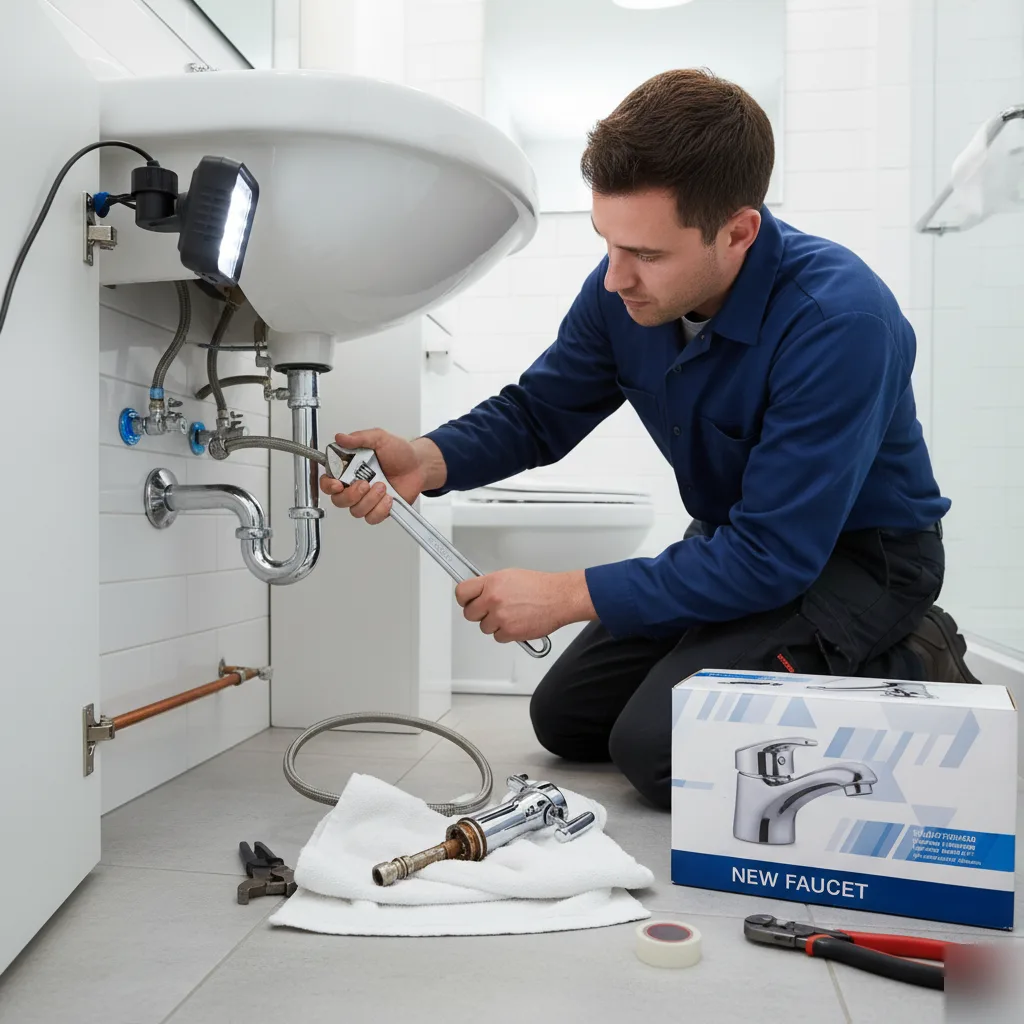
Most faucets, according to general industry standards, like those from the International Association of Certified Home Inspectors, are expected to last somewhere between 15 to 20 years. That’s a good long run. But here in Central Florida? That number shrinks considerably, in our actual experience. Our relentless hard water truly chews through internal components much faster than the national average. We consistently see faucets in local neighborhoods, places like Tuscawilla and Alafaya Woods, starting to fail closer to the 10-year mark. It’s just an unfortunate reality of living and plumbing here.
So, if your faucet has surpassed the 12-year mark and suddenly needs a repair, we strongly suggest you pause. Take a moment to think carefully about the situation. A single repair, for an older fixture, can sometimes cost you almost as much as a brand new faucet installation would. And that old one? It will probably need yet another fix within a year or two. Maybe even sooner, with our hard water. It's often better to just get it done right the first time with a fresh unit.
When Leaks Move Beyond the Spout
A simple drip from the spout of your faucet? Sure, that’s certainly annoying. But a leak that starts developing *under* your sink? That, my friends, is an entirely different kind of plumbing problem altogether. We’ve unfortunately walked into many Orlando kitchens where a slow, steady faucet leak went completely unnoticed for months on end. It soaked the entire cabinet floor, slowly ruining it. And, to make matters worse, mold had already started to grow in the damp, dark space. That situation is absolutely not a simple repair job anymore. That’s a full-blown cleanup and replacement scenario. It can become an emotional event for homeowners.
If you notice water visibly pooling around the very base of your faucet when you turn it on, that’s a clear sign. The O-rings or the internal seals have definitely failed. On a newer faucet, swapping out those seals makes perfect sense. It’s a dependable fix. But on a faucet that’s already showing its age, one that’s seen better days, you’re just patching up a deeper problem. That underlying issue will, without a doubt, eventually come back to haunt you. You'll be back where you started.
Here’s a very real scenario our Brightwater Plumbing team ran into just last month. A kitchen faucet for a family out near Waterford Lakes kept dripping, constantly. This was even after the homeowner had paid to have the cartridge replaced twice already in two short years. We pulled the entire faucet out to inspect it. What we found was that the internal valve seat was badly pitted. Years of relentless hard water mineral damage had done its job. No cartridge, no matter how new or how perfectly installed, would have ever sealed properly against that rough, uneven surface. A brand-new faucet installation, done by our professional crew, solved it completely. It took us under an hour, getting that family back to normal operations quickly and professionally.
The bottom line is simple, really. One repair on a younger, newer faucet? Absolutely worth it. It’s a good investment. But if you’re continually stacking repair after repair on a faucet that has clearly seen much better days, a fixture that’s just plain old, you’re often just spending more money to keep a problem alive. And you truly deserve a faucet that simply works. No fuss, no drama, every single time you turn that handle. That's what we believe.
Not quite sure which side of the line your particular faucet falls on? Our faucet installation page on our website can walk you through exactly what to expect. For when it is time for a brand-new one. Or, just call us, and we'll help you decide.
Get a Free Quote!
Terms and Conditions
Request a Quote
Terms and Conditions
Request a Quote
Terms and Conditions