

Do You Really Need to Flush Your Water Heater Every Year?
Do you really need to flush your water heater every year? In Orlando, the answer is usually yes.
Free Estimate
The Real Question Behind the Annual Flush Advice
Do you really need to flush your water heater every year? In Orlando, the answer is usually yes. Our hard water builds up minerals fast, and skipping the flush shortens your tank's life and drives up your energy bill. A trusted plumber in Oviedo can handle this for you.
You've probably heard someone tell you to flush your water heater every single year. Is that actually true, or just something plumbers say to fill a service call? Here's the honest answer: the advice exists because of what's building up inside your tank, not because someone made up a rule.
Water heaters rarely fail overnight. They wear down slowly, year after year, as sediment collects on the bottom of the tank. That sediment comes straight from the minerals in your water supply. Orlando's water runs hard, and all that mineral content settles at the bottom of your tank, sits there, and hardens over time.
So the real question isn't whether flushing matters. It does. What matters more is how often your particular home needs it. A young couple in a new build near Avalon Park with a filtration system might stretch things out a bit longer. A family in an older Winter Springs home with no softener? That tank is working overtime.
- Homes with untreated hard water build sediment faster than homes with a softener
- Older tanks near Casselberry and Waterford Lakes often show buildup within the first two years
- Tankless systems still need regular flushing, just for scale instead of sediment
- Homes on well water in outlying Alafaya-area properties can see even heavier mineral loads
We see this mistake constantly. Someone installs a water heater, feels good about it, and forgets it exists for five years straight. That's exactly how a $1,200 tank turns into a $1,200 replacement instead of a $150 service call. The tank doesn't send a warning text. It just quietly loses efficiency, then fails.
Here's what most people don't realize until it's too late: a tank packed with sediment has to work harder to heat the same amount of water. Your burner or heating element pushes through a layer of buildup instead of clear water, which means longer heat-up times, higher bills, and a shorter lifespan on a system you already paid good money for.
So yes, the annual flush advice is real. But whether your tank needs it every single year comes down to your water source, your tank age, and what's already sitting inside it. A quick look under your unit can answer that fast.
How Often You Need to Flush a Water Heater
So how often should you actually flush your water heater? Honestly, it depends on your water and your tank. There's no single number that fits every home in Orlando.
We've flushed tanks that looked brand new after two years. We've also opened units caked with buildup after just twelve months. The difference almost always comes down to water hardness and how much hot water a household runs through.
Here's a scenario we see a lot. A family in Orlando moves into a home with a standard 40 or 50-gallon tank. Nobody flushes it for three years straight. By the time we get the call, the heater is struggling, running hotter than it should just to keep up, and popping away in the tank.
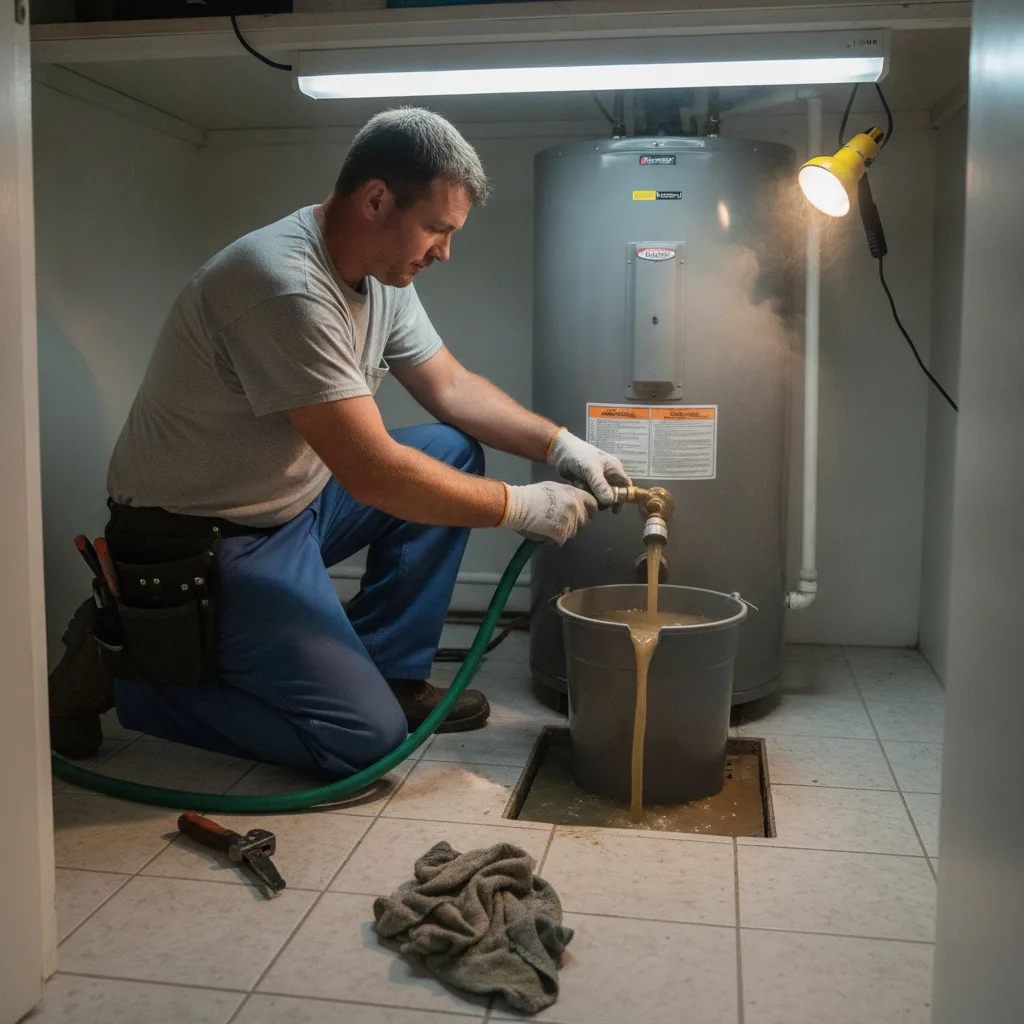
- Water hardness in your area - harder water means more mineral buildup, and Orlando's water runs on the harder side
- How many people live in the home - more showers and laundry loads mean more sediment passing through
- Tank age - older units already carrying buildup need more frequent attention
- Water heater type - tankless units and traditional tanks have different flush needs
- Whether you've ever flushed it before - a tank that's never been flushed needs it sooner, not later
For most Orlando homes, once a year is a solid baseline. But that's a starting point, not a rule carved in stone. If your water runs on the harder end, you might need it every six to eight months. If your household is smaller with lighter usage, stretching to eighteen months could be fine.
We tell customers to think of it less like a calendar reminder and more like a checkup. A tank that gets flushed on schedule almost never surprises you. One that gets ignored eventually will, usually at the worst possible time.
One thing years of this work has taught us: people who flush every year rarely call us for emergency repairs. People who skip it for three or four years almost always end up calling, and usually not for a simple fix.
Signs Your Water Heater Is Overdue for a Flush
Forget the calendar for a second. Your water heater will usually tell you when it needs help, if you know what to listen and look for. We've walked into hundreds of Orlando homes where the owner had no idea sediment was even a thing, until we showed them what was sitting at the bottom of the tank.
Orlando's water is hard. That mineral content settles at the bottom of your tank over time and hardens into a crusty layer of sediment. Once that layer builds up, your unit has to work harder just to heat the same amount of water.

- Popping, rumbling, or crackling noises coming from the tank, especially right when it kicks on
- Water that comes out rusty, cloudy, or with a slight metallic smell
- Hot water that runs out faster than it used to, even with the same household routine
- A noticeable jump in your energy bill with no other explanation
- The unit is more than 3 years old and has never been flushed before
That popping sound is the big one people ask us about. It happens when water gets trapped under the sediment layer and starts to boil. It's loud, it's annoying, and it means your tank is working overtime.
We had a homeowner in the Tuscawilla area call us last summer because their water heater sounded like popcorn every morning. Turned out the unit had never been flushed in almost 4 years. Once we cleared the sediment out, the noise stopped and the recovery time between showers got noticeably faster.
Rusty water is another sign folks tend to brush off. Is it always the water heater? Not always, but it's one of the first things we check. If it's coming from the hot side only, sediment or a failing tank lining is usually the cause.
Higher energy bills sneak up on people too. A sediment-packed tank needs more time and more power to heat water. Most homeowners never connect the dots between that extra $10 or $15 a month and a tank that hasn't been serviced.
None of these signs mean you're stuck, they just mean it's time to get eyes on the unit. If you're hearing noises or seeing rusty water, don't wait for it to get worse.
Get a Free Quote!
Terms and Conditions
Request a Quote
Terms and Conditions
Request a Quote
Terms and Conditions