

Handyman vs. Plumber: Which Is Cheaper for Your Repair? An Orlando Guide
Oviedo's trusted plumber for fast, honest service you can count on.
Free Estimate
A handyman can really help out with a lot around your home. Hanging shelves, patching drywall, swapping out a light fixture. But when it comes to plumbing work? That's where the lines blur fast — and it matters more than most people realize.
Here's the straight truth we see almost every day in Orlando homes: a handyman can usually handle simple jobs that don't involve your home's main water supply or its drain system. Replacing a showerhead. Caulking around a bathtub. Those are surface-level fixes. No permits needed. No real risk of a major water leak.
A licensed plumber covers everything deeper than that — everything inside the walls, under the floor, and connected to your water or sewer system.
What a Handyman Can Typically Do

- Swap a showerhead or replace a toilet seat
- Caulk around sinks, tubs, and fixtures
- Tighten loose faucet handles
- Hook up a basic appliance like a dishwasher, as long as no pipe changes are needed
These are small, cosmetic tasks. They don't touch your actual pipes, your main water line, or your sewer connections. That's the main difference.
What Requires a Licensed Plumber
Once a job involves cutting into pipes, rerouting water lines, or connecting to your main drain system, you need a licensed plumber. Florida law requires a license for this kind of work — it's not just a suggestion.
We handle calls every week across Oviedo and Winter Springs where a handyman tried a quick fix and things went sideways. A toilet repair where the wax ring wasn't seated right and caused a floor leak. A faucet installation where the supply lines weren't tightened properly and the homeowner found water damage under the vanity. These stories aren't rare.
Licensed plumbing work covers toilet repair, faucet installation, garbage disposal repair, water heater installation, leak detection, sewer line repair, and full repiping. If the job touches your water supply or your waste system, you need the right person doing it.
Why does this matter so much? A bad connection behind a wall can drip for weeks — sometimes months — before you notice. By then you're looking at mold, a rotted subfloor, and a repair bill that's ten times what the original job would have cost. We've pulled wet drywall out of Tuscawilla homes where a handyman fixed a pipe with the wrong fitting. That repair held for about three months.
The question to ask yourself is simple: does this job involve water pressure, drain flow, or any actual connection to your home's plumbing system? If yes, call a plumber.
And here's something many people don't find out until it's too late. Your homeowner's insurance might not cover water damage caused by unlicensed plumbing work. If a handyman installs a water heater and those connections fail, you could be paying for everything out of pocket. A licensed plumber carries proper insurance and pulls permits when required. That protects you in the long run.
Orlando's older neighborhoods — especially around the UCF corridor — often have homes from the 1970s through 2000s with galvanized or polybutylene pipes that need careful handling. Central Florida's hard water eats through fittings faster than in other parts of the country. A handyman won't test your water pressure or check for corroded supply lines before starting work. A plumber will — because that's exactly what their license and training are for.
Why the Cheaper Option Isn't Always the One You Expect
People assume a handyman is always the more budget-friendly choice. Sometimes that's true. But we see the opposite play out constantly in Orlando homes — particularly in older neighborhoods like Tuscawilla and Alafaya Woods where the plumbing has seen some years.
A handyman might charge less per hour. That sounds good on paper. But plumbing repairs aren't just about labor time. They're about knowing exactly what's wrong, fixing it right the first time, and making sure that fix holds. When a repair gets done incorrectly, you pay twice. And that's a tough situation to be in.
The Hidden Cost of a Redo
We've walked into homes where a handyman replaced a toilet but didn't set the wax ring properly. Water seeped under the tile for weeks. By the time the homeowner called us, the subfloor had gone soft and the water damage had spread. That second visit — to clean up the mess and actually fix the problem — cost far more than a licensed plumber would have charged from the start.
That's not a knock on handymen. Good ones exist and do great work on drywall, doors, shelving, and paint. But plumbing systems are interconnected. One bad connection, even a small one, can cause a slow leak behind a wall that you won't notice for months.
When a Licensed Plumber Actually Saves You Money
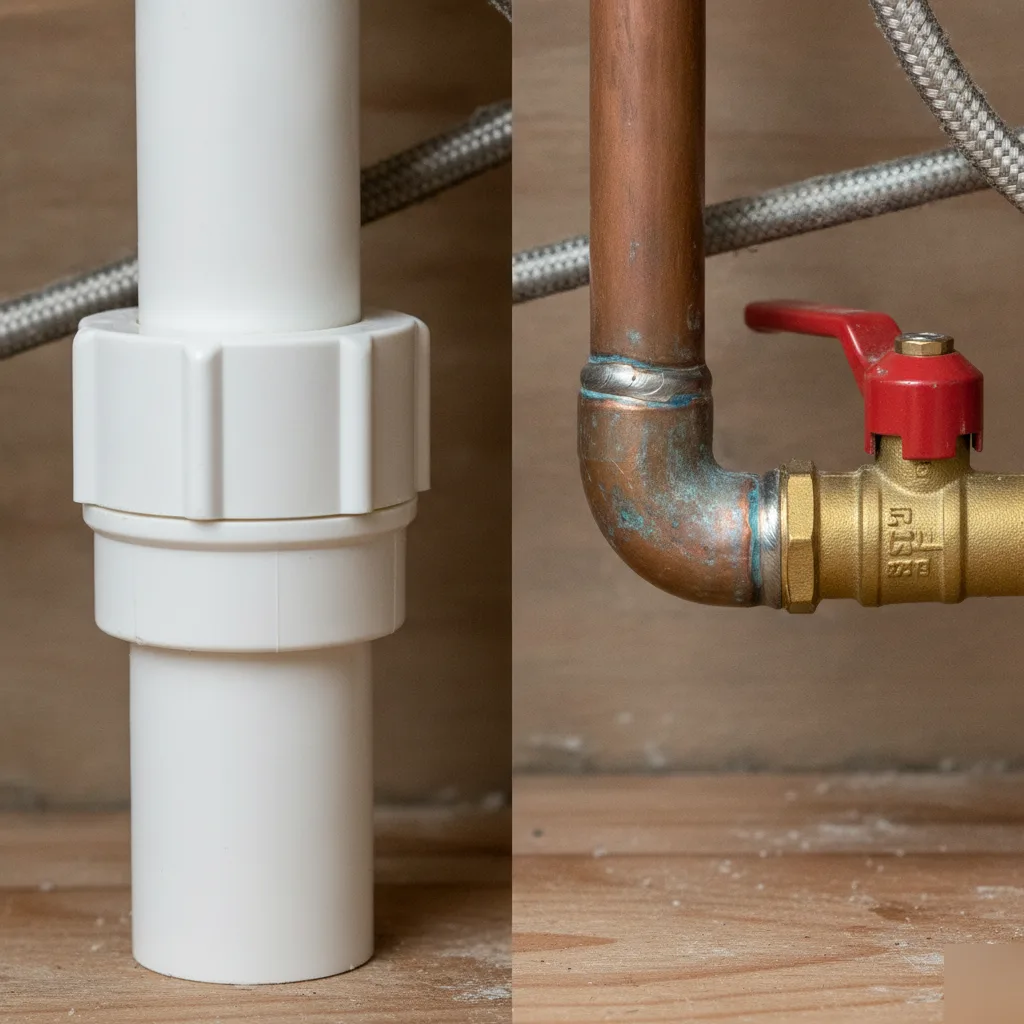
Any job that touches your water supply or drain lines — faucet installation, garbage disposal repair, leak detection, sewer line repair — needs someone who understands how the whole system works. A licensed plumber knows Orlando's building codes and knows when to pull permits, which is required by the Orange County Building Division for certain jobs.
Here's a common example. A homeowner in Winter Springs notices low water pressure at their kitchen sink. A handyman might swap out the faucet aerator and call it done. A plumber checks the supply lines, spots early corrosion in older pipes, and catches a problem before it becomes a major water main repair. The plumber's visit costs more up front — but saves thousands down the road.
A few things worth knowing:
- Drain clogs that keep coming back often point to a deeper sewer line issue. A handyman won't have the tools to find that.
- Slow leaks behind walls need specialized leak detection equipment. Most handymen don't carry those tools.
- Water heater problems — gas or electric — involve connections that need a licensed professional.
- Florida building code requires permits for specific plumbing work, and only licensed plumbers can pull those permits.
Licensed plumbers complete thousands of hours of training before they're certified. That training exists for a reason. Plumbing mistakes can cause serious water damage, mold growth, and real health hazards if drain or sewer connections aren't done correctly.
So which option is truly cheaper? It depends on the job. For a squeaky door hinge, call a handyman. For anything connected to your pipes, drains, or water supply, a licensed plumber is the safer bet. And safer almost always means cheaper when you look at the full picture.
Three Common Repairs: Which Pro Fits Each Scenario
Here are three repairs we see every single week in Orlando. Three common jobs — three very different answers.
Scenario 1: A Dripping Kitchen Faucet
A handyman can sometimes swap out a simple washer or tighten a connection. That's fair game for a basic fix.
But here's what we run into constantly. That drip isn't always just a worn washer. Orlando's hard water eats through faucet cartridges and valve seats faster than most people expect. Homes in Tuscawilla and Alafaya Woods built in the 1990s often have corroded internal parts. A handyman might replace the wrong piece, the drip comes back within a week, and now you're paying twice.
A faucet installation handled by a licensed plumber means the entire unit gets a full check — supply lines, shutoff valves, and all connections underneath. If something else is failing, we catch it on the same trip. One visit. Done right.
Scenario 2: A Running Toilet
A running toilet seems simple. Replace the flapper, move on. And yes, a handy homeowner can sometimes do exactly that.
But it needs a plumber when the fill valve is shot, when the flush valve seat is warped, or more seriously, when the toilet rocks because the wax ring has failed. That last one means water is seeping into your subfloor. We've pulled toilets in Winter Springs homes and found rotted plywood nobody knew about for months. That's a much bigger problem.
A handyman sees the symptom — the running water. A plumber sees the entire system and the interconnected parts. There's a real difference between stopping the noise and actually fixing the root cause.
Scenario 3: A Slow or Clogged Drain
This is probably where hiring the wrong person costs the most. A handyman might pour chemical cleaner down the drain or use a basic hardware store snake. Here's what that approach often misses:
- Tree roots growing into your sewer line — very common in older Orlando neighborhoods near downtown and Casselberry
- Bellied pipes that have shifted in Florida's sandy soil
- Grease buildup deep in the line that a store-bought snake can't reach
- A partial pipe collapse you can't see without a sewer camera inspection
We've shown up to homes where a handyman "fixed" a slow drain three times in six months. Each visit, the actual underground problem got worse. By the time we ran a camera through the sewer line, the homeowner needed a full sewer line repair — something that could have been a much simpler drain jetting job months earlier.
A clogged drain isn't always just a clog. It can be a symptom of something much bigger.
The Pattern Here
The repairs that look easy are often the ones that trick you. Surface fixes work for surface problems. But plumbing connects to plumbing. Every pipe leads somewhere — and water always finds the weakest spot, especially with our hard water and aging pipes around Oviedo.
Get a Free Quote!
Terms and Conditions
Request a Quote
Terms and Conditions
Request a Quote
Terms and Conditions