

Water Heater Repair in Oviedo
Need water heater repair in Oviedo? Brightwater Plumbing sends licensed plumbers to diagnose and fix the problem fast. Call to book today.
Free Estimate
Warning Signs Your Water Heater Needs Repair
You walk into the kitchen, turn the hot tap, and get lukewarm water that fades to cold in under a minute. That's not normal. And it's the kind of thing Oviedo homeowners tell us they ignored for weeks before calling.
Don't wait that long. Your water heater gives off clear signals before it quits completely. Here's what to watch for:
- Rusty or discolored hot water. If only the hot side runs brown or orange, sediment or corrosion inside the tank is the likely cause. Seminole County's hard water speeds this up fast.
- Popping or rumbling sounds. Mineral scale builds up on the heating element or the bottom of the tank. When the burner fires, trapped water underneath that layer of scale boils and pops. We hear about this from Tuscawilla and Alafaya Woods homeowners all the time.
- Puddles around the base. Even a small drip matters. A slow leak from the tank, a relief valve, or a corroded fitting can turn into a full flood overnight.
- Hot water runs out faster than it used to. If showers that lasted twenty minutes now go cold at ten, the lower heating element may have failed or sediment has cut your tank's usable capacity in half.
- Rotten egg smell. A failing anode rod lets bacteria grow inside the tank. The sulfur smell is unmistakable.
Most people call us after noticing two or three of these signs at once. By that point the unit's been struggling for a while. But here's the good news: most of these problems are fixable with a repair, not a full replacement. A bad element, a worn-out thermostat, a corroded anode rod, these are parts we carry on the truck.
One thing we tell every customer in Oviedo: if you see water pooling and the tank itself is cracked, that's a different conversation. A cracked tank can't be patched. But everything short of that is worth a diagnosis before you assume the worst.
The Most Common Water Heater Problems We Fix
You wake up, turn on the shower, and nothing but cold water comes out. That's the call we get more than any other across Oviedo. And the fix is simpler than people expect.
Most repair jobs we run fall into a handful of categories. Here's what we see over and over:
- No hot water at all. On electric units, this is usually a failed heating element or a tripped reset button. Gas units? Could be a bad thermocouple or a pilot light that won't stay lit.
- Water that's lukewarm but never hot. Often a lower heating element issue on electric tanks, or a dip tube that's cracked and mixing cold water into the hot supply.
- Strange noises from the tank. That popping or rumbling sound is sediment buildup cooking at the bottom. Oviedo's hard water speeds this up fast.
- Rusty or discolored water. If it's only coming from the hot side, the anode rod inside your tank is likely spent. That rod protects the tank lining from corrosion, and once it's gone, the tank itself starts to break down.
- Leaking around the base. Small drips near the bottom usually mean internal corrosion has won. A leak from fittings or the T&P valve, though, is often repairable.
We see these problems hit harder in neighborhoods like Colonialtown and College Park where homes are older and tanks have been sitting in garages or utility closets for a decade or more. The mineral content in Oviedo's water shortens the life of heating elements and eats through anode rods faster than you'd think.
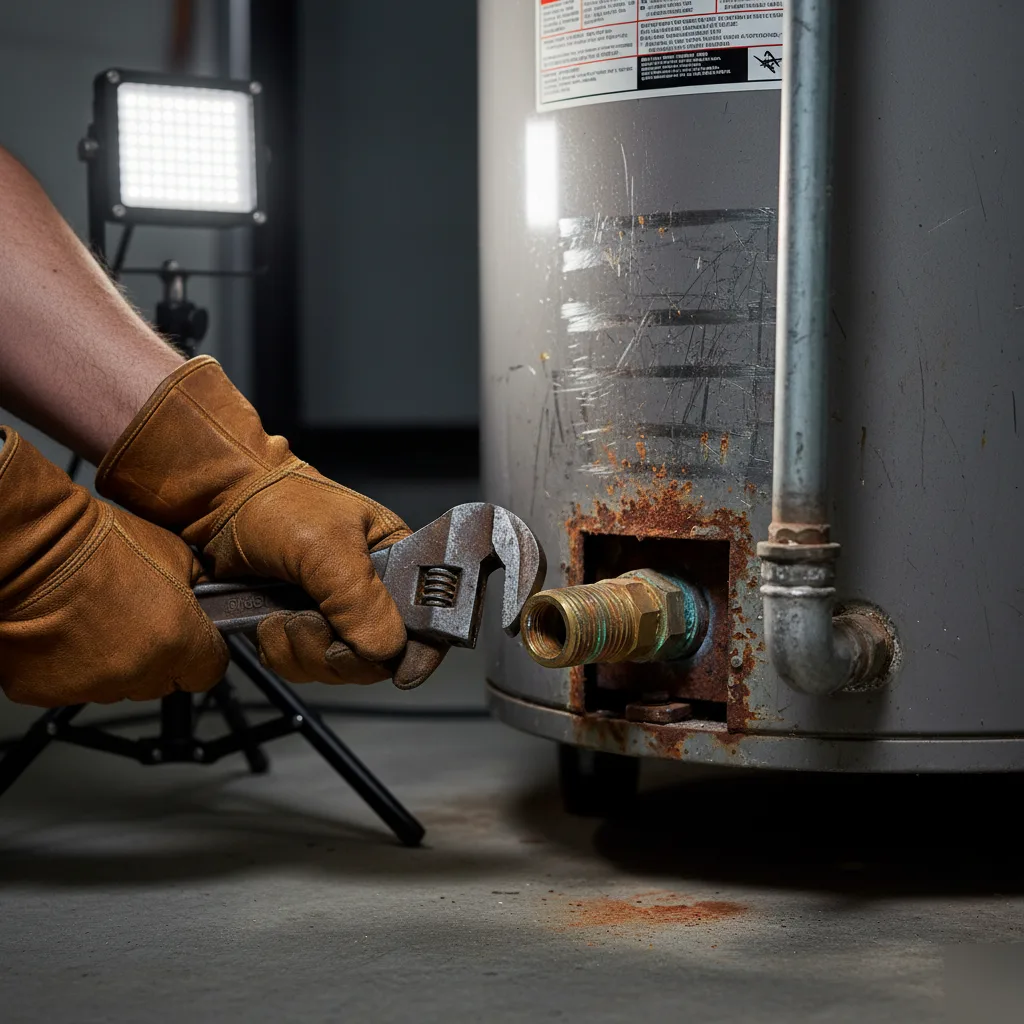
Here's something most homeowners don't realize. A water heater that's "working" can still be failing. Slow recovery time, inconsistent temperatures, a slight egg smell, these are all signs something's going wrong inside the tank. Catching it early means a repair instead of a full replacement.
We diagnose before we recommend anything, because a $150 part swap beats a new tank every time. Brightwater Plumbing of Orlando is licensed and insured, and we bring the right parts on the truck so most repairs get finished the same visit. We are your trusted water heater supplier in oviedo.
Repair or Replace: How to Make the Right Call
This is the question we get more than any other. Your water heater is acting up and you're stuck, fix it or scrap it? The answer isn't always obvious, but a few simple factors make it pretty clear once you know what to look for.
Age matters most. A standard tank water heater lasts about eight to twelve years in Oviedo. Our hard water here in Seminole County pushes that number toward the lower end, because mineral scale builds up inside the tank and eats away at parts faster than you'd think. If your unit is under seven years old and the problem is something like a bad thermostat or a worn-out heating element, repair makes sense almost every time. Those are straightforward fixes that buy you years of solid use.
But if you're past the ten-year mark, things change. Here's what we tell homeowners to weigh:
- A single repair on an aging unit often leads to another repair within months
- Rust-colored water or visible corrosion on the tank usually means the lining has failed
- A leaking tank itself can't be patched, that's a replacement, no question
- Repeated pilot light or igniter failures on older gas units signal deeper wear
We see this pattern constantly in neighborhoods like Tuscawilla and Alafaya Woods. Homes built in the 80s and 90s are often on their second or third water heater, and sometimes the owner doesn't even know how old the current one is. We'll check the serial number and tell you straight.
If the repair cost is getting close to half the cost of a new unit, replacement is the smarter move. You get better efficiency, a fresh start on parts life, and you skip the cycle of calling us every few months. We're licensed and insured, and we'll walk you through both options with no pressure either way.
Not sure which direction makes sense for your situation? Give us a call and we'll help you figure it out.
What Happens During a Water Heater Repair Visit
You called. We're on the way. But what actually happens when we show up? Most folks in Oviedo have never watched a repair from start to finish, so here's exactly how it goes.
We don't just walk in and start turning wrenches. The first thing we do is listen. You tell us what you noticed, when it started, what changed. That five-minute conversation saves everybody time because your description points us right to the problem.
After that, here's the typical process:
- We shut off power or gas to the unit and cut the cold water supply so everything's safe to work on.
- We inspect the tank, connections, and relief valve for visible damage, corrosion, or leaks.
- We test the heating elements or thermocouple depending on whether your unit is electric or gas.
- We check the thermostat settings and reset any tripped safety switches.
- We flush a small amount from the drain valve to look for sediment buildup, which is extremely common with Seminole County's hard water.
- We explain what we found, what needs to happen, and give you a straight answer before any work starts.
No surprises. No mystery charges after the fact.
A lot of homes we visit in Tuscawilla and Alafaya Woods have units that are 10 to 15 years old. The sediment layer inside those tanks can be two inches thick. That alone can kill heating efficiency and trigger strange popping sounds, and a good flush and element swap can bring a struggling unit back to life for years.
The whole visit usually runs under two hours for a standard repair. We clean up our work area, make sure you've got hot water flowing again, and walk you through what we did. Brightwater Plumbing is licensed and insured, so you know the work is done right. If the unit needs more than a repair, we'll tell you rather than patch something that's going to fail again next month.
Want to know what we found before we touch anything? That's how we operate.
Oviedo Conditions That Shorten Water Heater Life
Central Florida is tough on water heaters. The water coming into your home in Oviedo is loaded with minerals. Calcium and magnesium build up inside the tank over time, forming a thick layer of scale on the heating elements and along the bottom. That scale acts like insulation between the burner and the water it's trying to heat. Your unit works harder, runs longer, and wears out faster.
We pull anode rods out of tanks in the Waterford Lakes area that look like they've been dissolving for a decade. Sometimes they have.

Hard water isn't the only problem. Oviedo's humidity and heat put stress on components you can't see. Condensation forms around fittings and connections, especially in garages where most tanks sit. That moisture speeds up corrosion on supply lines, gas connectors, and the tank jacket itself. During summer storms, power surges can damage electronic ignition modules and thermostat boards on newer units. One good lightning strike near your neighborhood can quietly fry a control board, and you won't know until the water goes cold two days later.
Here are the biggest local factors we see shortening water heater life in Oviedo:
- Hard water scale coating heating elements and reducing efficiency
- High humidity accelerating rust on exposed metal fittings
- Power surges from summer storms damaging electronic controls
- Sediment buildup from municipal water settling in the tank bottom
- Garage installations with no climate control, causing wider temperature swings
According to the U.S. Department of Energy, sediment buildup alone can reduce a water heater's efficiency by up to 25 percent. In a place like Oviedo where the water is this hard, that decline happens faster than the national average.
What does this mean for you? A unit rated for 10 to 12 years might start failing at seven or eight. We see this constantly in older neighborhoods like Avalon Park and the Alafaya corridor. The tank looks fine on the outside, but inside it's coated and corroding. Regular flushing helps, but it doesn't stop the clock entirely. If your water heater is past the six-year mark and you haven't had it inspected, it's worth a look before you end up with a cold shower or a flooded garage.
Get a Free Quote!
Terms and Conditions
Request a Quote
Terms and Conditions
Request a Quote
Terms and Conditions
Frequently Asked Questions
Brightwater Plumbing provides expert plumbing services in Orlando, including leak repair, drain cleaning, water heaters, repiping, and more.
How long does a water heater repair take in Oviedo?
Most water heater repairs are finished in one visit, usually within one to two hours. Common fixes like replacing a heating element, thermostat, or anode rod are parts we carry on the truck. That means no waiting around for a second appointment. If your unit is in a tight utility closet or garage — common in older Oviedo homes — it may take a little longer to access, but the work itself is straightforward.
Why does Oviedo's water make water heater problems worse?
Oviedo and Seminole County have hard water, which means high mineral content. Those minerals build up as scale inside your tank and on heating elements over time. That sediment causes the popping and rumbling sounds many homeowners notice. It also cuts your tank's usable capacity and burns out elements faster. Homeowners in areas like Tuscawilla and Alafaya Woods deal with this regularly, especially in homes built in the 80s and 90s.
What happens when a plumber comes out to repair my water heater in Oviedo?
When we arrive, we start with a full diagnosis before touching anything. We check the age of the unit, inspect the tank, test elements and thermostats, and look for leaks or corrosion. Then we walk you through exactly what we found and what it takes to fix it. Most repairs are completed the same visit because we stock common parts on the truck. You will know what is wrong and what the plan is before any work begins.
Can my water heater be repaired, or does it need to be replaced?
Most water heaters can be repaired if they are under ten years old and the tank itself is not cracked or leaking from the bottom. Bad heating elements, worn thermostats, and spent anode rods are all fixable parts. Oviedo's hard water shortens part life faster than average, so age matters here. If repair costs are approaching half the price of a new unit, replacement usually makes more sense long-term.
What should I do if I smell rotten eggs coming from my water heater?
A rotten egg smell from your hot water means the anode rod inside your tank has likely failed. That rod is designed to protect the tank lining from corrosion. Once it wears out, bacteria grow inside the tank and produce a sulfur smell. This is a repair, not a reason to replace the whole unit. Replacing the anode rod is a straightforward fix, and catching it early protects your tank from further damage.
Is a small leak at the base of my water heater a serious problem?
Yes, even a small leak at the base needs attention right away. A drip from a fitting or the T&P relief valve is often repairable. But a leak coming from the tank itself usually means internal corrosion has worn through the lining, and that cannot be patched. What looks like a slow drip today can turn into a flood overnight. In older Oviedo homes where tanks sit in garages or closets, a leak can go unnoticed until real damage is done.