

Water Main Leak: Your Responsibility or the City's?
The Water Meter Is the Dividing Line Between Your Responsibility and the City's
Free Estimate
Here’s the simple rule. Your water meter is the boundary line. Everything on the street side of that meter belongs to the city or your utility provider, like OUC here in Orlando.
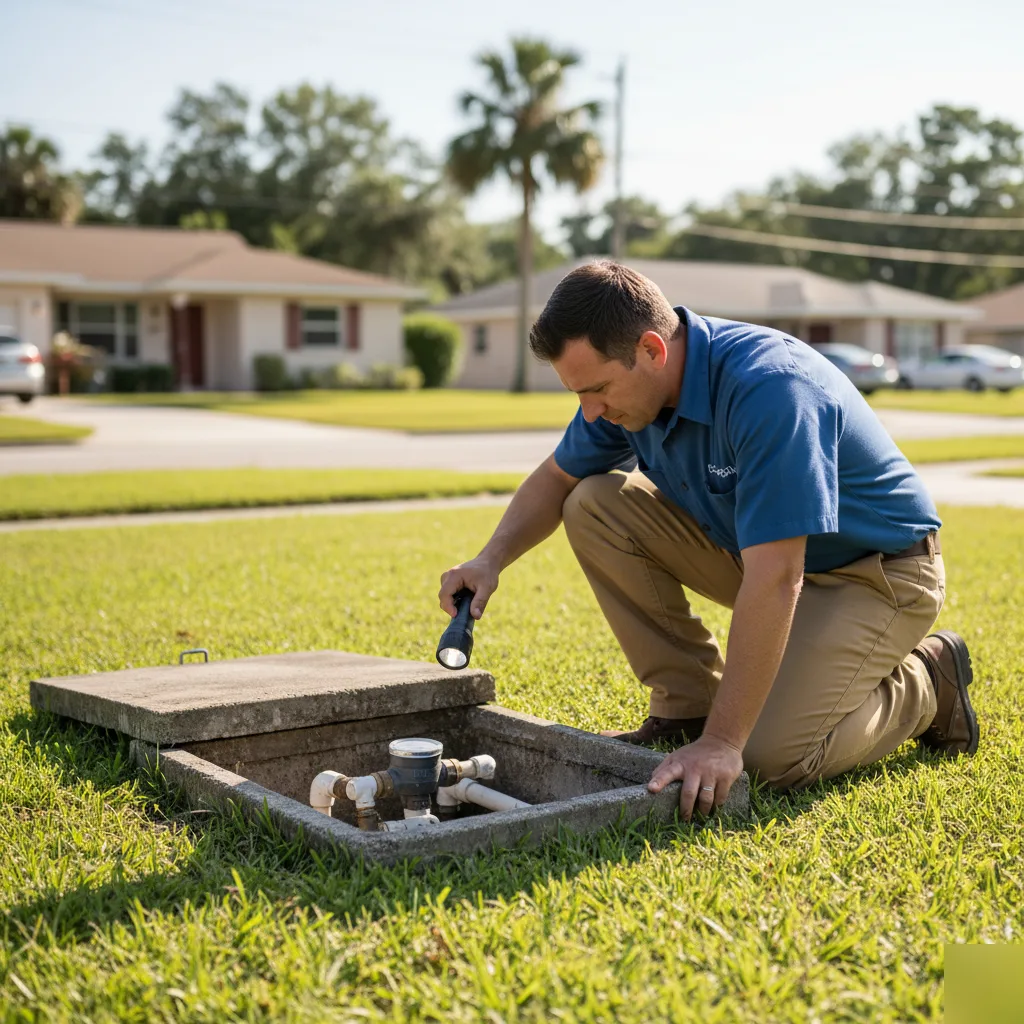
Everything on the house side of that meter, well, that belongs to you. It’s your pipe.
That’s it. One line in the ground decides who pays. Most people don’t realize this until they’re standing in a soggy yard, wondering who to call. We get that question constantly from homeowners across Orlando, especially around the University area and places like Waterford Lakes. The answer almost always comes back to where the leak sits relative to the meter.
What's on the City's Side
The city of Orlando, usually through Orlando Utilities Commission (OUC), owns and maintains the water main that runs under the street. They also own the service line. That’s the branch off the main that runs to your meter box. If a leak happens anywhere along that stretch, it’s the city’s problem to fix. You’d call OUC to report it, they’d send a crew out, and you wouldn’t get a bill for the repair. That’s good news.
Signs of a city-side leak often include water bubbling up in the street, or maybe a wet spot between the road and your meter box. You might also notice a sudden drop in water pressure across your whole neighborhood. But here’s what catches people off guard—even if the leak is on the city’s side, you still need to report it. They won’t know about it unless someone makes a call.
What's on Your Side
From the meter to your house, that’s your water main. Your pipe. Your responsibility. This includes the line running through your front yard, under your driveway, and into your home’s foundation or crawl space. Any leak along that stretch falls on you to fix. This is a common issue.
We see this play out a lot in older Orlando neighborhoods, like those near Lake Eola or College Park. Homes built in the 1950s and 1960s often have their original galvanized or copper water mains. Those lines can corrode over the decades. A homeowner notices their water bill jumped $80 in one month. They call OUC, and OUC confirms the meter is spinning even with every fixture turned off. That means water is escaping somewhere between the meter and the house. This is what we call a slab leak, by the way.
Your problem. It’s never a fun call to make.
Common signs of a water main leak on your side include:
- Unexplained spikes in your monthly water bill. That’s usually the first sign.
- Soft or muddy patches in your yard that never dry out, even after weeks without rain.
- The sound of running water when nothing inside is on. It’s a strange, unsettling sound.
- Low water pressure at multiple fixtures throughout the house.
If you spot any of these, the first step is checking your meter. Turn off every water-using fixture and appliance inside your home. Make sure the irrigation system is off too. Then look at the meter dial. If it’s still moving, water is leaving the system somewhere between the meter and your home. That confirms a leak on your side of the line.
And once you know the leak is yours, you need a licensed plumber for the water main repair. This isn’t a DIY fix. The line is buried, sometimes under concrete or heavy landscaping. Getting to it requires the right equipment and experience. We handle water main repair calls across Orlando regularly, from the Thornton Park area all the way out toward Baldwin Park. The process usually starts with plumbing leak detection to pinpoint the exact location before any digging happens. This saves you a lot of grief (and your landscaping).
One thing worth knowing—OUC may offer a bill adjustment. This happens if you can prove the high usage was caused by a leak you’ve since repaired. Keep your repair invoice. It could save you money on that inflated water bill.
How to Check Your Water Meter to Find Out Which Side the Leak Is On
Your water meter is the single tool you have right now. It tells you two things fast: whether you actually have a leak, and whether that leak is on your side or the city’s side. We walk homeowners through this test all the time in Orlando, especially folks near UCF in the 32817 zip code. It only takes about ten minutes.
Here’s the step-by-step process:
- Find your water meter. In most Orlando neighborhoods, it’s near the curb. You’ll see it in a concrete or plastic box set into the ground. Pop the lid off carefully—spiders love those boxes, so give it a tap first.
- Turn off every water source inside your home. Faucets, toilets, ice makers, irrigation systems, washing machines. Everything. If even one toilet is running—or “ghost flushing” as we call it—the test won’t work.
- Look at the flow indicator on the meter dial. Most meters have a small triangle or a star-shaped dial. If it’s spinning with all your water off, you’ve got a leak somewhere in the system.
- Locate the shut-off valve on your side. This is usually right next to the meter or on the house side of the meter box. Turn it to the closed position. You might need a wrench for older valves, especially with the hard water we have here in Central Florida.
- Check the flow indicator again. This is where the answer lives. If the indicator stops moving after you shut off your valve, the leak sits on your side of the line. That’s your responsibility. But if it keeps spinning, the problem may be on the city’s main. That could be the city’s issue to resolve, which is good news for your wallet.
Sounds simple. It usually is. But we see homeowners make a few common mistakes that throw off the results. You’d think it would be straightforward.
What Can Go Wrong With This Test
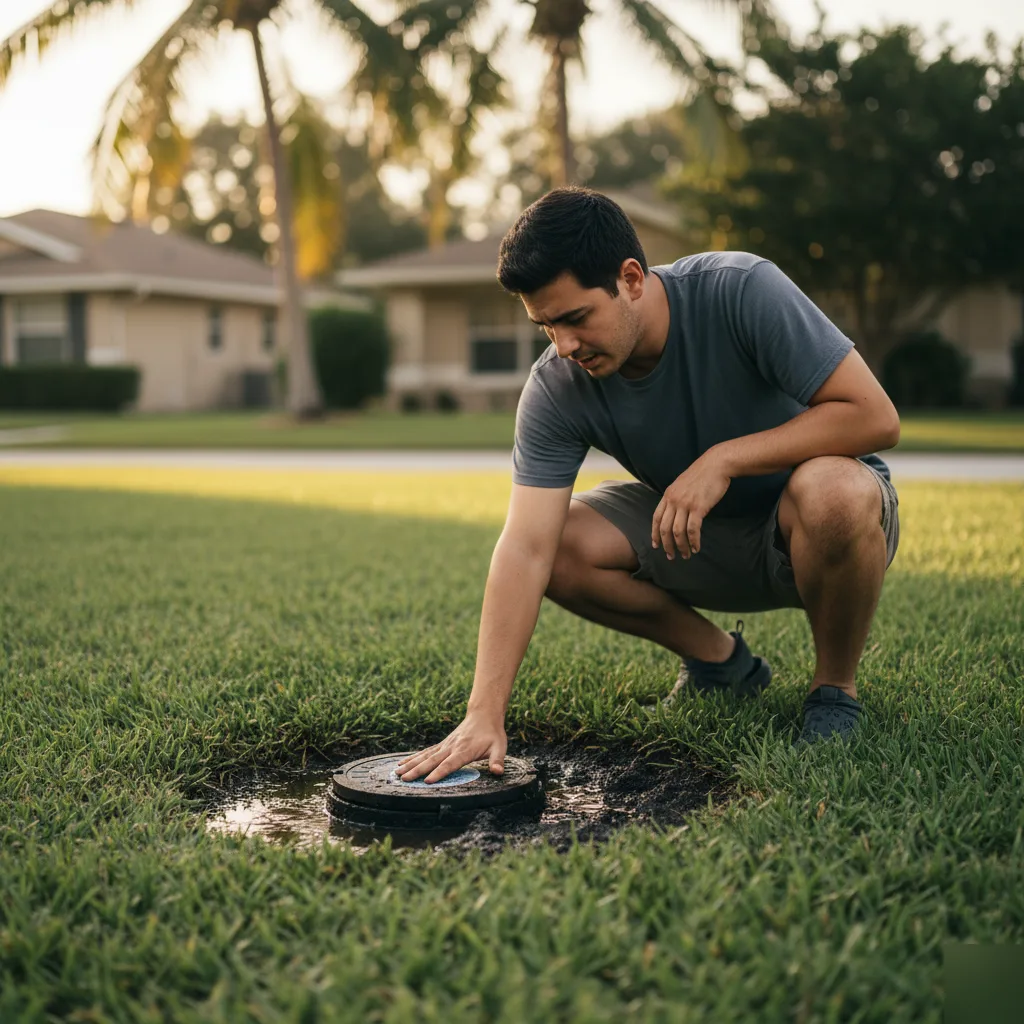
The biggest one? Forgetting about the irrigation system. In neighborhoods like Tuscawilla and Avalon Park, most homes have separate irrigation timers. If a zone kicks on mid-test, you’ll think you have a water main leak when you don’t. Shut the irrigation controller off at the panel before you start. It’s a common oversight.
Another issue is old shut-off valves. Homes built in the 1980s and 1990s across Orlando often have gate valves. These don’t fully close anymore. Mineral buildup from our hard water corrodes them over time. So you turn the valve, the indicator slows down but doesn’t stop. Now you’re confused. That doesn’t mean the leak is on the city’s side—it means your valve needs to be replaced. We see this quite a bit.
We’ve also had homeowners call us after doing this test during a heavy summer rainstorm. Groundwater was seeping into the meter box. They saw standing water and assumed the worst. Standing water in the meter box doesn’t always mean a water main leak. The flow indicator is what matters. Don’t let a little rain fool you.
If you run through these steps and the indicator clearly keeps moving with your valve shut off, call Orlando Utilities Commission to report it. They’ll send someone out to inspect the line on their side. Keep a record of when you noticed the issue and when you called. That matters if there’s a dispute later about who pays for what.
And if the test shows the leak is on your property? That’s where a professional plumbing leak detection service saves you from guessing. We use electronic listening equipment to pinpoint the exact spot underground. This means you’re not digging up your whole yard. If you want help figuring out your next move, our water main repair page walks you through what the process looks like from start to finish. We’re honest about the work involved.
Don’t skip this meter test. Ten minutes now can save you weeks of headaches. It’s a small investment of time.
Signs a Water Main Leak Is on Your Side of the Property
You’re standing in your yard. The grass near the street looks greener than the rest, maybe even a little soggy. Or maybe your water bill jumped by $50 last month for no clear reason. These are the kinds of clues that tell you the water main leak is probably yours to fix. It’s a real common situation.
Most people don’t realize a leak exists until it’s been running for weeks, even months. We get calls from homeowners in Tuscawilla and Alafaya Woods. They say everything seemed fine until they noticed a soft, muddy spot between their front door and the meter box. By then, the pipe has been leaking underground for a while. The damage is done, and the bill is climbing. Catching the signs early saves you real money and a lot of stress., it’s the way to handle it.
What to Watch For
Here are the most common signs that a water main leak sits on your side of the property line:
- Your water bill spikes without any change in how much water you’re using. Always check this first.
- You see wet spots, pooling water, or unusually green patches in your yard. These appear between the house and the meter.
- Water pressure drops at multiple fixtures inside your home at the same time. Not just one faucet, but the shower and the kitchen sink too.
- You hear a hissing or running-water sound when no faucets are on. This is especially true if you listen near walls or the ground.
- The water meter keeps spinning after you shut off every fixture and appliance in the house. This is your definitive proof.
That last one is the quickest test you can do yourself. Turn off every faucet, every toilet, the ice maker, the irrigation system. Everything. Then go look at your meter. If the dial is still moving, water is leaving your system somewhere. And if the meter confirms flow with everything off, the leak is on your property. This is particularly important for homes with slab-on-grade foundations. A slab leak can go unnoticed for a long time.
The Meter Test in Detail
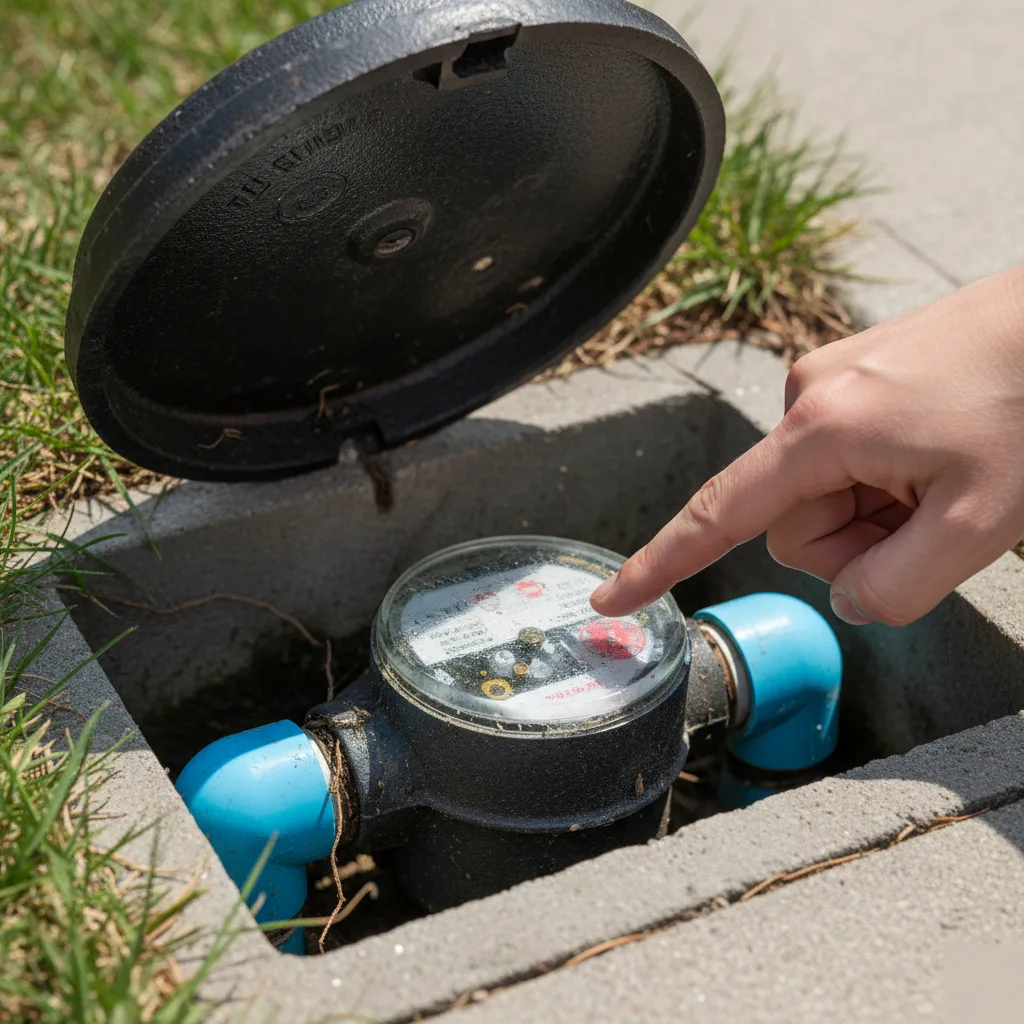
Here’s how to run it step by step:
- Shut off every water-using fixture and appliance in your home. Remember the irrigation!
- Find your water meter. It’s usually in a box near the curb or edge of your yard.
- Look at the flow indicator, a small triangle or dial on the meter face.
- Wait two to three minutes without touching anything. Take a breath.
- If the indicator is moving, you have a leak on your side of the meter.
We’ve walked dozens of Orlando homeowners through this exact process over the phone. It takes five minutes and gives you a clear answer before anyone even shows up. It’s the fastest way to get peace of mind (or confirm your suspicions).
But here’s what the meter test won’t tell you. It won’t show you where the leak is. And it won’t tell you how bad it’s gotten. A water main leak can run under a concrete driveway, beneath tree roots, or along the side of your house where you’d never think to look. That’s where plumbing leak detection comes in. We use equipment that pinpoints the break without tearing up your whole yard. This helps keep repair costs down too.
One thing we see a lot in older neighborhoods near downtown Oviedo and parts of Winter Springs is galvanized pipe. It’s corroded from the inside out. The leak starts as a pinhole, barely noticeable. Then it grows. By the time you spot soggy ground or a pressure drop, the pipe may need a full section replaced. We’ve also noticed accelerated corrosion in Central Florida’s humid climate. This means outdoor pipes, if exposed, can degrade faster due to UV and moisture, leading to leaks you might not immediately connect to your main.
So if you notice any of these signs, don’t wait on it. A small water main leak today turns into a big water main repair job next month. If you’re seeing the clues, reach out to Brightwater Plumbing of Oviedo. We’ll help you figure out exactly what’s going on before it gets worse. Our crew is here to help, even on evenings and weekends.
Get a Free Quote!
Terms and Conditions
Request a Quote
Terms and Conditions
Request a Quote
Terms and Conditions