

How Do Plumbers Detect Leaks Behind Walls? Methods & Tools Explained in Winter Garden
Learn if homeowners insurance covers leak detection services. Discover trace-and-access coverage, slab leak challenges, and steps to strengthen your claim.
Free Estimate
Why Hidden Wall Leaks Are Hard to Find Without the Right Tools
Most folks picture a leak as water just pooling on the floor. That's the easy kind for us. The leaks that truly cause real damage in Winter Garden homes? Those are the ones you can't see at all. They hide behind your drywall, under your tile, deep inside wall cavities where pipes snake between rooms. Figuring out how plumbers detect these leaks behind walls really means first understanding why they're so tricky.

Here's what we tell homeowners all the time: by the time you spot a hidden wall leak, it’s probably been running for weeks. Sometimes even months.
It's not your fault,. It's just how houses are built around here.
What's Actually Inside Your Walls
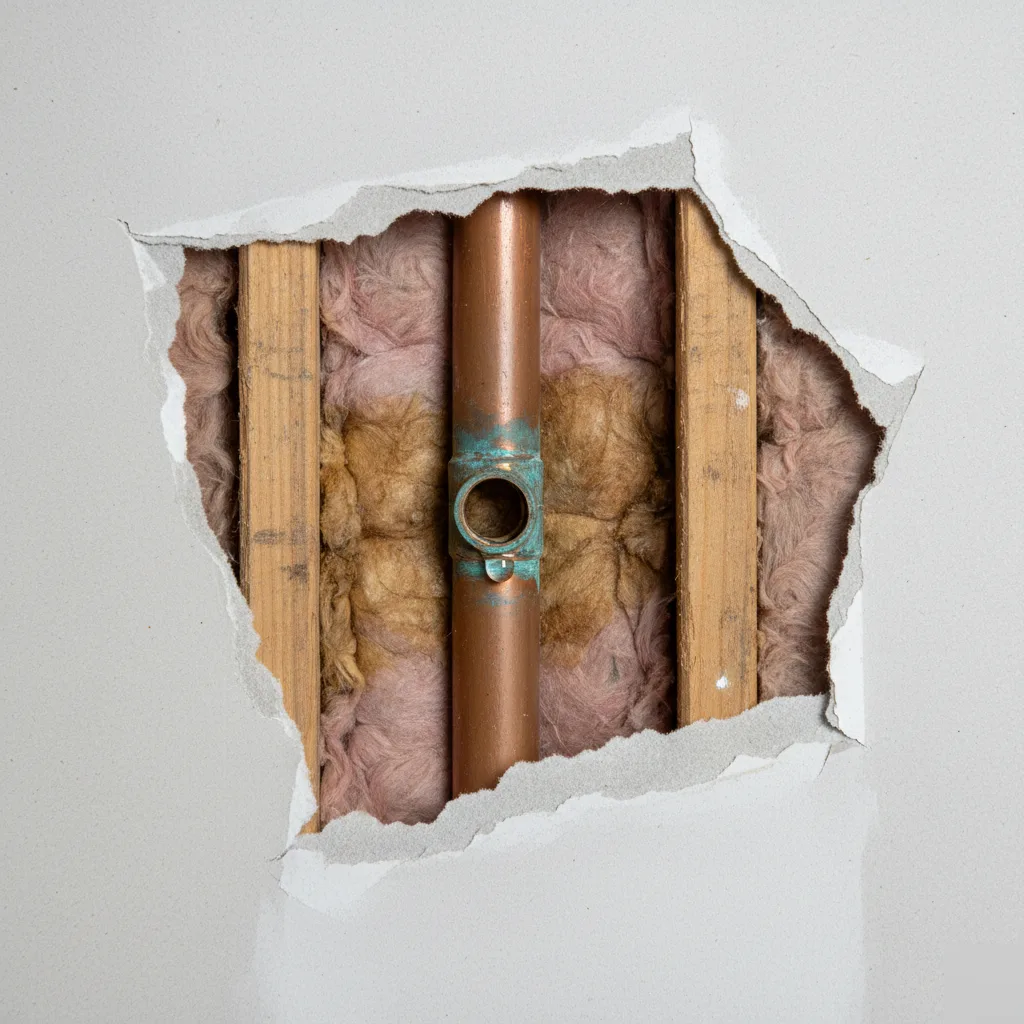
Your walls aren't just empty boxes. Not at all. They're packed full of stuff. Insulation sits in the spaces between studs. Electrical wiring runs up and down, side to side. And then there are the pipes, winding through in ways that rarely follow a straight line. All this sits behind that half-inch drywall, all taped, mudded, and painted smooth.
Water from a tiny pinhole leak can travel along a pipe for several feet before it even touches the drywall. It definitely follows gravity. But it also takes the path of least resistance. A leak on a second story home near downtown Winter Garden, say one of those charming older places, might show up as a ceiling stain on the first floor, ten feet from the actual source. We’ve seen this exact situation play out in many homes around Plant Street, and even in some of the newer builds over by Hamlin. (It's wild how water can trick you.)
So, you spot a water stain. You just assume the leak is right behind it. You cut open the wall. Nothing there. The pipe that's actually leaking? It could be three feet to the left and two feet higher. Without the proper leak detection tools, you’re just guessing, cutting big holes in perfectly good walls. That's not a fun afternoon.
Why Your Eyes and Ears Won't Cut It
Sure, some leaks make noise. A faint hiss or a steady drip behind the wall might tip you off. But most hidden leaks are quiet. A slow seep from a rusty fitting won't make a sound you'd ever hear over your AC cranking or your kids playing in the next room.
Visual clues are unreliable too. Here’s what you might notice instead:
- A small, off-colored patch on the wall or ceiling, growing bigger over time.
- Paint bubbling or peeling in one specific spot without any clear reason.
- A musty, damp smell that just won't go away, no matter how much you clean.
- Baseboards that feel soft or look warped along a section of wall.
These signs tell you something is definitely wrong. They do not tell you where the leak actually is. And that’s the real problem. You know water is going somewhere it shouldn't, but pinpointing the source without professional, reliable leak detection tools is like trying to find a needle in a haystack while wearing a blindfold. It’s nearly impossible.

We get calls every single week from homeowners in Winter Garden who’ve already tried tracking down a leak themselves. They’ve poked holes in walls, pulled up flooring, even torn out bits of ceiling. Most of the time, they still haven’t found the actual source. That's not a criticism of their effort. It’s just the plain reality of how water behaves inside a sealed wall system. It hides.
Florida's Climate Makes It Worse
Living in Central Florida adds a whole other layer of difficulty, one homeowners in drier climates simply don't face. Our humidity levels regularly sit above 70 percent, sometimes much higher. This means moisture from a small leak won't just dry out. It lingers. It feeds mold growth behind the wall, right where you can't see it, right where it causes health issues and structural problems.
The Environmental Protection Agency mentions mold can begin growing on wet surfaces in just 24 to 48 hours. In a Winter Garden home during summer, that timeline can be even quicker., this is the part most people overthink, but a tiny leak that might dry itself out in, say, Arizona, will become a full-blown mold problem here before you even realize the pipe is dripping.
And our sandy soil plays a big role too. The ground common around West Orange County shifts with heavy rains, a lot more than you'd think. That constant movement puts real stress on underground pipes and slab foundations. Pipes that enter your home through the slab often develop leaks at connection points inside walls, right where the pipe makes that from underground to vertical.
These slab-to-wall leaks are some of the hardest to pinpoint without specialized equipment. The water frequently travels along the outside of the pipe, goes down into the slab, then wicks back up into the wall from below. You might see damage at floor level and assume it's just a flooding issue. But it’s actually a pressurized supply line leaking inside the wall cavity above. It’s a sneaky one.
The Limits of DIY Detection
Can you find a hidden wall leak yourself? Sometimes, yes. But rarely on the first try. And usually not without causing even more damage in the process.
The most common DIY approach is that water meter test. You turn off every fixture and appliance that uses water. Then you watch your meter closely. If it’s still spinning, you've definitely got a leak somewhere. That confirms a leak exists. It tells you absolutely nothing about where it is.
Another tactic people try involves a moisture meter from the hardware store. These little handheld gadgets can detect higher moisture levels in drywall. They're useful for confirming a wall is wet. But they only read the surface. A moisture meter can't tell you if the water is coming from a pipe three inches behind the drywall, or if it's just condensation on a cold water line. It certainly can't tell you if the moisture traveled from a leak five feet away.
Here’s a scenario we run into regularly: a homeowner near Fowler Groves notices their water bill jumped by forty bucks in one month. They do the meter test, it confirms a leak. They buy a moisture meter, find a damp spot behind the bathroom wall. They cut into the wall, find wet insulation but no visible pipe damage, the leak is actually in a supply line running through the adjacent bedroom wall, and water has been wicking through the insulation laterally. Now they've got two walls to repair instead of one, that’s just extra hassle.
That's exactly why Professional leak detection matters so much.
What Makes Professional Tools Different
Professional plumbers use tools that can literally see through walls without opening them up. That’s the big difference. Every single tool in our leak detection kit is designed to pinpoint the source. We do this before anyone picks up a drywall saw.
Acoustic listening devices amplify the sound of water escaping a pipe. Even a slow drip, completely silent to your ear, becomes clearly audible through a contact microphone pressed against the wall surface. Thermal imaging cameras pick up temperature differences behind walls. A leaking cold water line makes a cool spot that shows up clearly on our infrared display. These aren't just gimmicks, by the way. They're the same tools used by insurance adjusters and restoration companies after major water damage events.
But tools alone aren’t enough. Knowing how to actually read the data matters as much as owning the equipment itself. A thermal camera might show three cool spots on one wall. An experienced plumber knows which one is the leak, which one is a cold water line running normally, and which one is just a poorly insulated section near an exterior wall. That interpretation? It comes from years of fieldwork, not just from owning the camera. We see this all the time.
We've worked in homes throughout Winter Garden where prior attempts at leak detection completely missed the mark. Someone had the right tool. They just didn't have the right experience to use it effectively. A camera scan takes minutes. But understanding what you’re truly looking at takes years of practice.
If you're seeing signs of a hidden leak, the smartest move is getting a Professional assessment before you cut into anything. Our leak detection service uses multiple tools together. We triangulate the exact source, so repairs stay small and completely targeted. That saves you time and money.
The Cost of Waiting
Every day a hidden wall leak goes undetected, the damage just keeps spreading. Drywall soaks up water and loses its structural strength. Wood studs and framing can start to rot. Mold colonies quietly expand behind the wall, where you can't even see or smell them yet.
And that water bill just keeps climbing. Fast.

The Insurance Information Institute reports that water damage and freezing account for roughly one in 50 insured homes filing a claim each year. Most of those claims involve slow leaks that went unnoticed for far too long, not dramatic pipe bursts. The average claim runs into thousands of dollars, a real headache for any homeowner. Early detection, using the right tools, keeps a small problem from becoming a really big one.
In a place like Winter Garden, where homes range from brand-new construction in Waterside to decades-old builds closer to the historic district, pipe materials and plumbing layouts vary a lot. Copper corrodes differently than CPVC. PEX connections fail differently than soldered joints. Each material has its own failure patterns, and each one hides behind that same drywall. Without the tools that can see past that surface, you’re working blind.
Don't wait for a ceiling to sag or a wall to buckle. Those are late-stage symptoms, big trouble. The right time to call for leak detection is when you first suspect something’s off. A higher water bill, a faint smell, a small stain that wasn’t there last week. Catching it early saves your walls, saves you money, and definitely saves you the headache of a major repair project down the road. Call us for your free estimate today, experience the difference integrity makes!
Get a Free Quote!
Terms and Conditions
Request a Quote
Terms and Conditions
Request a Quote
Terms and Conditions
Frequently Asked Questions
Common questions about how do plumbers detect leaks behind walls? methods & tools explained services
How do plumbers actually find leaks behind walls without tearing everything apart?
Plumbers use specialized tools like thermal imaging cameras, acoustic listening devices, and moisture meters to find leaks without major demolition. These tools let us pinpoint the exact source before we ever cut into a wall. That means less mess and less repair work for you.
Is the water stain on my wall always right above where the leak is?
No, and this is one of the biggest mistakes homeowners make. Water travels along pipes, insulation, and framing before it ever reaches your drywall. A stain on your ceiling or wall could be several feet away from the actual leak source. We see this regularly in older homes near Plant Street and newer builds over by Hamlin. Cutting into the wall right at the stain often finds nothing. That's why professional detection tools matter so much.
Does the sandy soil around West Orange County affect pipe leaks inside my home?
It absolutely does. The ground around West Orange County shifts with heavy rains, and that movement puts stress on pipes where they enter your home through the slab. These slab-to-wall connection points are common leak spots. Water from these leaks often travels down into the slab and wicks back up into the wall from below. Many homeowners near Winter Garden mistake this for a flooding issue when it's actually a pressurized supply line leaking inside the wall cavity.
Can a small leak behind a wall really cause that much damage in Winter Garden?
Yes, and faster than most people expect. Winter Garden's high humidity — often above 70 percent — means a slow leak behind drywall can grow mold in as little as 24 to 48 hours, according to the EPA. In drier climates, a small drip might dry out on its own. Here in Central Florida, that same drip feeds mold and rot before you ever notice a stain. Catching it early makes a huge difference.
When should I call a plumber instead of trying to find the leak myself?
Call a plumber as soon as you see a stain, smell something musty, or notice your water meter moving with everything turned off. DIY methods like moisture meters can confirm a wall is wet, but they can't tell you where the water is actually coming from. If you've already poked holes in the wall and still haven't found the source, stop. More guessing causes more damage. A professional with the right tools can locate the leak accurately the first time.
Will a water meter test tell me where my hidden leak is?
A water meter test tells you a leak exists, but it cannot tell you where it is. You turn off every fixture, then watch the meter. If it still moves, you have a leak somewhere in the system. That's useful information. But locating the actual source requires acoustic equipment, thermal cameras, or other professional tools. Think of the meter test as step one — it confirms the problem. Finding the leak still takes trained eyes and the right equipment.
Request a Quote
Terms and Conditions