

How long do sewer pipes typically last before needing replacement?
Ensure your home stays dry and safe with our expert leak detection services. Identify plumbing issues early to prevent costly damage and stress.
Free Estimate
Your sewer line quietly moves wastewater every day, so knowing how long pipes typically last helps you avoid surprise repairs. Lifespan depends on the material, local conditions, and how well the line is installed and maintained. This guide walks you through typical lifespans, Orlando-specific factors, warning signs, repair vs. replace decisions, replacement options, costs, and simple steps to keep your sewer line working longer.
What Is the Typical Lifespan of Sewer Pipes by Material?
Sewer pipe longevity varies by material. Knowing the differences helps you plan sewer line maintenance and replacement at the right time.
How Long Do Common Sewer Pipe Materials Last?
Typical lifespans for common sewer pipe materials are:
- PVC Sewer Pipes: Usually last 50–100 years because they resist corrosion and root intrusion.
- Cast Iron Sewer Pipes: Often last 75–100 years but can corrode over time, especially in acidic soils.
- Clay Pipes: Generally last 50–100 years but are more prone to cracking and root intrusion.
Keep in mind these ranges can shift based on local soil, moisture, and installation quality.
What Orlando-Specific Factors Affect Sewer Pipe Longevity?
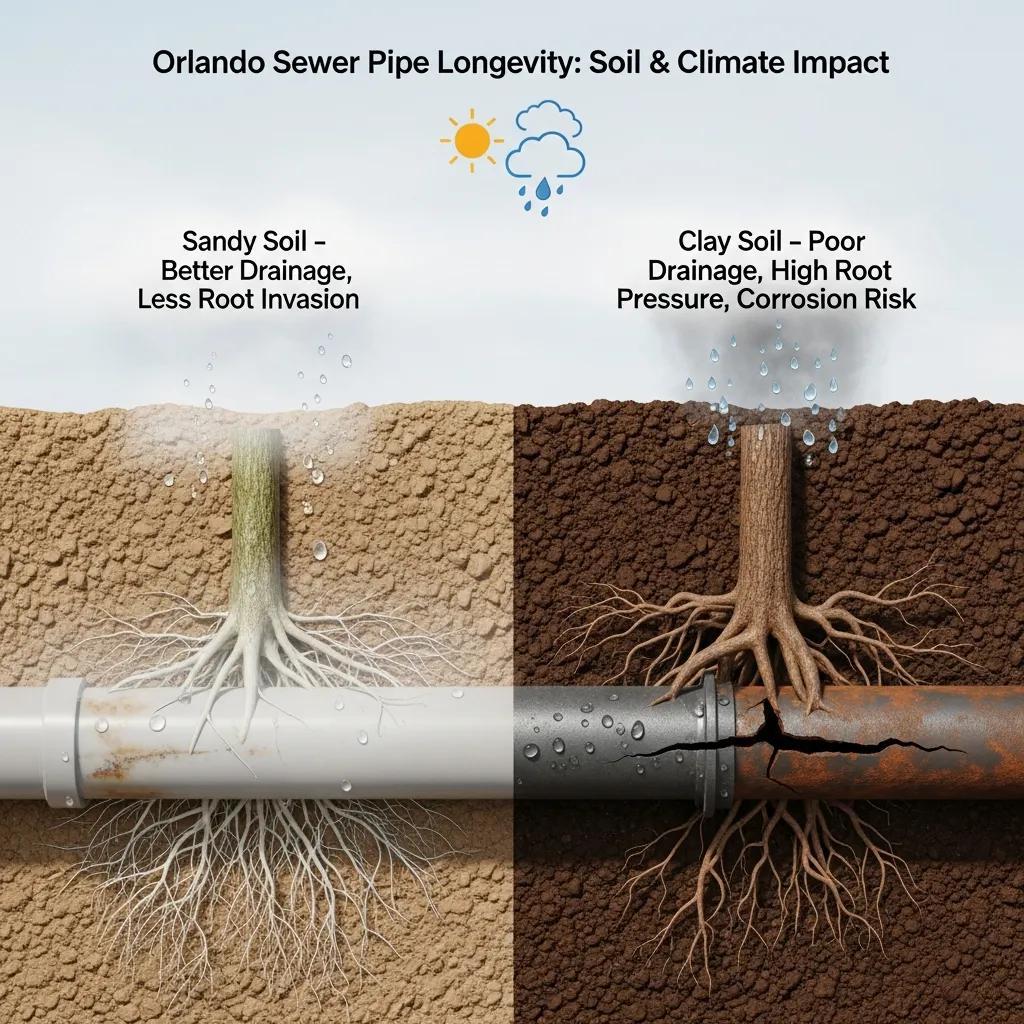
Orlando homeowners should watch for a few local issues that change how long pipes last:
- Soil Type: Sandy soils offer less lateral support while clay soils hold moisture, which can speed corrosion or settling.
- Climate Impact: Florida’s humidity and wet seasons can accelerate deterioration of some materials, particularly older metal pipes.
- Local Regulations: Code requirements affect installation methods and materials — which in turn influence longevity.
Knowing these local factors helps you choose the right materials and maintenance schedule for your home.
What Are the Key Factors Influencing Sewer Pipe Lifespan in Orlando?
Several main factors determine how long a sewer line will last, and many of them are within your control.
How Do Soil Conditions and Tree Roots Impact Sewer Pipes?
Soil and vegetation have a big impact:
- Root Intrusion: Tree roots seek moisture and can infiltrate joints or cracks, especially in older clay lines.
- Soil Acidity: Acidic or chemically aggressive soils speed corrosion in metal pipes.
- Impact on Pipe Integrity: Shifting, settling, or poorly compacted backfill can cause misalignment, cracks, or breaks.
What Installation and Maintenance Practices Affect Pipe Durability?
Good installation and routine care extend pipe life significantly:
- Quality of Installation: Proper bedding, slope, and jointing reduce stress and future failures.
- Regular Maintenance: Periodic inspections and cleanings catch small problems before they become big ones.
- Use of Proper Materials: Choosing materials suited to local soils and traffic loads improves long-term performance.
What Are the Signs Your Sewer Line Needs Repair or Replacement?
Spotting early warning signs saves money and hassle. If you notice any of the following, call a plumber for an inspection.
Which Warning Signs Indicate Sewer Line Failure?
Common red flags include:
- Frequent Clogs: Repeated backups across multiple fixtures can point to a main sewer problem.
- Foul Odors: Persistent sewage smells in drains or around the yard often mean a leak or blockage.
- Wet Spots in Yard: Unexplained puddles, soggy ground, or lush patches of grass can indicate a leaking sewer line.
When you see these signs, schedule a professional inspection right away.
How Can Homeowners Detect Sewer Line Problems Early?
Early detection is straightforward with the right habits and tools:
- Camera Inspections: A video camera lets a plumber see blockages, cracks, and root intrusions without guesswork.
- Regular Checks: Watch for slow drains, gurgling pipes, or unusual water behavior — those are early warning signals.
- Signs to Watch For: Any sudden change in drainage, odors, or lawn moisture should prompt a check.
When Should You Repair Versus Replace Your Sewer Line?

Deciding between repair and replacement depends on age, extent of damage, and recurring problems. Here’s how to think about it.
What Conditions Warrant Sewer Line Repair?
Repairs make sense when issues are localized or minor:
- Minor Cracks: Small leaks or hairline cracks can often be patched or relined.
- Localized Issues: If only a short section is damaged, targeted repair is usually more cost-effective.
- Recent Installations: Newer systems with isolated problems commonly need repair, not replacement.
When Is Sewer Line Replacement Necessary?
Consider full replacement when problems are widespread or the line is old:
- Age of Pipes: Pipes older than about 75 years are more likely to fail repeatedly and are good replacement candidates.
- Widespread Damage: Multiple damaged sections often mean replacement is the smarter long-term choice.
- Frequent Issues: If you’re dealing with constant clogs or leaks, replacement can save time and money over repeated repairs.
What Are the Sewer Line Replacement Options and Costs in Orlando?
Orlando homeowners typically choose between traditional excavation and less-invasive trenchless methods. Each has pros and cons depending on site conditions.
How Do Conventional and Trenchless Replacement Methods Compare?
Conventional replacement requires digging to remove old pipe; trenchless approaches replace the line with minimal surface disruption.
What Are the Typical Sewer Line Replacement Costs in Orlando?
Replacement costs depend on method, length, depth, and any obstacles:
- Average Cost Range: Expect roughly $3,000 to $7,000 for most residential replacements, depending on scope and method.
- Factors Influencing Price: Job complexity, material choice, and local labor rates all affect the final bill.
- Local Market Considerations: Seasonal demand and contractor availability can also shift prices.
How Can You Extend the Lifespan of Your Sewer Pipes?
A few simple habits and routine service go a long way toward keeping your sewer line healthy.
What Preventative Maintenance Practices Help Sewer Line Longevity?
Practical steps to protect your sewer line:
- Regular Check-Ups: Schedule periodic inspections to find small problems early.
- Avoiding Harmful Substances: Don’t flush wipes, grease, or other non-biodegradable items; avoid harsh chemicals that damage pipes.
- Professional Maintenance: Annual or biennial professional cleaning and camera inspections prevent buildup and surprise failures.
How Does Brightwater Plumbing Support Sewer Line Maintenance in Orlando?
Brightwater Plumbing offers services tailored to local needs:
- Emergency Services: We’re available 24/7 for urgent sewer line issues so you’re never left waiting.
- Maintenance Plans: Custom plans for regular inspections, camera checks, and cleanings to keep your system running.
- Local Expertise: We understand Orlando soils, tree root patterns, and code requirements — and we use that knowledge to recommend the right solution.
With routine care and the right professionals on your side, you can delay replacement and avoid unexpected failures.
Frequently Asked Questions — Quick Answers
What are the common causes of sewer line damage?
Sewer lines fail for several common reasons: tree roots that infiltrate joints or cracks (especially in older clay systems), shifting or settling soils that cause breaks, and corrosion in metal pipes exposed to acidic conditions. Poor installation and buildup of debris or non-biodegradable materials can also create blockages and added pressure that lead to damage.
How can I tell if my sewer line is clogged?
Look for signs like slow drainage in multiple fixtures, gurgling noises in drains, repeated backups, foul odors from drains or the yard, and wet patches on the lawn. If you see several of these symptoms, call a licensed plumber for an inspection and camera scan.
What is the average cost of sewer line repair?
Repair costs vary by the problem and technique, but homeowners typically pay between $1,500 and $5,000 for most sewer line repairs. The final price depends on the repair type, the location of damage, and local labor rates. For major issues that require replacement, costs can be higher, so it’s wise to get multiple quotes from licensed contractors.
Are there any DIY methods for maintaining sewer lines?
Homeowners can do basic maintenance: avoid flushing non-biodegradable items, keep grease out of drains, and use enzyme-based cleaners to manage organic buildup. However, for persistent clogs, suspected leaks, or structural issues, hire a licensed plumber with camera inspection tools to prevent worsening damage.
What are the environmental impacts of sewer line failures?
Failed sewer lines can release untreated sewage into soil and water, contaminating local waterways and posing health risks to people and wildlife. Leaks can also disrupt ecosystems and groundwater quality. Timely maintenance and repairs reduce these risks and protect the environment.
How often should I have my sewer lines inspected?
We recommend having sewer lines inspected every 1 to 2 years, especially for older systems or properties with trees and shifting soils. If you notice any warning signs — slow drains, odors, or wet spots — schedule an inspection sooner to catch problems early.
Conclusion
Understanding pipe materials, local conditions, and common warning signs helps you make smarter decisions about repairs and replacements. Regular inspections, sensible use, and a local plumbing partner can extend your sewer line’s life and prevent costly surprises. If you’re unsure about your system or notice warning signs, contact a trusted plumbing pro to evaluate your options and protect your home.
Get a Free Quote!
Terms and Conditions
Request a Quote
Terms and Conditions
Request a Quote
Terms and Conditions