

How to Spot a Good Plumber: Key Signs of Quality and Reliability
Orlando's trusted plumber for fast, honest service you can count on.
Free Estimate
Knowing how to spot a good plumber means checking for a valid license, clear pricing, real reviews, and a contractor who actually answers the phone — these are the signs of quality and reliability every homeowner should verify before hiring. A licensed and insured plumber protects your home and meets local code requirements, including permit rules enforced by Orlando-area building departments. Reliable Orlando plumbers show up on time, explain the work in plain language, and stand behind what they fix. No pressure tactics, no surprise charges after the job is done. In Winter Garden and the surrounding communities, same-day availability and a local reputation built on consistent five-star feedback are strong signals you've found a trustworthy professional.
What Makes a Plumber Trustworthy?
A trustworthy plumber holds a valid state license, carries insurance, prices work upfront, and treats your home with care every visit. Trust rests on three pillars: credentials, communication, and consistent follow-through on completed work.
Licensing proves the plumber passed Florida's trade exams and meets the state's minimum competency standards. Insurance protects you if something goes wrong during the job — and without it, you can be on the hook for injuries or property damage that happen on your own property. That's not a hypothetical risk.
Clear communication means explaining what's wrong, what the fix involves, and what it'll cost before any work begins. A plumber who can't describe the problem in plain language is either uncertain of the diagnosis or unwilling to be transparent about the scope. Neither is great.

Four trust indicators to check before you hire:
- Valid, active Florida plumbing contractor license
- General liability insurance and workers' compensation coverage
- Written price provided before work starts, not after
- A real local presence with verifiable reviews and a physical address
Does a plumber's local roots affect how accountable they are?
A plumber whose name is on the truck has personal skin in the game. When the owner is the one diagnosing your problem and the business operates inside the same community where you live, accountability is direct and personal — not filtered through a corporate call center three states away. Local roots make the cost of cutting corners very high.
How Do You Check a Plumber's License and Insurance in Florida?
In Florida, you can verify a plumber's license in minutes using the state's free online contractor search tool. The search returns real-time license status by name or license number. Free to use, takes about 90 seconds.
Florida requires plumbers to hold either a Certified Plumbing Contractor or Registered Plumbing Contractor license, and both are fully searchable through that database. Always ask for the license number before hiring. A legitimate plumber will share it without hesitation — if there's any reluctance, that tells you something.
Confirm the license is active and not expired. An expired license offers no legal protection if work is performed incorrectly or a permit dispute arises. It also means the contractor may not be current on code updates that affect your project.
Ask for a certificate of insurance showing general liability coverage and workers' compensation. Request that the certificate be sent directly to you, not just described verbally, so you have a document you can actually verify.
What permits are required for plumbing work in the Winter Garden area?
Orlando-area building departments require permits for water heater installations, sewer line repairs, and other major plumbing projects. A licensed plumber will pull those permits automatically as part of the job. Permit-pulling is not an optional add-on.
Skipping permits is one of the most common mistakes homeowners make when hiring under price pressure — and it tends to surface at the worst possible time, like when you're trying to sell the house. An unpermitted water heater replacement or sewer repair can create insurance problems and real complications at closing. If a plumber suggests skipping the permit to save time or money, that's your cue to look elsewhere.
What Do Online Reviews Actually Tell You About a Plumber?
Online reviews reveal patterns. A plumber with consistent five-star feedback across dozens of real jobs is far more reliable than one with a handful of perfect scores and nothing else behind them. Volume and specificity together tell the real story.
Look for reviews that mention specific details: the technician's name, the type of job performed, how the problem was diagnosed, and whether the final price matched the original quote. Those details signal a genuine customer experience. Generic reviews like "great service!" carry far less weight than one describing a burst pipe repair, a clogged drain fix, or a water heater replacement — those specifics can only come from someone who was actually there.
What to look for in a plumber's Google reviews:
- Mentions of a specific job type — drain jetting, water heater install, leak detection
- Confirmation that the final price matched the quoted price
- Comments about punctuality and communication during the job
- Details about how the plumber handled a problem or unexpected complication
- How the business responds to negative reviews — professionally or defensively
That last one is worth lingering on. A defensive or dismissive response to a critical review tells you more about how a company operates than ten glowing ones.
Should I trust reviews on the plumber's own website?
First-party testimonials on a plumber's own website are useful for tone and story, but they're not independently verified. Third-party platforms like Google are harder to manipulate because the platform controls the review process. Use Google as your primary source and treat website testimonials as supplementary context only.
How Should a Good Plumber Explain Pricing Before the Work Starts?
A good plumber gives you a clear, written price before any work begins. Not a range, not a guess, and never a number that shifts after the job is done. Written pricing removes ambiguity for both parties.
Straight pricing means the quote covers parts, labor, and any expected access work — so there are no surprise charges on the final invoice. If cutting into drywall is part of the repair, that cost belongs in the quote, not on a separate line you see for the first time at the end.
High-pressure upsell scripts are a red flag. A reliable plumber explains what you need, not what generates the highest margin. Phrases like "we should replace the whole system while we're in here" deserve a clear explanation of why, backed by actual evidence — not just a sales pitch delivered while standing in your living room.
What is the difference between a plumbing estimate and a fixed quote?
An estimate is an approximation — it can change as the job unfolds. A fixed quote is a committed price for a defined scope of work. Before signing anything, ask which one you're receiving. If the answer is an estimate, ask what conditions would cause the price to increase and by how much. A plumber who answers that clearly and specifically is operating with transparency. One who deflects or gives a vague answer is not.
If a plumber refuses to put a price in writing before starting, get a second opinion before the work begins. No exceptions.
What Does Punctuality Tell You About a Plumber's Reliability?
A plumber who shows up on time — and calls ahead when running late — is demonstrating the same professional discipline they bring to the actual repair work. How a contractor manages your time is a pretty reliable indicator of how they'll manage your job.
Punctuality is a proxy for organization. Plumbers who manage their schedule carefully are also more likely to order the right parts in advance, show up with the correct tools, and complete the work without a second trip that derails your whole day.
Same-day availability matters most in emergency situations. Burst pipes, sewage backups, and failed water heaters cause active damage every hour they go unaddressed. In Winter Garden and Horizon West, where newer construction and aging homes sit side by side, fast response times are frequently the deciding factor in limiting water damage and repair costs.
Is same-day plumbing service realistic or just a marketing claim?
Same-day service is realistic when the plumber actually answers the phone — including evenings and weekends. The easiest way to test the claim before an emergency happens is to call during off-hours and see who picks up. A business that answers and schedules same-day appointments during that call has demonstrated the capability. A voicemail box on a Saturday afternoon tells you something very different.
Ask directly: "Do you provide same-day service for emergencies?" The confidence and specificity behind the answer will tell you what to expect when the pipe actually breaks.
Why Do Local and Family-Owned Plumbers Often Outperform Large Chains?
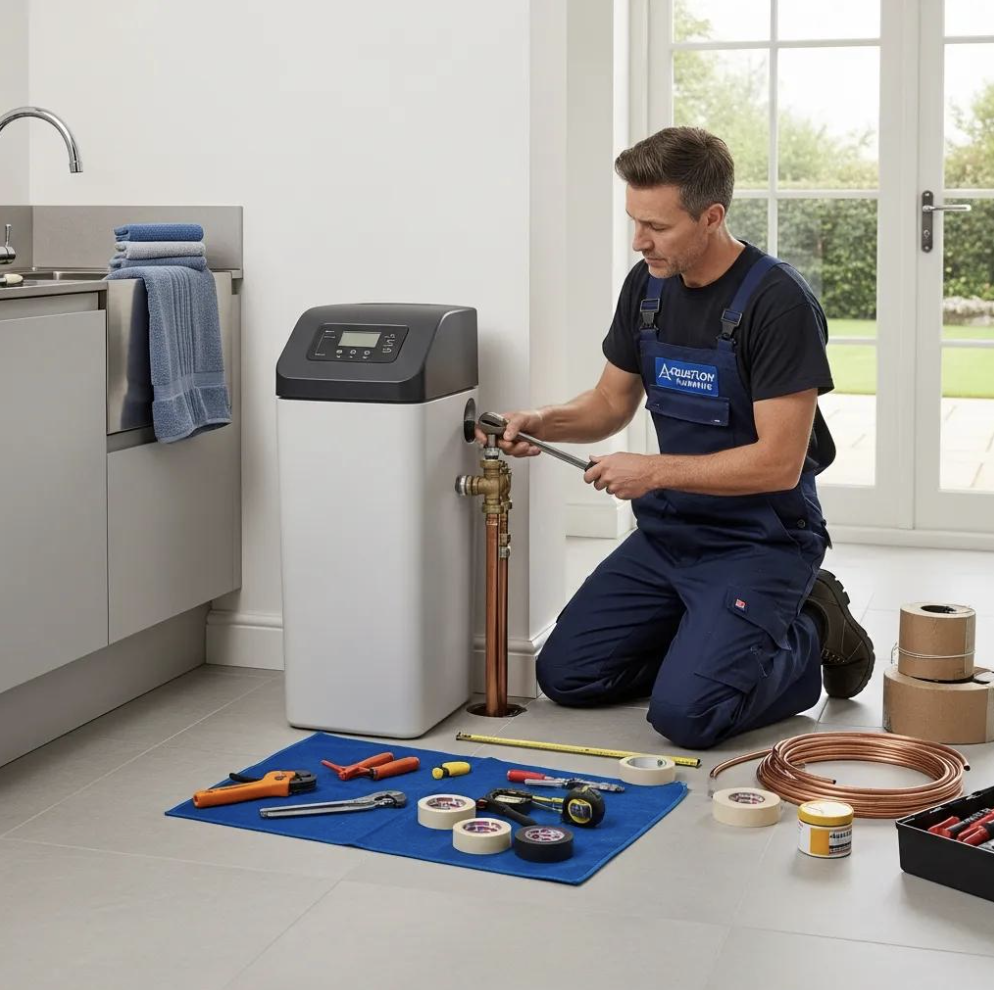
Local and family-owned plumbers are directly accountable to the community they serve. Their reputation lives and dies in a single neighborhood, which creates stronger motivation to do the job right the first time. A national chain can absorb a bad review and move on. A local plumber in Winter Garden can't.
Owner-operated businesses often mean the person diagnosing your problem is also the person responsible for the outcome. There's no hand-off to a junior technician after the sales call. The diagnosis, the repair plan, and the workmanship all come from the same accountable source.
How does local plumbing knowledge affect the quality of the work?
Local knowledge changes the way a plumber approaches the job from the first visit. Winter Garden's sandy, frequently saturated soil increases underground plumbing complexity — pipes can shift over time in ways that don't happen in denser soil conditions. A plumber who works in this area regularly accounts for that during installation and inspection, rather than figuring it out on your dime.
Mid-century homes in communities like Orlovista, which fall within the broader Orlando service area, may still contain galvanized steel or cast iron pipe. A local plumber recognizes those materials on sight and knows whether repair or full replacement is the right call, rather than patching a pipe that's already at the end of its service life.
Familiarity with Orlando-area permit requirements also means a local plumber knows exactly which projects need a city permit and how to coordinate with building departments efficiently. That knowledge keeps your project compliant and your timeline on track.
Family-owned businesses also tend to build long-term client relationships — which is especially useful for landlords and property managers who need a reliable plumber across multiple properties without having to vet a new contractor every single time.
What Are the Red Flags That Signal an Unreliable Plumber?
The clearest red flags are an inability to produce a license number, a refusal to give written pricing, vague timelines, and pressure to pay in cash before the work is inspected. Each signals a contractor who isn't operating transparently.
Six red flags to watch for before you hire:
- No license number provided — operating outside Florida's legal requirements; any permits pulled may be invalid
- Verbal-only quotes — creates room for invoice inflation after the job is complete with no recourse for you
- Pressure tactics — phrases like "this price is only good today" are sales scripts, not honest assessments of your plumbing
- Inability to name the specific repair — a plumber who can't describe the problem clearly is either inexperienced or obscuring the scope of work
- Skipping required permits — unpermitted work on water heater replacements or sewer line repairs can create legal and insurance problems when you sell the home
- No verifiable local presence — no physical address, no Google Business Profile, and no real reviews together mean no local accountability
A plumber who pushes back on any reasonable verification request — license number, insurance certificate, written quote — is signaling that scrutiny is unwelcome. That's exactly when scrutiny is most warranted.
How Do You Choose the Right Plumber for Your Specific Job?
Matching the plumber to the job means confirming the plumber has hands-on experience with your specific type of work — not just a general license — before you schedule. A license proves competency standards were met. It doesn't automatically mean the plumber has done your exact job dozens of times.
Emergency repairs like burst pipes or sewage backups demand a plumber with same-day availability and proven experience handling urgent, high-stakes situations. A contractor who only handles scheduled installs may not have the troubleshooting speed an emergency requires.
Planned projects — bathroom remodels, kitchen plumbing relocations, whole-house repiping, or tankless water heater conversions — require a plumber experienced with rough-in work and local permit coordination. The permit process for a full bathroom remodel is more involved than a single fixture swap, and the plumber needs to know the difference without being prompted.
Do I need a different plumber for a bathroom remodel versus an emergency repair?
Not necessarily a different plumber — but confirm the one you hire has done both. Some plumbers specialize in service calls and emergency repairs; others focus on new construction and remodel work. The best outcome is a plumber who handles both competently, because your plumbing needs won't always sort themselves into neat categories.
For specialty services — sewer camera inspections, drain jetting, water softener installation, septic system service, or plumbing leak detection — confirm the plumber has the specific equipment and training for that service. Ask for examples of similar completed work, or check whether Google reviews reference the exact service type you need. Reviews that mention drain jetting or a sewer camera inspection by name carry real weight when those are the services you're considering.
Landlords and property managers benefit from a plumber who responds to tenant calls reliably, knows the common failure points in rental properties — toilets, drains, water heaters — and can be dispatched without on-site supervision. That combination of responsiveness and independent judgment is worth asking about directly. When those criteria all line up, reach out to a licensed plumber in Winter Garden to confirm the plumber's specific experience matches your job.
The Bottom Line
A good plumber is licensed, insured, upfront about pricing, punctual, and backed by real reviews from real customers in your area. Local accountability — especially from a family-owned business where the owner's name is on the truck — consistently produces better outcomes than working with an anonymous contractor. Matching a plumber's specific experience to your exact job type, whether that's an emergency repair or a planned renovation, turns a stressful hiring decision into a confident one. For the full picture of what professional, accountable service looks like in this area, visit our licensed plumber in Winter Garden page.
For more information on plumbing best practices and home maintenance standards, you can refer to resources from the International Association of Plumbing and Mechanical Officials (IAPMO).
Get a Free Quote!
Terms and Conditions
Request a Quote
Terms and Conditions
Request a Quote
Terms and Conditions