

How to Spot Hidden Plumbing Problems in a House in Oviedo
Oviedo's trusted plumber for fast, honest service you can count on.
Free Estimate
Why Hidden Plumbing Problems Are Easy to Miss
Quick Summary:
Most hidden plumbing problems in Oviedo homes stay hidden because the pipes are buried in slab foundations or walls where you can't see them. Add in hard water buildup and small leaks that only show up as a slightly higher water bill, and it's easy to miss trouble until it turns into damage. Knowing what to watch for is the first step to catching it early.
Here's the thing about plumbing. It's designed to work quietly in the background. You turn a handle, water comes out. You flush, it goes away. That's exactly why problems can build for months without anyone noticing.
Most homes in Tuscawilla, Alafaya Woods, and Remington Park sit on slab foundations. That means your water lines and drain lines run under a few inches of concrete, not in a crawlspace you can pop open and check. A slab leak can drip for weeks before you see a warm spot on the floor or notice your water bill creeping up. By then, water has already soaked into the foundation.
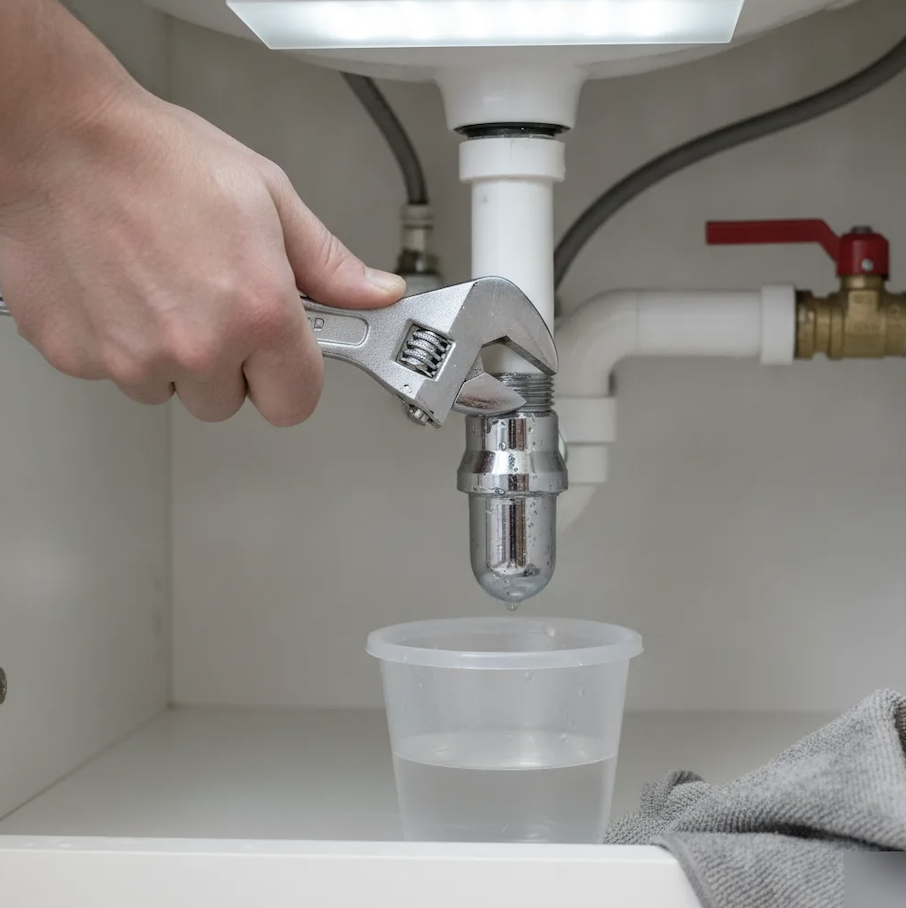
- Pipes hidden inside walls or under concrete slabs, so leaks show up as symptoms, not sights
- Hard water in Seminole County leaves mineral buildup inside pipes that slows leaks to a barely-noticeable drip
- Small leaks get absorbed by soil or insulation before they ever reach a visible surface
- Daily habits like running the dishwasher or shower mask sounds that would otherwise signal trouble
- Older homes built before the 1990s often have galvanized or cast iron pipes that corrode from the inside out, invisible until they fail
We got a call last year from a homeowner near Oviedo on the Park. Her water bill had crept up for three months straight. She figured it was just her teenagers taking longer showers. Turned out to be a slab leak under the kitchen. No puddle, no stain, nothing you'd catch walking through the house. Just a bill that kept climbing.
That's the pattern we see over and over. The house looks fine. The bill or the sound is the only clue. And most people don't realize this until the damage is already spreading under the flooring.
Summer storms in Central Florida make things worse too. Heavy rain pushes groundwater up around foundations, which can hide a slab leak's usual warning signs, like a damp spot outside, because the ground is already wet from the storm. If you want a full breakdown of what our team checks during a plumbing inspection, our plumbing services page walks through what's included.
Signs of a Hidden Water Leak by Where Your Pipes Run
Not every leak shows up the same way. Where the pipe runs changes what you'll notice first. A leak under your slab acts different than one behind a wall. Learning how to spot hidden plumbing problems in a house often comes down to knowing which clues match which location. We've walked into homes across Tuscawilla and Remington Park where the homeowner swore the leak was in one spot, but the water traveled and showed up somewhere else entirely.
Slab leaks are the sneaky ones. Most Oviedo homes sit on a concrete slab, and pipes run underneath it. When one starts leaking, you won't see water right away, you'll feel it through the floor first.
- Warm spots on the floor, even with the AC running (a sign of a leaking hot water line)
- A hissing sound near the floor when everything's turned off
- Your water meter still spinning after you've shut off every fixture
- Cracks forming in tile or baseboards that weren't there before
- Wet carpet or a musty smell in a room with no windows open
Wall leaks give off different signals. And they're often easier to catch early if you're paying attention. Look for peeling paint, bubbling wallpaper, or a soft spot when you press on drywall near a bathroom or kitchen wall. Sometimes you'll hear a faint dripping sound inside the wall at night when the house is quiet. That's not your imagination.
Ceiling leaks are usually the loudest warning. A brown stain spreading across drywall means water's been sitting there a while, this isn't a fresh problem.
Leaks under sinks or behind appliances tend to be quieter but just as costly. Check under your kitchen sink, behind the washing machine, and around the water heater base every few months. Look for warped cabinet wood, a faint sewage-like smell from the P-trap area, or mineral buildup around a fitting. Central Florida's hard water leaves crusty white deposits fast, so if you see that ring forming around a connection, it's already been dripping longer than you'd think.
So what do you do once you spot one of these signs? Don't guess and don't wait.
This is exactly the kind of thing our plumbing leak detection team gets called out for around Seminole County. We use tools that pinpoint the exact spot without tearing up your whole floor or wall, which saves you money and mess.
How to Check Your Water Meter and Water Bill for a Leak
Your water meter doesn't lie. It's one of the easiest tools you already own for catching a hidden leak, and most folks in Oviedo never think to look at it. We've walked into homes in Tuscawilla and Remington Park where the family had no idea a leak had been running for weeks, until we showed them the meter still spinning with every faucet off.
This works because your meter measures every drop that passes through your line. If nothing in your house is using water and the meter is still moving, something's leaking somewhere. Simple as that.
- Find your meter. In most Oviedo neighborhoods it sits near the curb or front yard in a small box marked WATER.
- Turn off every faucet, the ice maker, dishwasher, and irrigation system. Yes, even the sprinklers.
- Note the numbers on the dial, or snap a photo with your phone.
- Wait 20 to 30 minutes without using any water.
- Check the meter again. If the numbers moved, water is leaking somewhere in your system.
- Look for a small triangle or dial on the meter face. If it's spinning even slowly, that confirms a leak too.
And if the meter didn't move but you still smell trouble, don't rule it out yet. Slow leaks can hide for hours before showing up. So run the test again overnight for a longer window.
Your water bill tells the same story, just over a longer stretch of time. Pull your last three or four bills and compare the usage numbers, not just the dollar amount. A jump from 6,000 gallons to 9,000 gallons in a month with no change in habits is a red flag.
We see this mistake all the time: people assume a higher bill means the water company made an error. It happens, but it's rare. Most spikes trace back to a running toilet, a slab leak, or a cracked pipe under the yard.
Here's a real one. A homeowner near Oviedo on the Park called us after her bill jumped almost $80 in one cycle. No visible wet spots, no dripping faucets. Turned out to be a slab leak feeding water straight into the soil under her kitchen. The meter test caught it before the floor started buckling.
Hard water and Central Florida's shifting sandy soil put extra stress on aging pipes, which speeds up small cracks turning into big ones. If your meter test or bill comparison points to a leak but you can't find the source, that's the moment to stop guessing.
Frequently Asked Questions
How do I know if a hidden leak is something I can check myself or if I need a professional?
You can check the basics yourself, like reading your water meter or looking under sinks, but tracking down the exact spot of a slab or wall leak needs a professional. Homeowners in Tuscawilla and Remington Park often spend weeks chasing a sound or a warm spot before calling for help. Our plumbing leak detection team uses tools that find the leak without tearing up your floor. If your meter is still spinning after you've shut off every fixture, that's your signal to call.
What's the biggest mistake people make when trying to spot hidden plumbing problems?
The biggest mistake is waiting for a puddle or stain before taking a leak seriously. Most hidden leaks in Oviedo homes never show visible water at first, especially slab leaks under concrete foundations. People blame a rising water bill on teenagers or a leaky sprinkler instead of checking the meter. By the time a stain or warm floor spot appears, water has usually been soaking into the foundation for weeks. Checking early, before you see damage, saves you time and stress later.
Why do so many Oviedo homes have hidden plumbing problems from slab leaks?
Most homes in Oviedo, including Tuscawilla, Alafaya Woods, and Remington Park, sit on slab foundations, so water and drain lines run under solid concrete instead of an open crawlspace. This means you can't just look underneath to check a pipe like you could in a raised foundation home. A slab leak can drip for weeks before it shows up as a warm spot on the floor or a jump in your water bill. Homes built before the 1990s add another layer of risk, since older galvanized pipes corrode from the inside without warning.
Does Central Florida's hard water make hidden plumbing problems worse?
Yes, hard water in Seminole County builds up mineral deposits inside pipes that can slow a leak to a barely noticeable drip. This buildup hides the early warning signs you'd otherwise catch, like a steady hiss or a fast-growing wet spot. You may also notice crusty white rings forming around fittings under sinks or near the water heater. If you spot that buildup, it usually means the connection has been dripping longer than you'd think, so it's worth a closer look.
Can heavy Florida rain hide the signs of a hidden plumbing leak?
Yes, summer storms in Central Florida can mask a slab leak's usual warning signs, like damp ground near your foundation. Heavy rain pushes groundwater up around the house, so the soil already looks and feels wet whether or not you have a leak underneath. This makes it harder to spot trouble just by walking around outside after a storm. Checking your water meter after the rain clears is a more reliable way to catch a leak that heavy weather might be covering up.
Get a Free Quote!
Terms and Conditions
Request a Quote
Terms and Conditions
Request a Quote
Terms and Conditions