

Is DIY Plumbing Legal? What Homeowners Need To Know In 2026
Orlando's trusted plumber for fast, honest service you can count on.
Free Estimate
Is DIY plumbing legal? Legality depends on the type of work. In Florida, minor repairs like replacing a faucet or fixing a running toilet are generally allowed without a permit. But most major plumbing projects in Orlando — water heater replacements, sewer line repairs, new drain installations, and whole-house repiping — require a building permit and a licensed plumber. Florida's owner-builder exemption lets primary-residence homeowners pull their own permits, but the work must still pass inspection. Rental property owners cannot use this exemption. In the Winter Garden and greater Orlando area, local building departments actively enforce these rules. Unpermitted plumbing work can void homeowner's insurance, complicate a home sale, and result in costly corrections.
What Counts as DIY Plumbing vs. Licensed Plumbing Work?
DIY plumbing means a homeowner handles plumbing repairs or improvements themselves, without hiring a licensed plumber — but not all plumbing tasks fall into this category legally. The distinction matters because Florida law and local building codes draw a clear line between routine maintenance and work that affects the plumbing system itself.
Minor repairs — fixing a dripping faucet, replacing a showerhead, swapping a toilet flapper — are generally DIY-safe. These tasks don't alter existing pipe connections, don't open walls, and don't tie into supply or drain lines in a new way.
Licensed plumbing work covers anything that connects to the main supply line, the sewer system, or gas lines, or that requires opening walls and floors to access pipes. The Florida plumbing code, combined with local building department rules, sets this boundary.
What Is Considered Minor Plumbing Repair?
Minor plumbing repair covers tasks that restore a fixture to working order without changing how the plumbing system is configured. Low-risk work most homeowners can handle safely:
- Replacing a faucet cartridge or aerator
- Fixing a running toilet by replacing the flapper, fill valve, or flush handle
- Swapping a showerhead on an existing shower arm
- Tightening or replacing supply line connections under a sink
- Clearing a slow drain with a plunger or hand auger
- Replacing a visible, accessible shut-off valve under a sink or toilet
| Typically DIY-Allowed | Requires Licensed Plumber |
|---|---|
| Replacing a faucet (same connections) | Water heater installation or replacement |
| Fixing a running toilet (internal parts) | Sewer line repair or replacement |
| Swapping a showerhead | New drain installation |
| Replacing garbage disposal (same setup) | Whole-house repiping |
| Tightening supply line connections | Water main repair |
| Unclogging a drain with a plunger | Adding or relocating bathroom plumbing |
What Does Florida Law Say About Homeowner Plumbing Work?
Florida law allows homeowners to perform plumbing work on a residence they own and occupy, but the law comes with strict conditions that many homeowners miss — and missing them isn't a minor paperwork problem. Knowing those conditions before starting any project protects you from fines, failed inspections, and legal exposure.
Under Florida Statute § 489.103, an owner-builder exemption exists for homeowners who want to act as their own contractor. The exemption only applies to the homeowner's primary residence — not rental properties, investment properties, or homes being prepared for sale by someone who doesn't live there.
It also doesn't waive the permit requirement. The homeowner must still pull a permit and pass a post-installation inspection for any work that falls under the permitted-work category. Skipping that process doesn't become legal just because the homeowner did the work themselves.
Does the Owner-Builder Exemption Apply to Rental Properties?
No. Rental property owners and landlords in the Winter Garden and greater Orlando area cannot use the owner-builder exemption. Florida Statute 489.103 specifically limits the exemption to the homeowner's primary residence. A licensed plumber is required for any permitted plumbing work on a rental property, regardless of how minor the project may seem.
How Does Florida's Plumbing License Law Protect Homeowners?
Florida's plumbing licensing law exists because improperly installed plumbing causes water damage, mold growth, contaminated water supplies, and structural failures. A licensed plumber carries the education, field experience, and insurance that protect both the homeowner and the occupants of the home. When a licensed plumber pulls a permit and passes inspection, there's a documented record that the work was done correctly — and that record matters when filing an insurance claim or closing a sale.
Which Plumbing Projects Require a Permit in Florida in 2026?
In Florida, any plumbing project that involves new installations, system extensions, or changes to the existing supply or drain-waste-vent (DWV) system requires a building permit. Any change to the DWV system must be inspected.
Water heater replacements require a permit in the Orlando area, including Winter Garden, and must be inspected after installation. Many homeowners assume a simple swap-out doesn't trigger permit requirements. It does, every time.
Sewer line repairs, sewer camera inspections that lead to repair work, and underground drain installations all require permits and licensed contractor involvement. Septic system service and septic line jetting carry additional oversight from the county health department, beyond the standard building permit process.
Here are the eight most commonly misunderstood permit-required plumbing jobs in Florida, ordered from most to least frequently misunderstood by homeowners:
- Water heater replacement — Even a like-for-like swap requires a permit and inspection in most Florida jurisdictions.
- Sewer line repair or replacement — Any work on the underground line from house to street requires a licensed plumber and permit.
- Whole-house repiping — Replacing supply lines throughout a home is a major permitted project.
- New drain installation — Adding a drain where none existed requires a permit regardless of project size.
- Water main repair — Connections to municipal water systems require permits and licensed work.
- Adding or relocating bathroom plumbing — Moving a toilet, sink, or shower rough-in is always permitted work.
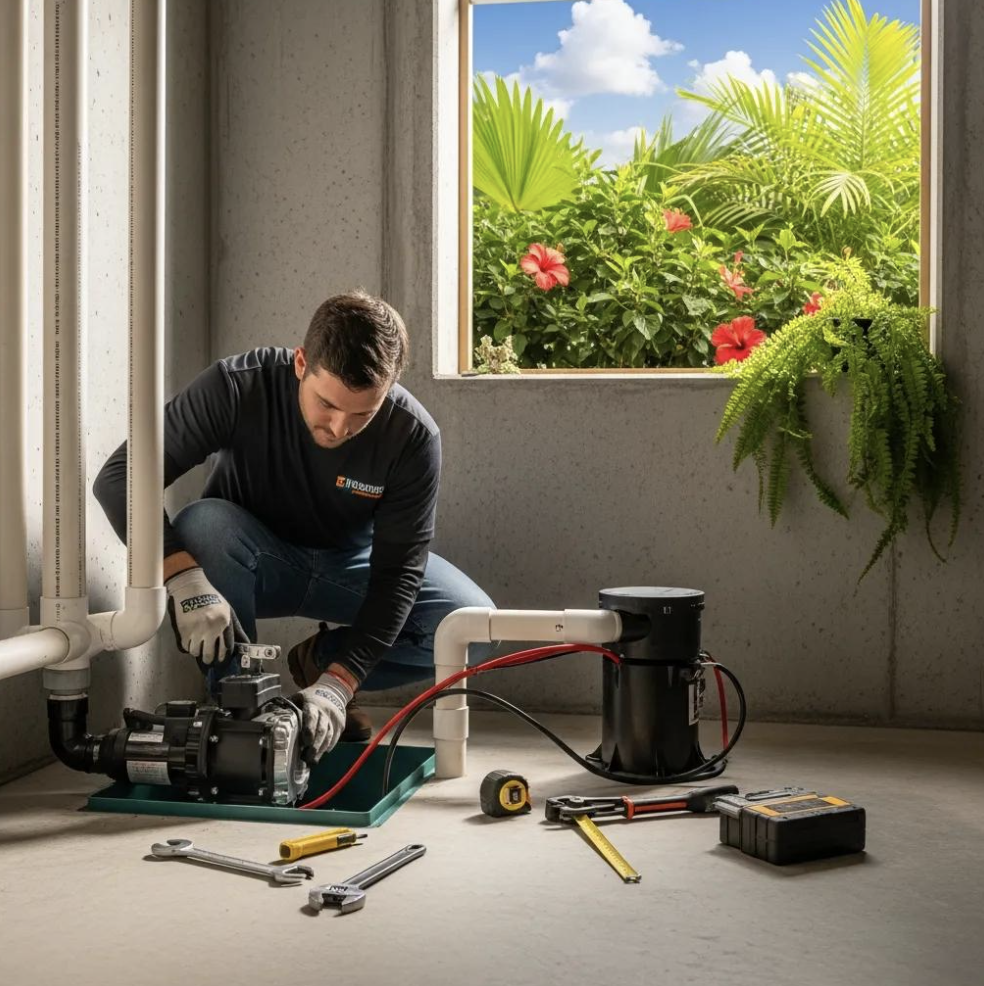
- Sump pump installation — Connecting a sump pump to the drainage system requires a permit.
- Water softener installation tied to the main line — Whole-house water softener hookups require a permit when they connect directly to the supply main.
What Happens If You Do Plumbing Work Without a Permit?
Doing unpermitted plumbing work in Florida can result in fines, forced removal of completed work, failed home sales, and voided homeowner's insurance claims. These consequences aren't theoretical — local building departments actively look for unpermitted work, especially during real estate transactions.
Local building departments can issue stop-work orders on active projects. For completed unpermitted work, an inspector may require the homeowner to open walls or floors so the work can be visually verified. The cost of that demolition and repair falls entirely on the homeowner.
Can Unpermitted Plumbing Affect a Home Sale in Florida?
Yes, and the impact can be significant. Home buyers and their inspectors increasingly flag unpermitted plumbing work during the due diligence period. Unpermitted work can kill a real estate deal outright or force the seller to hire a licensed plumber to correct the work, pull a retroactive permit, and pass inspection — all before closing.
Homeowner's insurance may deny a water damage claim if the source of the damage is traced to unpermitted plumbing work. In the Winter Garden and greater Orlando area, sandy soil conditions mean improperly installed underground plumbing can shift, crack, and fail. Insurance won't cover damage from work that was never inspected.
The cost of correcting unpermitted work almost always exceeds the original permit fee and licensed labor cost that were avoided. Paying for the permit and a licensed plumber upfront is consistently the more affordable path.
Can a Homeowner Pull Their Own Plumbing Permit in Florida?
Yes, a Florida homeowner can pull their own plumbing permit for their primary residence using the owner-builder exemption, but the process requires meeting specific requirements set by the local building department. Simply deciding to do the work yourself isn't enough.
The homeowner must typically appear in person at the local building department, sign an affidavit stating they will personally perform the work, and acknowledge they cannot sell the home for one year following permit issuance without disclosing the owner-builder status to any buyer.
In Winter Garden, permits are processed through the City of Winter Garden Building Division. Homeowners should confirm current requirements directly with that office, because codes and fee schedules are updated regularly and the requirements in 2026 may differ from what older sources describe.
The permit doesn't replace the inspection requirement. All permitted work must be inspected and approved before walls are closed or systems are put into service. Installing a water heater, closing the wall panel, and then scheduling an inspection won't pass — the inspector needs to see the work before it's concealed.
Many homeowners who pull their own permits still hire a licensed plumber to do the actual installation. Using the owner-builder permit while hiring a professional for the labor is both legal and common. You can verify that any plumber you hire holds a valid Florida license at the Florida DBPR plumbing license lookup page — the Department of Business and Professional Regulation maintains an up-to-date searchable database.
What Plumbing Tasks Can Homeowners Legally Do Themselves?
Homeowners can legally handle a range of low-risk plumbing tasks without a permit, as long as those tasks don't alter the existing plumbing system or connect to supply and drain lines in a new way. The key test is whether the work changes the configuration of the plumbing. If it does, a permit is likely required.
Replacing a faucet with a like-for-like fixture — same connection points, no pipe relocation — is typically permit-free DIY work. Swapping a toilet using existing rough-in connections, fixing a running toilet with internal replacement parts, and replacing a garbage disposal on an existing wiring and drain setup are all commonly allowed without a permit.
Unclogging a drain using a plunger or hand auger is maintenance, not a plumbing alteration. No permit is needed for drain clearing that doesn't involve cutting into pipes or replacing drain sections.
Five permit-free DIY plumbing tasks most Florida homeowners can handle safely:
- Replacing a faucet or faucet cartridge at existing connection points
- Fixing a running toilet by replacing the flapper, fill valve, or flush handle
- Swapping a showerhead on an existing shower arm
- Replacing a garbage disposal on an existing drain and wiring setup
- Tightening or replacing supply line hoses under a sink or toilet
When Does a Simple Repair Become a Permitted Project?
Scope creep is where DIY projects cross the line — and it happens faster than most people expect. Replacing a faucet is permit-free, but if the supply lines behind the wall are corroded and need to be cut and reconfigured, that work requires a permit. Replacing a toilet is permit-free, but if the floor flange is broken at the drain line level and requires cutting into the drain pipe, the job has moved into licensed-work territory. When a repair reveals a deeper problem, stopping and calling a licensed plumber is the right call.
When Should You Call a Licensed Plumber Instead of DIYing It?
Call a licensed plumber any time the job involves the main supply line, sewer or drain system, water heater, or anything behind a wall. Those projects carry real risk of water damage, code violations, and safety hazards. The permit requirement alone signals that the work has consequences if done incorrectly.
A sudden drop in water pressure, discolored water, or a wet spot on the ceiling or floor with no obvious source — those signs point to a leak that needs professional leak detection. Trying to locate and patch a hidden leak without the right detection equipment often causes more damage than the leak itself.
Burst pipes, sewer backups, and water heater failures are emergencies. Don't attempt DIY repairs on active failures. A sewer backup requires identifying the blockage location — often using a sewer camera inspection — before any repair work begins. Guessing at the location wastes time and can worsen the damage significantly.
Mid-century homes in communities near Winter Garden, including Orlovista, may have galvanized steel or cast iron pipes. Both materials require professional assessment before any repair attempt, because galvanized steel corrodes from the inside and cast iron can behave unpredictably when disturbed.
Florida's warm, humid climate accelerates corrosion and places ongoing stress on pipe connections. A minor drip at a fitting can indicate systemic pipe deterioration that a licensed plumber needs to evaluate.
Homeowners planning bathroom additions or kitchen remodels especially benefit from professional rough-in work. An incorrectly placed drain or supply stub-out adds significant cost to fix after tile and drywall are already installed — exactly the kind of mistake that a licensed plumber in Winter Garden catches before it becomes an expensive tear-out.
How Winter Garden's Local Conditions Change the DIY Plumbing Equation
Winter Garden's sandy soil, aging housing stock, and Florida's strict building code enforcement make DIY plumbing riskier here than in many other parts of the country. These factors reflect conditions our team encounters regularly in this area.
Orlando-area sandy soil saturates quickly and shifts around underground pipes. Improperly installed or repaired underground plumbing in this soil type can move, crack, or separate faster than the same installation would in areas with denser clay or loam soil. A drain connection that holds in drier soil may fail within a season here.
Homes in and around Winter Garden's historic district and nearby communities like Orlovista may have galvanized steel or cast iron plumbing. Both materials react unpredictably when disturbed. Galvanized steel that's been corroding for years can become brittle at joints, turning a simple repair into a full-section replacement.
Does Florida's Climate Make DIY Plumbing Mistakes Worse?
Yes. Florida's warm, humid climate means even small plumbing errors — a slightly loose compression fitting, an improperly sealed drain connection — can produce hidden moisture that leads to mold growth behind walls. Local building departments in the Winter Garden and Orange County area actively enforce permit requirements. Unpermitted work in an active renovation area is more likely to be flagged by a neighbor's permit pull, a real estate transaction, or a routine inspection of an adjacent property.
Same-day licensed plumbing service is available in the Winter Garden area. Working with a licensed plumber upfront avoids the additional expense of permit corrections and re-inspection fees that unpermitted work can require.
The Bottom Line
DIY plumbing in Florida is legal for minor, like-for-like repairs at your primary residence — but most projects beyond basic fixture swaps require a permit, an inspection, or a licensed plumber. Skipping permits in Winter Garden's sandy-soil, aging-pipe environment creates real risk: failed inspections, insurance gaps, and correction work that costs far more than the original job. The owner-builder exemption exists and can be useful, but it comes with conditions — and rental property owners can't use it at all. When the job goes beyond a straightforward fixture swap, working with a licensed plumber in Winter Garden is the reliable path to work that passes inspection and holds up over time.
Get a Free Quote!
Terms and Conditions
Request a Quote
Terms and Conditions
Request a Quote
Terms and Conditions