

Plumber Hourly Rates in 2026: How Much Do Plumbers Charge Per Hour?
Orlando's trusted plumber for fast, honest service you can count on.
Free Estimate
Plumber hourly rates in 2026 typically range from $75 to $200 per hour for most residential work, depending on the plumber's experience level, the type of job, and your location. Understanding Orlando plumber hourly rates in 2026 starts with knowing that labor is just one part of the total cost — parts, permit fees, and service call charges are usually billed separately. In Florida markets like Winter Garden, standard residential calls commonly fall somewhere within that broader national range. Emergency or after-hours work typically costs more than standard daytime rates, often significantly so. The final bill also depends on whether the plumber charges a flat service fee on top of the hourly rate. The clearest way to avoid billing surprises is to get a written, itemized estimate before any work begins and to ask the right questions about what is and is not included.
What Do Plumbers Charge Per Hour in 2026?
Most licensed plumbers charge between $75 and $200 per hour in 2026 for residential work. According to Bureau of Labor Statistics plumber wage data, median plumber wages have risen steadily in recent years, and those increases show up directly in the hourly rates homeowners pay. These figures reflect labor only. Parts, permits, and disposal fees are billed separately in most cases — and that distinction matters a lot when you're comparing quotes.
Entry-level or apprentice-supervised work sits at the lower end of the range. Journeyman plumbers with several years of field experience typically bill at mid-range rates. Master plumbers handling specialty work — gas line repair, slab leak detection, or permitted sewer line replacement — often reach the higher end or above.
| License Level | Typical Hourly Rate (2026) |
|---|---|
| Apprentice (supervised) | Lower end of range |
| Journeyman Plumber | Mid-range |
| Master Plumber | Higher end of range |
How Does Plumber Experience Level Affect the Hourly Rate?
A master plumber earns a higher rate through additional licensing, advanced training, and legal accountability for permitted work. In Florida, only a licensed master or certified plumbing contractor can pull permits for regulated jobs. That means the higher rate carries real legal weight, not just seniority.
Apprentices work under direct supervision, and their lower rate doesn't mean lower quality on straightforward tasks. The key is matching the license level to the job complexity. A toilet swap or faucet installation doesn't require a master plumber. A sewer line repair or water heater installation subject to permit does.
What Affects a Plumber's Hourly Rate?
Six main factors push a plumber's hourly rate up or down: location, license level, job type, time of day, access difficulty, and local demand. Each one can move the final cost meaningfully — and a couple of them tend to catch homeowners off guard.
Location matters. Metro areas and higher cost-of-living markets tend to see rates above the national average, and Florida's Orlando corridor, including Winter Garden, is generally consistent with or slightly above national averages for residential plumbing labor. License level follows from there: master plumbers and specialty contractors bill at a higher rate than journeymen or apprentice-supervised crews. Job type matters too, since a faucet swap is far simpler than rerouting supply lines through a concrete slab. Greater complexity means more time, which raises the total cost even at the same hourly rate.
Time of day is straightforward: daytime weekday rates are the baseline, while evenings, weekends, and holidays cost more. Access difficulty adds labor time in ways homeowners often don't anticipate. Tight crawl spaces, second-story installations, and buried pipes all take longer to work around. Sandy, frequently saturated soil common across the Winter Garden and broader Orlando area can slow underground excavation and increase the cost of water main repair or sewer line work. Local demand shifts after storm events or during high-volume seasons, when plumber availability tightens, scheduling windows shrink, and rates can move upward temporarily.
Does the Local Soil or Climate Change What a Plumber Charges?
Yes — ground conditions that slow digging or increase pipe-movement risk add legitimate labor time to underground jobs. Winter Garden's sandy, frequently saturated soil means underground work often takes longer than the same job in drier or harder-ground markets. The ground shifts more, excavation takes more care, and backfilling requires extra attention to avoid settling around new pipe runs.
Florida's warm, humid climate adds a separate layer of complexity. Temperature differentials stress water heater components more in humid conditions than in dry climates. Pipe joints in older homes — particularly in mid-century construction near communities like Orlovista — are more prone to stress from humidity fluctuations than in newer builds. Both conditions are legitimate reasons why a quoted job can run longer than a homeowner expects.
How Much More Does an Emergency Plumber Cost Per Hour?
Emergency plumbing calls typically cost more than standard daytime rates, often substantially more, depending on the time of call and the company's after-hours policy. Most plumbers define "emergency" as any call outside normal business hours. Evenings, weekends, and holidays all qualify.
Some companies also charge a flat emergency dispatch fee on top of the elevated hourly rate. That fee covers the cost of mobilizing a technician outside of a scheduled route. Ask about it when you call so the total cost is clear before anyone shows up — not after.
A burst pipe, overflowing toilet, or water heater failure at midnight is a genuine emergency. Waiting until morning to save the premium rate can result in thousands of dollars in water damage, drywall replacement, flooring repair, and mold remediation — costs that dwarf the after-hours surcharge. Knowing that same-day and evening plumbing response is available in the Winter Garden area means homeowners don't have to guess whether help is accessible when something goes wrong after hours.
Is It Worth Paying the Emergency Plumber Rate?
In most cases, yes. Water damage from a delayed repair almost always costs more than the after-hours premium. A burst pipe left unaddressed overnight can saturate walls, subfloor, and insulation in ways that are expensive to dry out and restore. The emergency rate looks a lot different when the alternative is a flooded living room.
The calculation shifts for minor inconveniences. A slow-draining bathroom sink, a dripping faucet, or a running toilet can almost always wait until the next business day without causing additional damage. Save the emergency premium for true emergencies. That's the smarter financial call.
Do Plumbers Charge a Flat Rate or Hourly — and Which Costs Less?
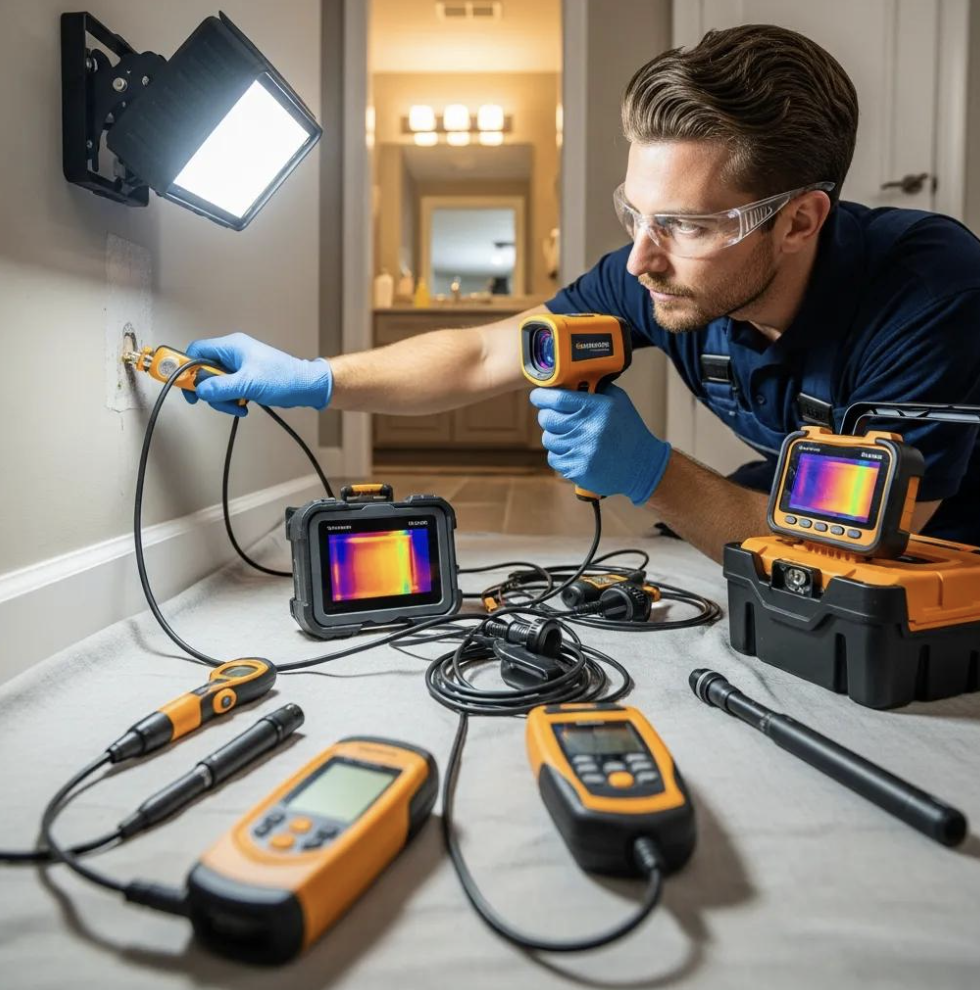
Plumbers use both pricing models — flat rate (a fixed price per job) and hourly (time plus materials) — and which one costs less depends entirely on the job at hand. Neither model is universally better for the homeowner. It really comes down to how predictable the job is before anyone touches a wrench.
Flat-rate pricing works well for predictable jobs where labor time is consistent from one house to the next. Toilet installation, garbage disposal repair, faucet installation, and water heater replacement are all good flat-rate candidates. You know the total cost before work starts, regardless of how long the job takes. Hourly pricing is common for diagnostic work, plumbing leak detection, sewer camera inspection, or complex repairs where the full scope isn't visible until the plumber opens a wall or runs a camera. If the plumber finishes quickly, hourly can cost less. If surprises add time, the total can climb.
On a flat-rate job, you pay a known number upfront — useful for budgeting, though if the job turns out to be simple and fast, you may pay more than an hourly rate would have cost. On an hourly job, you pay only for actual time spent, which is standard for diagnostic and exploratory work, but the total stays uncertain until the work is done.
What Is a Plumbing Service Call Fee?
A service call fee, also called a trip charge, is a fixed amount charged just for the plumber to arrive and assess the problem. It covers drive time and the diagnostic visit itself. The specific amount varies by company and market.
The service call fee may or may not be credited toward the total repair cost if you proceed with the work. Ask about this specifically before booking. A plumber who answers that question clearly and without hesitation is one worth working with.
How Much Does a Plumber Cost in Florida in 2026?
Florida plumbers generally charge rates consistent with or slightly above the national average for residential plumbing labor in 2026. Orlando-area markets, including Winter Garden, Windermere, Horizon West, and Ocoee, fall within the broader national range for most residential calls.
Florida's permit requirements add cost to certain jobs that homeowners sometimes don't anticipate. Water heater installations, sewer line repairs, and other major plumbing work must be permitted and inspected by the local building department. That permit cost is separate from the hourly rate and shows up as a pass-through line item on the invoice. Permits are a legal requirement, not an optional expense a plumber is tacking on.
Aging housing stock in parts of the service area creates an additional cost variable. Mid-century homes near Orlovista and older sections of Winter Garden may contain galvanized steel or cast iron pipe — both materials corrode over time and can complicate repair work. A plumber may open a wall expecting a simple fix and find pipe that needs replacement, adding legitimate labor time at the same hourly rate.
Are Plumber Rates Different in Newer Neighborhoods Like Horizon West?
The hourly rate is generally the same across a plumber's service area. What changes is how long the job takes. Newer construction in Horizon West typically uses modern supply line materials, accessible clean-outs, and fittings that haven't had decades to corrode. Simpler access means fewer hours.
Older homes in Winter Garden's historic district or nearby communities may require more diagnostic time before a repair can even begin. Same hourly rate, longer job, higher total invoice. That's why the age of the home matters when estimating plumbing costs.
What Is Included in a Plumber's Hourly Rate?
A plumber's hourly rate covers labor time on the job. It doesn't automatically include parts, materials, permit fees, or disposal of old equipment — and knowing exactly what the hourly rate covers prevents the most common billing surprises homeowners run into.
Labor time typically starts when the plumber arrives at your home and ends when the work is complete. Travel time is usually not billed separately, but confirm this when booking, because some companies do bill for drive time on jobs outside their primary service zone.
Five line items to look for on any plumbing estimate: labor (hourly rate or flat fee, clearly stated), parts and materials (priced at cost or with markup — ask which), permit fees (required for water heater installation, sewer repair, and other regulated work), the service call or trip charge (the arrival and assessment fee), and disposal fees for old water heaters, fixtures, or pipe materials removed during the job.
Some plumbers mark up parts above wholesale; others charge parts at cost. Both practices are standard in the trade. What matters is knowing which model applies to your job before work begins. A plumber who walks through each of these line items before starting — and puts the breakdown in writing — is giving you a straight pricing approach that protects both sides when the invoice arrives.
How to Read a Plumbing Estimate Before You Agree
A clear plumbing estimate lists the labor rate or flat fee, parts cost, permit fees, and any trip or diagnostic charge as separate line items, before work begins. If the estimate is verbal only, ask for it in writing. A text message or emailed breakdown is sufficient and protects both you and the plumber if a dispute comes up later.
Check whether the hourly rate is capped or open-ended. An open-ended hourly job on a complex repair — like sewer line inspection followed by sewer line repair — can run higher than the initial estimate if the camera reveals unexpected damage. Ask specifically: "Is this price all-in, or could it change?" A professional answers that question directly. One who gets evasive is telling you something.
Compare multiple estimates on a like-for-like basis. One quote may exclude parts that another includes, making the lower number misleading at first glance. Make sure each estimate accounts for the same scope of work before you treat price as the deciding factor.
Watch for these red flags: no license number listed anywhere on the paperwork, no itemized breakdown and just a single lump-sum number, pressure to decide immediately without time to review the estimate, or verbal-only pricing with no written follow-up offered.
What Questions Should You Ask a Plumber Before Hiring?
Ask for their license number first, then verify it's current using Florida's state contractor license lookup tool at myfloridalicense.com. A licensed plumber hands over that number without hesitation.
Six questions to ask before signing any plumbing estimate:
- What is your license number, and are you licensed for this type of work?
- Will you pull the required permits for this job?
- How do you handle unexpected scope changes — do you stop and notify me before proceeding?
- Does the service call fee apply toward the repair cost?
- Are parts billed at cost or with a markup?
- Is your estimate a fixed price, or is it subject to change?
A plumber who answers all six clearly and without irritation has nothing to hide on the invoice.
When Does a Flat Rate Make More Sense Than an Hourly Rate?
A flat rate makes more sense when the job scope is fully defined before work starts. Toilet installation, water heater replacement, faucet installation, and garbage disposal repair are all good flat-rate candidates because an experienced plumber knows how long each one takes.
Hourly billing suits jobs where the full scope is unknown until the plumber opens the wall, runs a sewer camera, or starts digging. Plumbing leak detection, sewer line inspection, and drain jetting for an undiagnosed blockage are examples where hourly billing reflects the reality of diagnostic work. It's an honest model for uncertain jobs — you pay for what the job actually takes, not a plumber's best guess upfront.
As a homeowner, you carry less financial risk with flat-rate pricing on defined jobs. If the plumber takes longer than expected, your cost doesn't change. Landlords and property managers handling multiple rental units often prefer flat-rate agreements for common repairs — toilet repairs, faucet swaps, garbage disposal replacements — because consistent pricing makes annual maintenance budgets predictable.
If a job starts as hourly and expands in scope, ask the plumber to pause and provide a revised estimate before proceeding. A professional stops, explains what the camera or open wall revealed, and gives you a new number before continuing. That moment is the clearest test of whether transparent pricing is actually part of how a company operates, or just something they say in their marketing.
What This Means for Your Next Plumbing Call
Plumber hourly rates in 2026 range from $75 to $200 for most residential work, with Florida markets like Winter Garden falling within that national range for standard calls. The final cost depends on license level, job complexity, time of day, access difficulty, and whether permits are required — not just the hourly rate printed on a business card.
Reading an estimate line by line and asking specific questions before work starts is the most reliable way to avoid billing surprises. If you're ready to get a straight, itemized quote from a licensed plumber in Winter Garden, Brightwater Plumbing of Orlando is family-owned, locally operated, and answers the phone, including evenings and weekends.
Get a Free Quote!
Terms and Conditions
Request a Quote
Terms and Conditions
Request a Quote
Terms and Conditions