


Plumber Near Johns Lake Conservation Area in Winter Garden Winter Garden's trusted plumber for fast, honest service you can count on.

How Lakefront and Wooded Lots Affect Plumbing
Homes near Johns Lake Conservation Area tend to sit on larger, wooded lots running on well water and septic rather than city hookups, which is a different setup than you'll find in newer Winter Garden subdivisions. Mature tree roots, heavier outdoor water use, and aging infrastructure keep local plumbers busy with well pressure tanks, septic line checks, and outdoor fixture repairs in this part of town. Homeowners here trust a local Orlando plumber.
The area around Johns Lake Conservation Area doesn't look or function like much of newer Winter Garden. Rather than tightly packed subdivisions with matching lot sizes, properties here tend to be bigger and heavily wooded, often set back from the road under mature oak canopies with undeveloped buffer zones near the water. That layout changes everything from how water reaches a home to how wastewater gets handled, since a good number of these parcels sit entirely outside city sewer and water lines.
Well water is still common in this pocket of Winter Garden, especially on older or larger lots that were established before city utilities ever reached this far out. Homes on wells depend on pressure tanks and pumps to keep water flowing steadily, and those components tend to wear faster in areas with iron-heavy or mineral-dense groundwater, which is typical near the lake. When pressure drops, water looks off-color, or fixtures start sputtering, it's usually a tank or pump problem rather than anything citywide.
Septic systems show up more often here too, compared to newer developments closer to downtown Winter Garden. They need a different kind of upkeep than a sewer connection, and homeowners generally benefit from periodic inspections that catch slow drains, soggy yard patches, or backups before they turn into costly repairs. Because so many of these lots are wooded and shaded, drain fields can take longer to dry out after heavy rain, which sometimes hides the early warning signs.
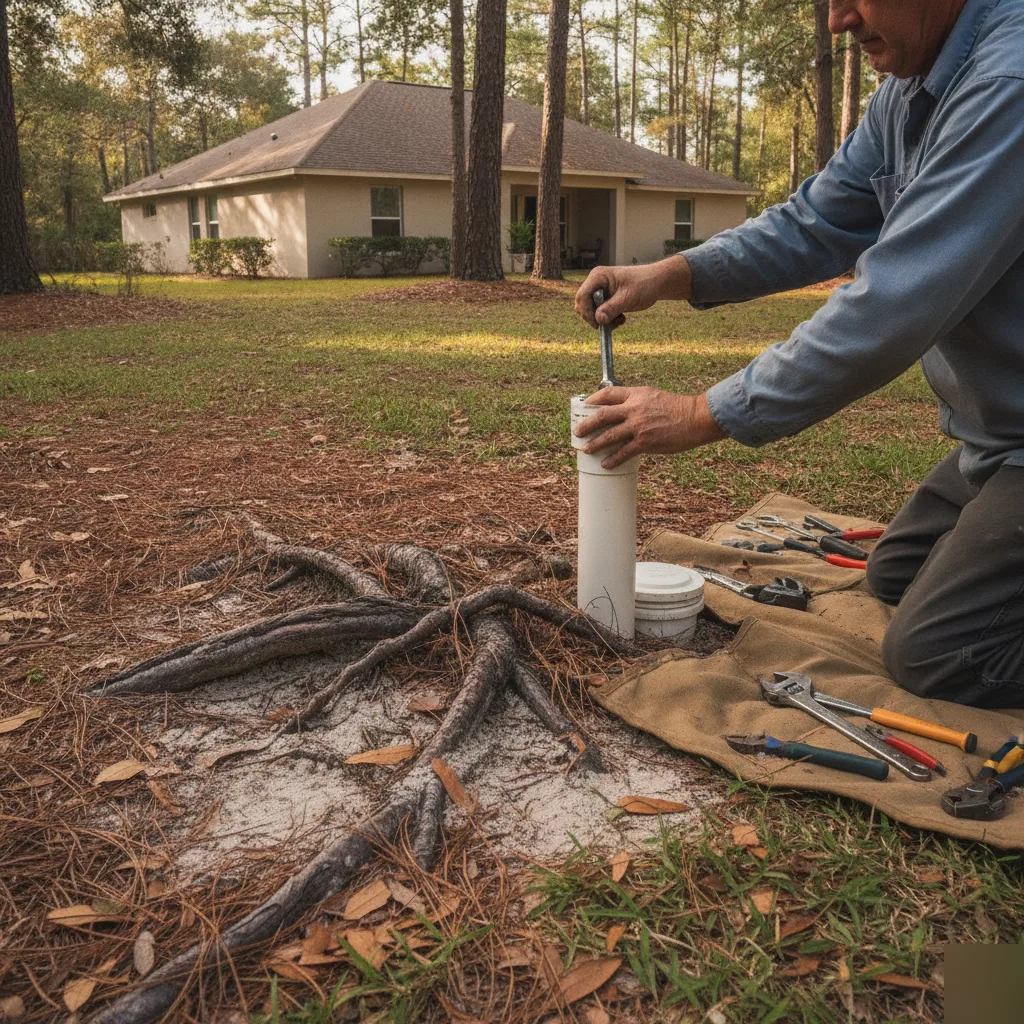
Mature trees near the conservation area bring their own set of plumbing headaches. Root systems from decades-old oaks and other hardwoods can work their way into older sewer and septic lines, particularly clay or aging PVC pipe that's developed small cracks over the years. This usually shows up as recurring clogs, gurgling drains, or slow backups isolated to one part of the home, and a camera inspection is typically the only way to pinpoint exactly where the roots got in.
Outdoor water use runs heavier in this area as well, since bigger lots mean more lawn, garden beds, and landscaping near the lake. Spigots, hose bibs, and irrigation lines get used constantly throughout the year, which makes them more prone to leaks, freeze damage, or worn fittings than what you'd see in smaller yards elsewhere in Winter Garden.
- Well pressure tank repair and replacement for homes without city water access
- Septic line inspections and drain field checks to catch early warning signs
- Root intrusion diagnosis using camera equipment on older sewer lines
- Outdoor spigot, hose bib, and irrigation line repair for heavily used yards
- Water quality troubleshooting for well systems near the lake
Brightwater Plumbing is a Full-Service Winter Garden Plumbing Company
Every home in Winter Garden deserves reliable plumbing you can count on. Whether it's a property near Johns Lake Conservation Area or an established home closer to downtown Winter Garden, aging pipes, hard water mineral deposits, and the shifting soils common throughout Orange County can quietly worsen into serious problems without the right attention. Our licensed plumbers at Brightwater Plumbing are here to provide expert solutions that keep your system performing at its best.
Plumbing Services in Winter Garden, FL


Sewer and Drain

How Our Team Reaches the Johns Lake Conservation Area
Our shop sits at 751 Business Park Blvd Suite 101, tucked inside one of Winter Garden's established commercial corridors just off the main business park loop. From there, our trucks head south and west toward the arterial roads leading to the Johns Lake Conservation Area. The route usually runs along Daniels Road before cutting over to Tildenville School Road, which feeds directly into the quieter, tree-lined streets bordering the conservation land. Since our location sits inside the business park zone rather than out near the lake, we sidestep the congestion that builds up around Plant Street and the downtown historic district during peak hours.
That positioning matters more than it might seem at first glance. Plumbing emergencies don't wait for convenient traffic, and a shop based closer to the lake but stuck behind school zones or festival crowds downtown could easily lose fifteen or twenty minutes on a single call. Our business park location gives us a clear shot toward the conservation area corridor most hours of the day, which keeps drive times short and predictable for homes and small farms scattered along that stretch.
Once we turn off the main roads and get closer to the conservation area itself, the driving changes character. Properties out here sit on larger lots, and quite a few are reached by long driveways, gravel lanes, or gated entries that don't always show up cleanly on GPS. Our technicians have logged enough runs through this part of Winter Garden to know what to watch for: unmarked turnoffs, low-hanging tree limbs on older driveways, and the occasional soft shoulder after heavy rain near the wetland edges. That familiarity saves time that would otherwise be spent circling a property looking for the right way in.
- Direct route from the business park zone avoids downtown Winter Garden congestion
- Techs recognize common gravel and dirt driveway patterns near the conservation area
- Gated properties are handled smoothly since crews carry contact protocols for call-ahead access
- Lower housing density means street parking or driveway parking is rarely an issue
- Trucks are stocked before dispatch so a single trip covers most repair scenarios without a return visit
Parking near the conservation area is one less thing to worry about compared to the denser neighborhoods closer to the lake's northern shoreline. With homes spaced farther apart, our crews can usually pull a service truck right up to a garage or side entrance without blocking a street or squeezing into a narrow driveway. For larger properties with agricultural outbuildings or detached guest structures, we just ask for a quick heads-up on gate codes or preferred entry points when the appointment gets booked, which keeps the whole visit moving smoothly from arrival to repair.
Ready to Get Started?
Homes Near Johns Lake Conservation Area: Wells, Septic, and Older Construction
Drive down toward Johns Lake Conservation Area and the houses start looking different from the newer builds closer to town. A lot of these homes sit on bigger lots, some backing right up to the tree line where the conservation land begins. That setting is part of why people love living out here, but it also means the plumbing underneath these houses tells a different story than a subdivision built five years ago.
Older construction near the conservation area often means original galvanized or early copper pipe is still doing the work. Pipes that age don't fail all at once, they fail slow. A pinhole leak behind a wall. A toilet that runs a little longer than it used to. We've replaced enough old shutoff valves along this stretch of Winter Garden to know the pattern by heart.
Well water and septic systems show up more around Johns Lake Conservation Area than they do closer to downtown Winter Garden, and that changes what we look for. Well water tends to run hard out here, and hard water builds scale inside water heaters and fixtures faster than city water does. Septic systems need drain lines free of roots, which is a real concern given how many mature trees shade these properties.
We had a call last year from a house just off the road leading toward the conservation area, where the homeowner noticed her water heater was working harder for less hot water. Turned out years of hard well water had scaled up the tank. That's common out here, not the exception.
- Older galvanized or early copper supply lines that wear out from the inside
- Private wells feeding hard water into fixtures and water heaters
- Septic systems paired with tree roots that work their way into drain lines
- Original toilets and faucets that are decades past their expected life
- Slab foundations where a slow leak can go unnoticed until the water bill jumps
Rainy season adds another layer near the conservation area. Heavy afternoon storms push groundwater up, and homes with older drain lines or a septic system already under stress can back up fast. We handle sewer line repair and drain jetting for exactly this kind of situation, clearing root intrusion before it turns into a backed-up yard.
So if your water heater is straining, your toilet keeps running, or your drains are slowing down, that's usually the house telling you it's due. We install and repair water heaters, handle toilet repair and installation, and take care of drain jetting for homes right around Johns Lake Conservation Area, exactly the kind of work these older lots tend to call for. Well owners can also review broader water conservation coverage.
Google Reviews
44 Reviews | 5.0 Avg Rating
Request a Quote
Terms and Conditions