

Should You Call a Plumber to Replace a Faucet?
Should you call a plumber to replace a faucet? Most of the time, yes, especially if your home is more than 15 years old.
Free Estimate
Faucet Replacement Sounds Simple-Here's Why It Isn't Always
Swapping a faucet looks easy in a video, but Orlando homes often hide old shutoff valves, corroded supply lines, and hard water buildup that can turn a quick job into a real headache. Should you call a plumber to replace a faucet? Most of the time, yes, especially if your home is more than 15 years old. A pro can catch hidden problems before they become a leak under your cabinet. Our Oviedo plumbing pros handle both.
Every faucet box makes the job look like four easy steps: turn off the water, disconnect the old one, drop in the new one, done. On paper, that's true. But after being under enough Orlando sinks, we've learned the box never mentions what's actually waiting down there.
Here's what tends to happen in real life. You reach under the sink, turn the shutoff valve, and it snaps off in your hand. That valve hasn't moved in ten years, and now water is spraying with no way to stop it except the main. This is one of the most common calls we get, and it's rarely the homeowner's fault.
Central Florida water doesn't help matters. Hard water leaves mineral scale on fittings and supply lines, making everything stiff and brittle. A nut that should turn easily with a wrench instead cracks the pipe behind it. We see this mistake often: someone starts a simple faucet swap, hits a stuck fitting, and pushes just a little too hard.
- Corroded shutoff valves that seize up or break when turned
- Mineral buildup from hard water fusing supply lines to the faucet body
- Mismatched connections between old plumbing and new faucet fittings
- Soft or water-damaged wood under the sink that hides bigger issues
- Improper sealing that leads to slow leaks weeks after installation
Older neighborhoods around Orlando often have galvanized or aging supply lines that don't cooperate well with newer faucet hardware. Homes built in the last decade usually have PEX or updated fittings, which makes the job go much smoother. The age of your plumbing matters more than the age of your faucet.
A cracked supply line under pressure can dump gallons of water in minutes.
That's the real risk with faucet replacement. It's not the faucet itself, it's everything connected to it. A plumber checks the shutoff valve, the supply lines, and the drain assembly before ever touching the new fixture. That extra ten minutes of inspection is usually what separates a clean install from a Saturday night emergency call.
The Real Risk Factor: Your Shutoff Valve and Supply Lines
Here's the part nobody warns you about. The faucet itself is the easy piece. The shutoff valve under your sink is where things go sideways.
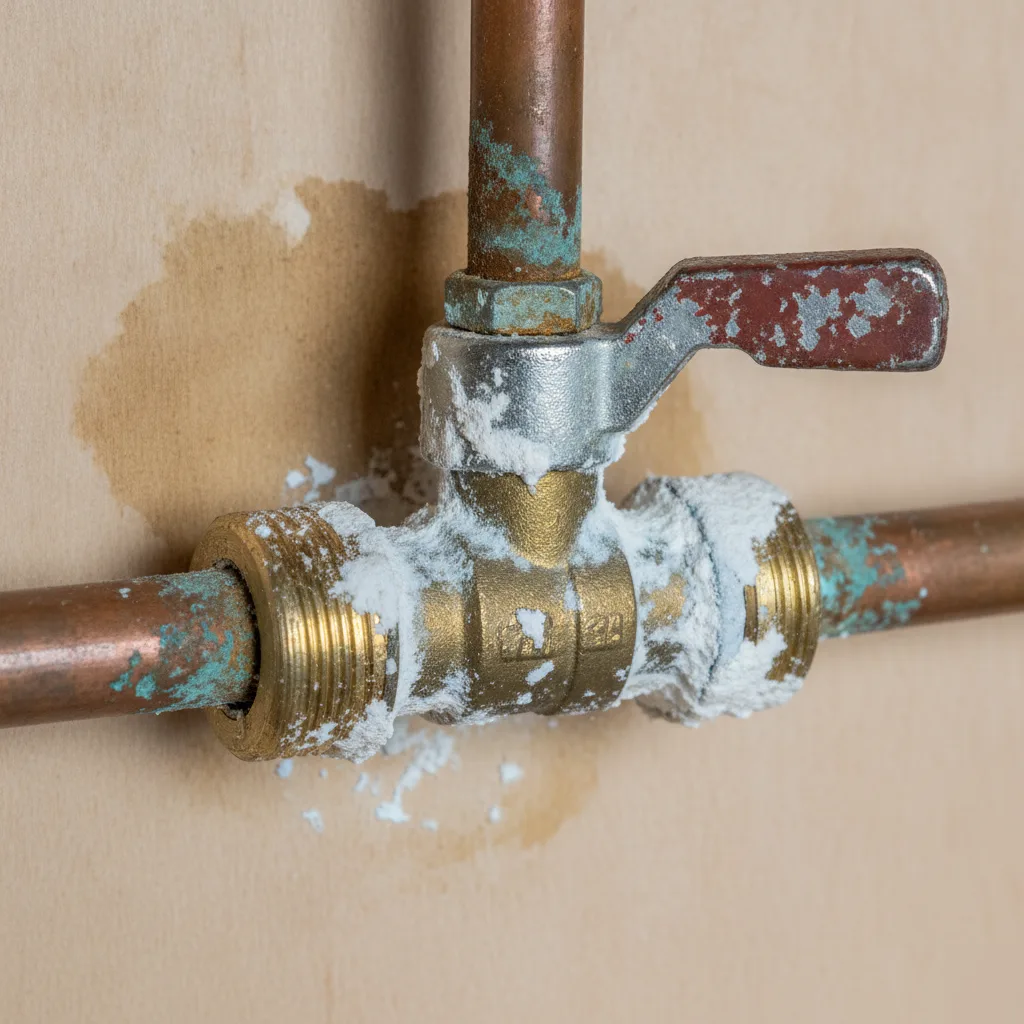
Most Orlando homes have valves that haven't been touched in ten or fifteen years. They sit there quietly until the day you finally need them to work, and that's exactly when they don't. Hard water minerals build up inside the valve over time, and corrosion gathers around the stem. We've turned plenty of these valves for customers, only to have them snap right off in our hand.
Picture this: you shut off what you think is the water, pull the old faucet, and water keeps coming anyway. Now you've got a spraying supply line and a cabinet full of cleaning products floating in an inch of water. This isn't a rare story. It happens more than you'd think.
- Valve handle feels stiff or won't turn at all
- Valve turns but water still trickles through afterward
- Supply lines feel brittle, cracked, or discolored
- Visible rust or green corrosion around the valve body
- Old valve is the compression type, not a modern quarter-turn ball valve
If you notice any of those signs, stop right there. A stuck valve isn't just annoying, it means the whole shutoff system for that sink may need replacing before a new faucet even goes in. That's a bigger job than most homeowners plan for, and not one you want to discover mid-install with your kitchen floor already wet.
Supply lines matter too. The braided steel lines under your sink have a lifespan. Once they start to bulge, discolor, or feel stiff instead of flexible, they're near the end. Reusing an old line with a new faucet is a gamble we don't recommend, even if it looks fine on the outside.
We see this mistake all the time: someone buys a new faucet, skips checking the valve, and ends up calling us on a Saturday because the shutoff won't fully close. At that point it's not a simple faucet swap anymore, it's an emergency call.
This is really the deciding factor in whether you tackle a faucet yourself or bring in help. If your valve turns smoothly and your lines look new, a swap might be manageable. But if either one looks questionable, that's your sign to have a professional handle the faucet installation from start to finish, valve and all.
DIY or Call a Plumber? Three Common Scenarios
So let's get specific. Not every faucet job looks the same, and the right answer changes depending on what's under your sink. We've been under enough Orlando cabinets to know the difference between a five-minute swap and a job that turns into a Saturday-ruining mess. Here are three scenarios we see all the time, and how we'd handle each one.
Scenario one: same faucet, same holes. You're replacing an old kitchen or bathroom faucet with a new one that fits the exact same mounting holes and uses standard supply lines. This is the most DIY-friendly setup out there. If your shut-off valves work and there's no corrosion, a handy homeowner can usually manage it with basic tools and an hour of patience.
Scenario two: different configuration. Maybe you're going from a single-handle faucet to a widespread three-hole design, or adding a pull-down sprayer that needs extra supply lines. Homes in Tuscawilla and Alafaya Woods often have countertops or sinks that weren't drilled for newer faucet styles. This can mean extra cutting, new supply lines, or even a new sink. That's where DIY projects tend to stall out.
Scenario three: old or missing shut-off valves. This one's the big red flag. A lot of older Orlando homes, especially anything built before the 90s, still have original shut-off valves. They look fine until you try to turn them, then they crack, seize, or snap off in your hand. If that happens, you're not looking at a faucet job anymore. You're looking at a shut-off valve replacement, and possibly a trip to shut off water at the main.
We had a call last summer from a homeowner near Black Hammock who tried scenario one and landed in scenario three. The old valve crumbled the second he touched it, and water started spraying under the cabinet before he could grab a towel. He ended up calling us anyway, just later and wetter than he needed to.
Here's the honest truth. Scenario one, go for it if you're comfortable. Scenario two, it depends on your skill level and whether you're okay cutting a countertop. Scenario three, just call. There's no shame in it, and trying to force a stuck valve almost always makes things worse.
If you're not sure which scenario you're in, that's the most common question we get. A quick look under your sink from a professional can save you from guessing wrong. Our faucet installation service handles all three of these situations, including the valve replacements that turn a simple swap into a bigger job.
Get a Free Quote!
Terms and Conditions
Request a Quote
Terms and Conditions
Request a Quote
Terms and Conditions