

What Are the Warning Signs of a Broken Sewer Line?
The Most Common Warning Signs of a Broken Sewer Line
Free Estimate
We get calls every week from people who notice something "off" but can't quite name it. The signs were there for a while before they called us. Here's what to watch for.
A broken sewer line doesn't always make itself obvious with a dramatic backup. Sometimes it's subtle. A faint rotten-egg smell near your foundation. Drains that gurgle when you flush a toilet two rooms away. Wet patches in your yard that never dry out, even during a dry January.
Red Flags You Shouldn't Ignore
- Multiple slow drains at once. One slow sink might be a clog. But when your shower, kitchen sink, and washing machine all drain slowly at the same time, the problem is deeper than a single pipe.
- Sewage odor inside or outside your home. You should never smell sewage. Period. If you smell that near your cleanout or in your Winter Garden yard, something is cracked or separated underground.
- Patches of extra-green grass. Sewage is fertilizer. If one strip of your lawn looks much greener than the rest, there's likely a leak feeding it from below.
- Foundation cracks or settling. A leaking sewer line erodes the soil under your slab over time. We've seen homes in Winter Garden where a small crack in the drywall pointed to a sewer line that had been leaking for months.
- Pest problems. Rats and insects are drawn to sewer breaks. A sudden roach problem can point to a cracked pipe underground.
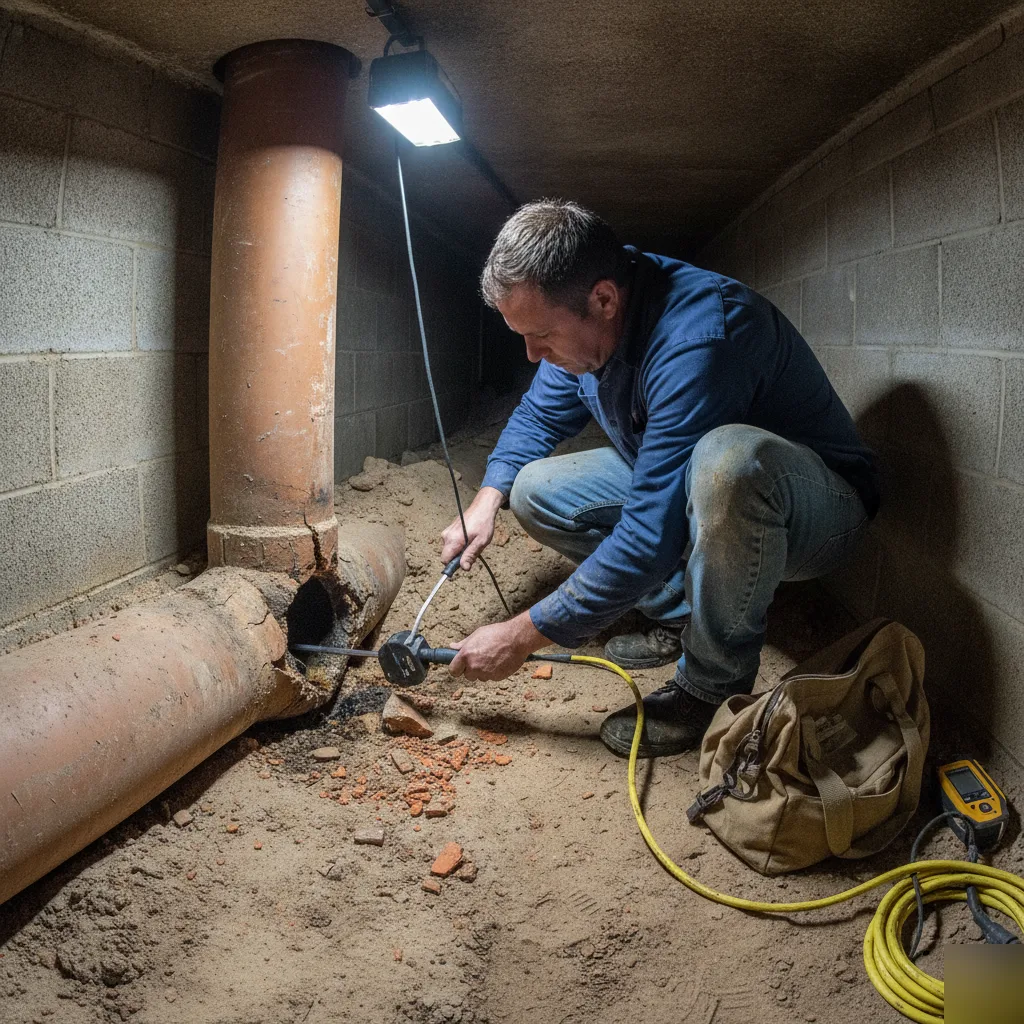
Here's one that surprises people. You hear water running when nothing is on. That faint trickle sound means water is escaping through a break in the line beneath your slab or yard. The EPA reports that the average household leak can waste nearly 10,000 gallons of water a year. A broken sewer line adds to that number quickly.
Central Florida soil shifts. Sandy conditions plus heavy summer rain create movements that stress older pipes. Even if your home is only 15 years old, the ground underneath has been stressing those pipes since day one.
If you're noticing more than one of these signs, don't wait. The damage gets worse and more expensive every day you put it off. Brightwater Plumbing of Orlando runs sewer camera inspections from our Winter Garden location. We find the exact spot and cause of the break before any digging starts.
How a Broken Sewer Line Differs From a Simple Clog
A clog is annoying. A broken sewer line is a whole different problem. We talk to homeowners every week who tried drain cleaner, plunged for an hour, and hoped the issue would clear itself. Sometimes it does. But when the pipe itself is cracked, collapsed, or separated underground, no amount of plunging will fix it.
Here's the simple difference. A clog is a blockage inside a pipe that's intact. Grease, hair, food scraps, tree roots growing through a joint. The pipe works fine once you clear it. A broken sewer line means the pipe itself has failed. The waste has nowhere to go, or it's leaking into the soil around your foundation.
Signs It's More Than a Clog
Certain patterns tell us the pipe itself is the problem, not just something stuck inside it:
- Multiple drains back up at the same time (toilets, showers, and sinks all at once)
- You clear a drain and it clogs again within days
- Sewage smell in your yard even when drains seem to work
- Wet, soggy patches in the lawn with no recent rain
- Gurgling sounds from drains you aren't using
A single slow drain in your bathroom? Probably a clog. Every fixture in the house all acting up at once? That points to the main sewer line, and it likely isn't just blocked.
Neighbors near Horizon West and Oakland call us thinking they need drain jetting. And sometimes they do. But when we run a sewer camera inspection and see a pipe belly, a crack, or a full separation, jetting alone won't solve it. The camera doesn't lie. It shows us exactly where the break is and the extent of the damage.
Sandy Central Florida soil shifts more than people expect. That movement stresses older clay and cast iron pipes. Our hard water also corrodes pipe walls from the inside over time. Brightwater Plumbing sees this constantly in homes built before 2000. The pipe didn't clog. It gave out.
If your drains keep failing after you've already had them cleared, don't keep just treating the symptom. The real answer is finding out what's happening underground.
Why Winter Garden Homes Face Higher Sewer Line Risk
Central Florida soil takes a toll on sewer lines. Most people don't think about it, but the ground under your house in Winter Garden is stressing your pipes every day.
Sandy soil shifts a lot. After a heavy summer storm, the ground can move enough to stress rigid pipe joints. We see this constantly in older neighborhoods near downtown Winter Garden and out toward Tildenville. The pipes crack at the joints first. Then the sand gets in through those small gaps. Over time, a small crack turns into a full break.
Hard Water and Tree Roots
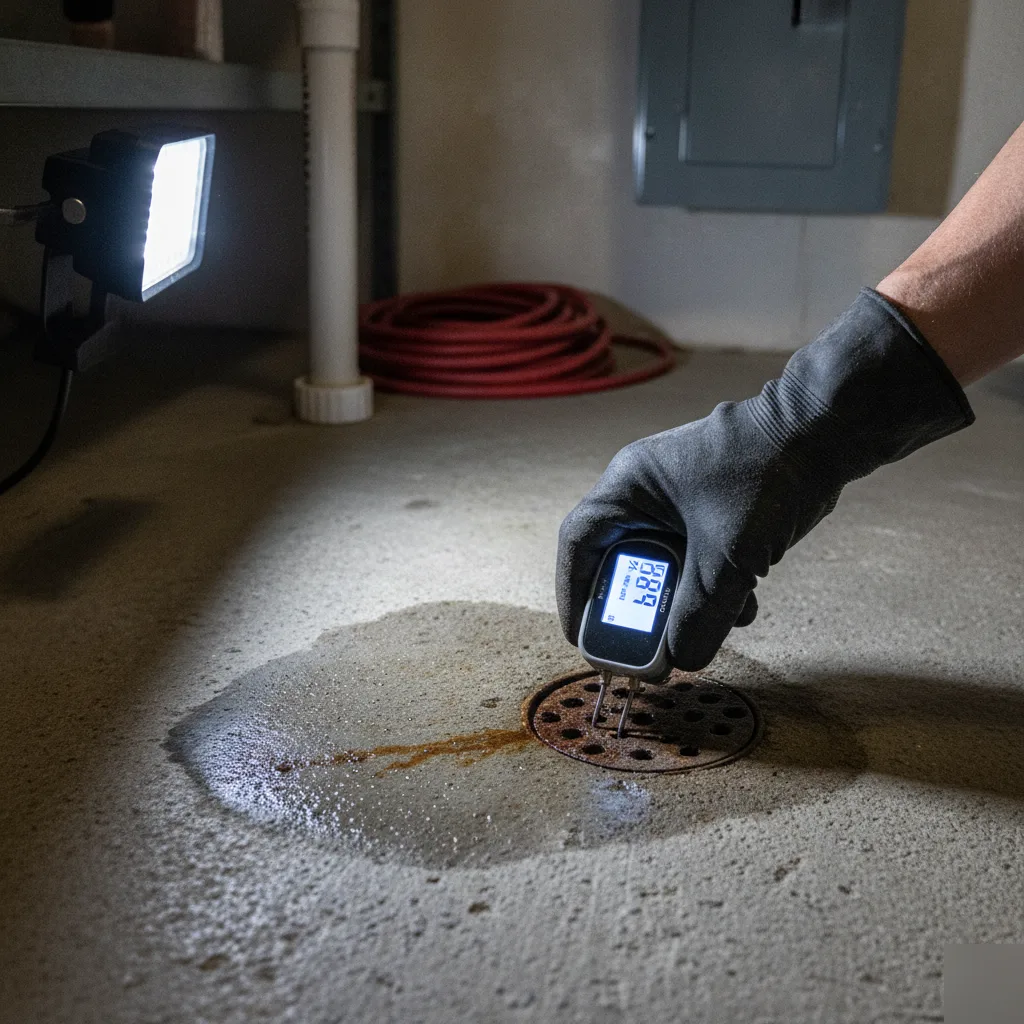
Florida's hard water is tough on everything it touches. Mineral buildup inside your sewer line creates rough spots along the pipe walls. Those rough spots catch debris, grease, and waste. That's how blockages start. Once a line slows down, tree roots find it fast.
Roots are drawn to moisture. A sewer line with even a hairline crack sends a signal roots can't resist. Live oaks, magnolias, and the palm roots common across Winter Garden can push into a cracked pipe within one growing season. According to the EPA, tree root intrusion is one of the most common causes of sewer line failure in residential areas.
Here's what makes it worse locally:
- Many homes built before the mid-1990s still have clay or Orangeburg pipes that break down over time
- Florida's water table sits high, so saturated soil puts constant pressure on underground lines
- Summer rain patterns in Winter Garden cause repeated ground swelling and settling
- Older developments near Plant Street and the West Orange Trail often have mature trees planted right over sewer runs
Newer construction in Horizon West uses PVC. This material holds up better. But "better" doesn't mean forever. We've pulled roots out of PVC joints on homes less than ten years old. Our climate just accelerates underground issues.
So if your home sits on older pipes or you have big trees in your yard, your sewer line is already under stress. That doesn't mean it's broken today. It means you should know what to watch for. A sewer camera inspection from Brightwater Plumbing can tell you this before a small crack turns into a sewage backup in your bathroom.
What Happens When a Broken Sewer Line Goes Unrepaired
Ignoring a broken sewer line doesn't make it go away. It makes everything worse. And fast.
We hear it often. A slow drain showed up six months ago and the homeowner hoped it would fix itself. By the time they called us, the problem has become much worse. Raw sewage backing up into a shower. A yard that smells terrible. Foundation cracks that appeared suddenly. The repair that could've been straightforward is now a major project.
Damage to Your Home's Foundation
Central Florida's sandy soil shifts easily when it gets saturated. A cracked sewer pipe leaks wastewater into the ground around your foundation every day. Over weeks and months, that moisture causes uneven soil erosion. You'll start seeing cracks in your walls, doors that won't close right, floors that feel uneven. The EPA reports household leaks can waste a lot of water each year. A broken sewer line leaks something far worse than clean water. It pushes contaminated waste into the ground beneath your home throughout Winter Garden and Orlando.
Health Risks You Can't See
A leaking sewer line can cause mold growth inside walls and under floors. Sewer gas contains methane and hydrogen sulfide. These gases are dangerous in enclosed spaces. Your family breathes that air every day without knowing it. Kids and older adults are most affected.
Here's what we see happen when repairs get delayed too long:
- Sewage pooling in the yard creates a breeding ground for mosquitoes and bacteria
- Tree roots push deeper into the cracked pipe, making the break larger each week
- Water damage spreads to drywall, insulation, and subflooring inside the home
- The cost of sewer line repair doubles or triples compared to catching it early
Often, the homeowner tells us they had a feeling something was wrong weeks before they called. That instinct is usually right. A sewer camera inspection from Brightwater Plumbing of Orlando confirms what's going on quickly. We run the camera through the line right from our truck. You see the footage on screen, and we explain what needs to happen. No guessing.
The longer a broken sewer line sits, the fewer options you have. Don't wait until it's an emergency.
How Plumbers Diagnose a Broken Sewer Line
You can't fix what you can't see. Your sewer line sits four to six feet underground, from your home to the city connection near the street. So when something goes wrong down there, we don't guess. We use a sewer camera inspection to see the problem directly.
Here's how the process works when we come out to a home in Winter Garden:
- We start by talking to you. We'll ask about what you've noticed, how long it's been happening, and which drains are acting up. That conversation tells us a lot before we touch any tools.
- We run a waterproof sewer camera through your cleanout access point. This camera sends live video to a monitor. We see the inside of the pipe in real time.
- We look for cracks, offsets, root intrusion, sagged sections (bellies), and any spots where the line has collapsed.
- We mark the location and depth of the problem above ground. This shows you exactly where the issue is under your yard.
- We walk you through the footage and explain what we found. No jargon. You get a clear picture of what's broken and what happens next.
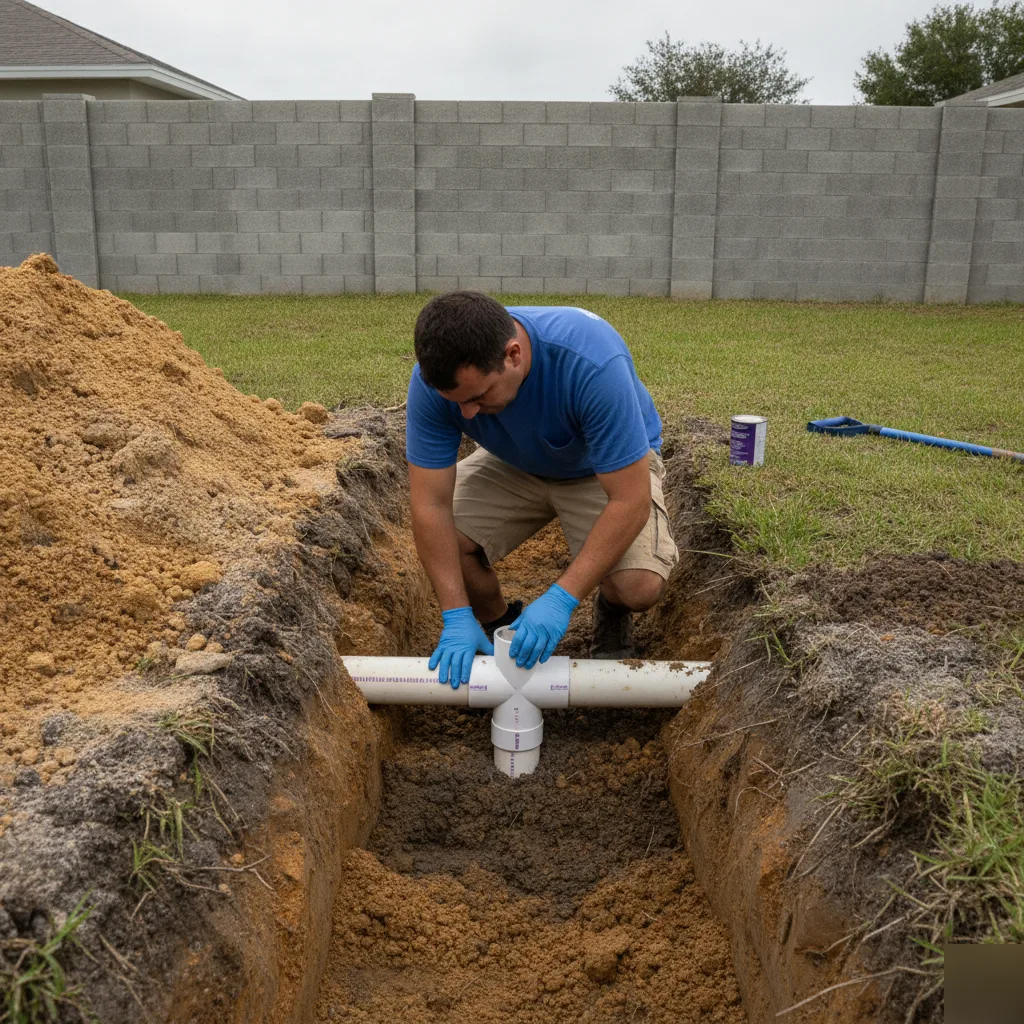
The camera tells the whole story. We see root balls the size of softballs in older clay pipes near Tildenville. We find cracked PVC joints in newer Horizon West builds after ground settlement. Every home and every line has its own history.
Sometimes we also use leak detection if we suspect the break is causing water to pool under a slab or near your foundation. That combination of camera work and leak detection gives us a complete diagnosis before any digging starts.
The whole inspection usually takes about an hour. You watch the screen with us, ask questions, and see the damage yourself. There's no mystery to it. We've run cameras through lines all across Winter Garden and nearby communities. We can usually tell you on the spot whether you need a sewer line repair or something simpler like drain jetting to clear a stubborn blockage.
A proper diagnosis saves you money. It keeps us from digging in the wrong spot. And it gives you the facts you need to make a good decision about your home.
Get a Free Quote!
Terms and Conditions
Request a Quote
Terms and Conditions
Request a Quote
Terms and Conditions