

What should I do in the first 30 minutes after I suspect a water main leak?
Signs You May Actually Have a Water Main Leak
Free Estimate
Okay, let's calm down for a second. a wet spot in the yard can be alarming. It doesn't always mean your water main is busted, but it sure can feel that way. At Brightwater Plumbing of Oviedo, we get calls every week from folks in Orlando asking if they've got a real problem or just a sprinkler acting up. Knowing what to look for can save you a lot of worry, and money.

It helps you figure out your next move.
What to Look for Outside
The clearest sign is water pooling where it shouldn't. Think about a soggy patch in your yard that never dries out, even after days without rain. Or water bubbling up through the ground near your sidewalk or out by the street. Sometimes, you'll notice the grass looks unusually green in one strip compared to the rest of your lawn. That green stripe is actually being fed by a steady leak underneath.
We see a lot of this in neighborhoods like Tuscawilla and Alafaya Woods. Many of those older homes have galvanized steel or polybutylene water mains. Over time, those materials just wear out. And here in Orlando, our sandy soil is always shifting around. That movement puts real stress on aging pipes, turning a tiny crack into a constant flow before you even know it.
It's a common issue.
What to Look for Inside
Not every water main leak shows itself in the yard. Sometimes, your first clues will pop up inside the house. Keep an eye out for these things:
- Your water pressure suddenly drops at multiple faucets.
- You see discolored or muddy water coming from your taps.
- Your water meter keeps spinning, even when every faucet and appliance is off.
- Your water bill spikes for no clear reason.
That last one catches most people off guard. You open the mail and see a bill twice what you usually pay. There were no extra showers. You didn't fill a pool. Just a quiet leak running 24 hours a day under the ground., most folks don't realize how much water a small leak can waste. These things really add up.
The EPA says household leaks waste nearly a trillion gallons of water across the country each year. Your water main could be contributing to that without you ever realizing.
The Meter Test
This is the simplest check you can do yourself. Go outside to your water meter, it's usually near the curb. Write down the numbers you see on the dial. Then, head back inside and make sure nothing is using water. No dishwasher running, no washing machine, definitely no toilets. Wait about 15 to 20 minutes.
Go check the meter again.
If those numbers changed, water is moving somewhere it shouldn't be. This doesn't always point to the water main; it could be a leaky toilet flapper or a slow drip under a sink. But if you're seeing a moving meter along with wet spots in the yard or low pressure throughout the house, it's very likely a water main leak.
We've noticed homeowners in the Waterford Lakes area catch leaks early just by doing this test after a high water bill. It takes maybe five minutes. Costs nothing. And it gives you real information to share when you call us for plumbing leak detection.
When It's Something Else
Orlando gets some serious rain, especially during the summer. A puddle near your foundation right after a storm probably isn't a broken water main. Leaks in your irrigation system can look pretty similar too. So can condensation drips from your AC unit's drain line.
The main difference is consistency. A water main leak doesn't stop when the rain does. It's constant flow. If you're seeing standing water in the exact same spot for two or three days with no rain, that's your cue. Don't wait another week, hoping it just dries up. People often don't realize how quickly a small water main leak can erode the soil around their foundation. By the time they finally call, the repair ends up being a lot bigger than it needed to be. And that's a real shame.
If you're noticing any of these signs, the next step is getting a professional out for water main repair before the damage gets worse. Brightwater Plumbing of Oviedo handles water main repair across Orlando and Seminole County. We can usually get to you the same day you call, ready to help.
Your First 5 Minutes: Shut Off the Water and Stay Safe
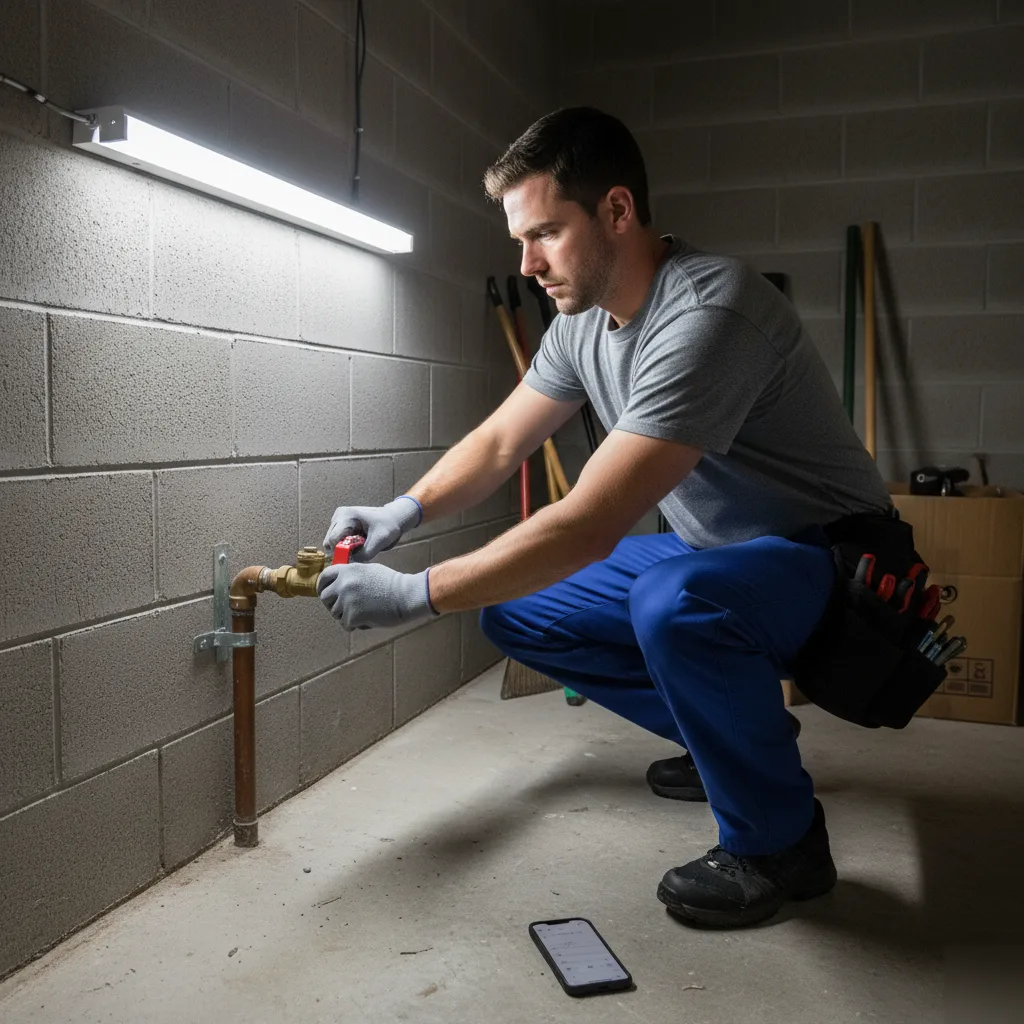
Water is already moving, and fast. Every second here really does matter. The single most important thing you can do right now is stop the flow of water into your home. You do this by shutting off your main water valve.
Most people don't know where their main shutoff is until they absolutely need it. We've had frantic calls from homeowners in Tuscawilla and Alafaya Woods, standing in two inches of water, searching behind bushes for a valve they've never touched. That's a rough lesson to learn.
Finding and Closing Your Main Shutoff Valve
Here's what to do in those first few minutes:
- Find your main water shutoff valve. For most Orlando-area homes, it's near the front of the house, usually closer to the street. Look for a round metal or plastic cover in the ground, often near your property line.
- Carefully open that meter box lid. You might need a flathead screwdriver. Just watch out for fire ants and spiders, they love those boxes in Central Florida.
- Turn the valve clockwise until it won't turn anymore. Some valves need a meter key or pliers. A crescent wrench can work if you're in a pinch.
- Go inside and open a faucet to check. If the water slows to a trickle and stops, you've got the right valve.
- Check around for any standing water near electrical outlets or your breaker panel. If water is anywhere near electrical stuff, do not touch it. Call an electrician first, that's too risky.
That whole process takes maybe three minutes. It could save you thousands in water damage.
What About the Valve Inside Your Home?
Some homes also have an interior shutoff valve. You’ll typically find it in the garage, a utility closet, or somewhere near your water heater. Turning this one off works just as well if you can't get to the one by the street. But here’s something we often see: many older homes in neighborhoods like Remington Park have gate valves that haven’t been turned in 20 years. They can be really stuck. Or worse, they might even break if you force them.
If the valve doesn't budge, don't push it. You'll just make things worse. Go for the street valve instead.
Stay Safe Around the Leak
A water main leak isn't just a plumbing issue. It's a safety concern. We’ve seen saturated soil undermine walkways and driveways in Oviedo on the Park after a main line break went unnoticed for days. Standing water near your home's foundation can also shift soil. That can create sinkholes, especially in Florida’s sandy ground.
Keep kids and pets well away from the wet area. If water is bubbling up from the ground or pooling in your yard, don't walk through it. You just can't tell how deep the erosion might be underneath. And that's not a risk worth taking.
If the leak is inside your home, move furniture and valuables away from the water. Grab some towels. Use a mop or wet vac if you have one. The goal right now isn't to fix anything. It’s to limit the damage while you wait for help.
One more thing most people forget: take pictures. Shoot a quick video of the water, the valve, the whole affected area. Your insurance company will definitely want to see what it looked like before any cleanup started. We tell all our customers this, and they're always glad they listened. Once the water is off and everyone is safe, you've bought yourself some time. That's the real point of these first five minutes. You've taken an emergency and made it manageable. Now you can think clearly about your next steps, like calling a licensed plumber for water main repair before the damage spreads further.
Minutes 5 Through 15: Document Everything Before You Clean Up Anything

Your water's off. Good work. Now, grab your phone and start taking pictures. This is the step most people skip, and, it ends up costing them later on.
Before you mop up a single drop or move even one piece of furniture, you need a record of what happened. Insurance adjusters want proof. They want timestamps. And they need to see the damage before anyone touched it.
What to Photograph
Walk through the affected area slowly. Take wide shots of every room where you see water. Then get in close for pictures of the specific damage. Here's what's most important:
- Any standing water on floors, including how high it reaches on walls or baseboards.
- Visible cracks, bulges, or wet spots on your walls and ceilings.
- The water meter dial, showing it's still spinning (if it was).
- Damaged personal items like furniture, electronics, or things stored away.
- The area around your main shutoff valve and any visible pipe connections.
Shoot some video too. A 30-second walkthrough, with you just narrating what you see, is worth more than a dozen still photos. Say the date and time out loud at the start of your video. That small detail can really save you a headache when dealing with your claim later on.
Check Your Water Meter
Head back outside to your meter box. Here in Orlando, most meter boxes sit near the curb or sidewalk. Pop open the lid and look at the dial. If you've already shut off your main valve inside the house, and that dial is still moving, it means your water main leak is somewhere between the meter and your home. That's a big deal, actually. It tells us the break is in the supply line running under your yard.
We notice this a lot in older Oviedo neighborhoods, places like Alafaya Woods and Tuscawilla. Homes built in the 1980s and 1990s often have polybutylene or aging copper supply lines. Decades of Central Florida's hard water really take a toll on those pipes. The mineral buildup weakens joints and fittings over time, leading to these kinds of issues.
Write down the meter reading again. Snap a photo of it. If those numbers change in five minutes, with everything shut off, you've confirmed an active water main leak on your side of the meter.
Note What You Hear and Smell
Sound is important here. Can you hear water rushing behind a wall? Is there a distinct hissing sound near the foundation? That information tells a plumber exactly where to start looking. And if you're smelling anything musty or earthy, that could mean water has been leaking longer than you ever realized.
Jot down quick notes on your phone. "Hissing sound near garage wall." Or "Wet patch in hallway, about 4 feet wide." "Soil near front walkway is soft and soggy." These kinds of details really speed up the plumbing leak detection process once a professional arrives. We’ve shown up to jobs where the homeowner's notes saved us an hour of searching. That’s valuable.
One more thing people don't often think about: check your water heater area. Sometimes, a water main leak can look a lot like a water heater failure; the symptoms can really overlap. If the floor around your tank is bone dry, that rules it out fast. Don't start cleaning just yet. I know it's incredibly tempting to jump right into it. But every towel you throw down, every puddle you soak up, removes evidence your insurance company might need. Give yourself these ten minutes to document everything first. Then, you can move on to damage control. Your future self will definitely thank you.
If you're already sure it's a water main issue, this is a good time to call for help. Brightwater Plumbing of Oviedo offers same-day emergency plumbing repair and we can walk you through your next steps while you wait for our crew to arrive. Our water main repair page has more on what you can expect from us.
Get a Free Quote!
Terms and Conditions
Request a Quote
Terms and Conditions
Request a Quote
Terms and Conditions