

What's the average duration of a hydro jetting service?
Ensure your home stays dry and safe with our expert leak detection services. Identify plumbing issues early to prevent costly damage and stress.
Free Estimate
Hydro jetting uses high-pressure water to blast away clogs and thoroughly clean pipes. Knowing how long a hydro jetting job usually takes helps homeowners and businesses plan their day and budget for maintenance. Below, we break down typical timeframes, the main factors that change how long the job takes, and the step-by-step process our techs follow. We’ll also compare hydro jetting to snaking and explain how often you should schedule maintenance to keep your plumbing running smoothly.
What Is Hydro Jetting and Why Is It Effective?
Hydro jetting is a drain-cleaning method that fires a concentrated stream of water into pipes to remove stubborn blockages and the buildup clinging to pipe walls. It doesn’t just clear an immediate clog — it scrubs the inside of the pipe, removing grease, mineral deposits, and even small root intrusions that traditional methods can leave behind.
How Does Hydro Jetting Clean Pipes Thoroughly?
Technicians feed a special nozzle into the line that sprays water at pressures typically between 1,500 and 4,000 psi. That force breaks up and flushes away grease, scale, and other debris so the pipe’s flow is restored. The result is a more complete clean than what a snake or chemical cleaner can achieve.
What Are the Benefits of Hydro Jetting Over Traditional Methods?
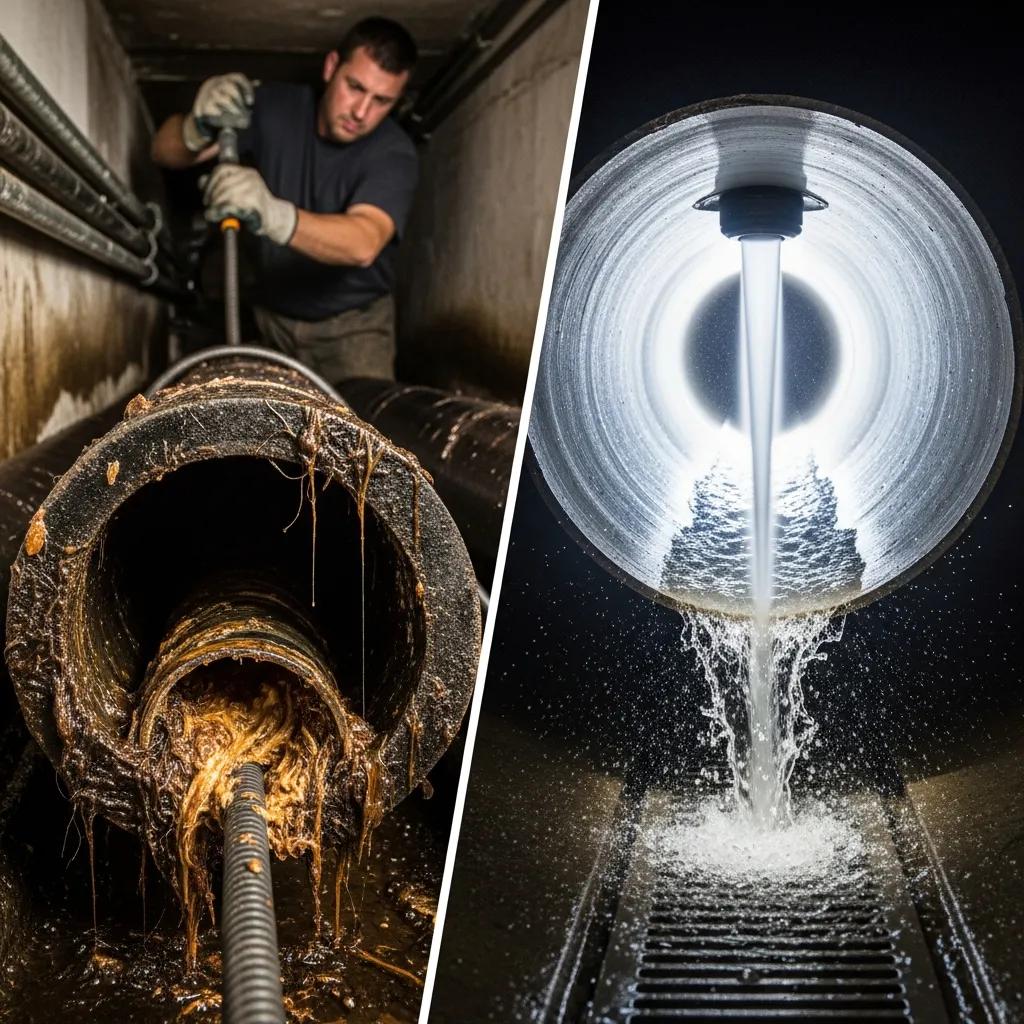
Compared with snaking, hydro jetting gives a deeper clean: it removes buildup from the entire pipe wall, not just the blockage point. That makes it a good preventative choice because it reduces recurring clogs. It’s also eco-friendly — it uses only water and avoids harsh chemicals.
What Is the Average Duration of Hydro Jetting Services?
How long hydro jetting takes depends on property type and how bad the clog or buildup is. Residential jobs are usually faster because home plumbing systems are smaller and less complex than commercial systems.
How Long Does Residential Hydro Jetting Typically Take?
For most homes, a full hydro jetting service — inspection, setup, and jetting — takes about 1 to 3 hours. The exact time depends on the blockage’s severity and how much piping needs attention.
What Is the Duration Range for Commercial Hydro Jetting?
Commercial jobs often run longer, commonly 2 to 6 hours or more. Bigger systems, multiple lines, or heavy buildup all add time to ensure a proper, lasting clean.
Which Factors Influence Hydro Jetting Service Time?
Several things change how long the job will take. Knowing them ahead of time helps you set expectations for the visit.
How Does Blockage Severity Affect Hydro Jetting Duration?
The worse the clog, the longer it takes. Light grease or soap build-up can clear quickly, while thick grease, heavy mineral scale, or root intrusions require more time and passes to remove. A simple clog might be handled in about an hour; a major root breach can take several hours.
What Role Do Pipe Material and Age Play in Service Time?
Older or fragile pipes — clay, aging cast iron, or very thin-walled materials — need gentler handling. That can slow the process because we adjust pressure and technique to avoid damage. Pipe diameter and length also matter: larger or longer runs take more time to clean thoroughly.
What Is the Step-by-Step Hydro Jetting Process at Brightwater Plumbing?

At Brightwater Plumbing we follow a clear, safety-first process so you get reliable results without surprises.
How Does Initial Inspection Impact Service Duration?
We start with a camera inspection to pinpoint the blockage and evaluate pipe condition. That helps us choose the right nozzle, pressure, and entry point — and it often saves time by avoiding trial-and-error during the jetting stage.
What Are the Key Stages of Hydro Jetting and Their Timeframes?
The typical stages are:
- Initial Inspection: 30 minutes to 1 hour, depending on system complexity.
- Setup: 15 to 30 minutes to position equipment and access the line.
- Jetting Process: 1 to 3 hours for most homes; 2 to 6 hours (or more) for commercial systems.
- Post-Jetting Inspection: 30 minutes to confirm the line is clear and the pipes are in good shape.
This sequence keeps the job efficient and reduces downtime at your property.
How Does Hydro Jetting Compare to Drain Snaking in Time and Effectiveness?
Hydro jetting and snaking solve different problems. Snaking is quick for removing a single blockage, but it often leaves buildup on pipe walls. Hydro jetting takes longer to set up and complete, but it delivers a deeper clean that helps prevent future clogs.
Why Might Hydro Jetting Take Longer Than Snaking?
Because hydro jetting cleans the full pipe interior, it involves more setup and run time than simply feeding a snake. That extra effort usually translates to longer-lasting results, though — which can save time and money over the long run.
How Does Hydro Jetting Provide More Lasting Results?
By removing grease, scale, and other deposits from the entire pipe surface, hydro jetting restores full flow and reduces the chance those materials re-accumulate quickly. In many cases it prevents repeat visits for the same line.
How Often Should You Schedule Hydro Jetting for Maintenance?
Regularly scheduled hydro jetting keeps lines clear and prevents emergencies. How often depends on use and conditions.
Routine maintenance can stop small problems from turning into big, costly ones.
What Is the Recommended Frequency for Residential Properties?
For most homes we recommend hydro jetting every 1 to 2 years, depending on household size and what goes down the drains. Homes with recurring slow drains or heavy grease use may benefit from more frequent service.
How Often Do Commercial Properties Require Hydro Jetting?
Commercial properties often need hydro jetting every 6 to 12 months because of higher volumes and heavier buildup. Restaurants, multi-tenant buildings, and industrial sites typically follow the shorter end of that range.
This table highlights the main factors that change how long a hydro jetting call will take so you know what to expect.
Hydro jetting is an excellent way to keep plumbing systems clean and functioning. Understanding typical timelines and the elements that affect service length helps you plan and choose the right solution. Brightwater Plumbing provides experienced hydro jetting for both homes and businesses — thorough, safe, and focused on long-term results.
Frequently Asked Questions
What are the signs that I need hydro jetting services?
Look for frequent clogs, slow drains, foul smells from drains, gurgling noises, or water backing up in sinks or toilets. If your system is older or you’ve had heavy rain that caused backups, hydro jetting can be a smart preventative step.
Is hydro jetting safe for all types of plumbing systems?
Hydro jetting is safe for most systems, but older or fragile pipes — like some clay or old cast-iron lines — may need a gentler approach. That’s why we always do a camera inspection first to assess pipe condition and choose an appropriate pressure setting.
Can I perform hydro jetting myself, or should I hire a professional?
We strongly recommend hiring a professional. The equipment and pressures involved require training and experience to avoid damaging pipes. Professionals also run camera inspections before and after the job to make sure the line is clear and the work is safe. You will save money in the long-term hiring a professional.
How does hydro jetting impact the environment?
Hydro jetting is eco-friendly because it uses only high-pressure water — no harsh chemicals. That reduces chemical runoff and is a safer option for both plumbing and the environment.
What should I do to prepare for a hydro jetting service?
Clear the area around access points like cleanouts and drains, move valuables or furniture away from the work zone, and tell us about any prior plumbing problems. Also make sure we’ll have access to water and power for our equipment.
What happens after hydro jetting is completed?
After the job we perform a post-jetting camera inspection to confirm the line is clear and in good condition. You should notice improved flow and fewer odors. Follow any maintenance tips we provide, and consider regular scheduling to keep lines healthy.
Conclusion
Hydro jetting is a reliable, long-lasting solution for cleaning and maintaining pipes. Knowing the typical duration and what influences the service helps you plan accordingly. For the best results, trust a professional team — like Brightwater Plumbing — to inspect, clean, and advise on the maintenance schedule that fits your property. Contact us to keep your pipes flowing freely.
Get a Free Quote!
Terms and Conditions
Request a Quote
Terms and Conditions
Request a Quote
Terms and Conditions