

Can You Teach Yourself Plumbing? A Beginner's Guide for 2026 in Orlando
Oviedo's trusted plumber for fast, honest service you can count on.
Free Estimate
Here's the truth. Some plumbing jobs are simple enough to learn from an instruction manual or a YouTube video and a quick trip to Home Depot. Others will have your Orlando home full of water by the time you get to step three. Knowing which jobs to take on and which to leave alone saves you time, money, and a lot of stress.
Every week we get a call from a homeowner in Tuscawilla or Alafaya Woods who took on a job that looked easy in a video. It's not because they aren't capable. It's because plumbing is often deceptively complicated — until the water starts spraying onto the floor.
Here's what you can realistically learn yourself:
- Changing a showerhead. These thread on by hand for the most part. You just need some Teflon tape and a plumber's wrench.
- Replacing a toilet flapper. That running sound in the middle of the night? Most of the time it's a $5 flapper you can swap out in five minutes.
- Unclogging a slow drain. A simple hand-crank drain snake is often all you need to clear a stubborn hair clog without harsh chemicals.
- Knowing your water shutoff. Every homeowner needs to find the main shutoff valve before a burst pipe ever happens.
- Tightening a loose faucet. This often takes nothing more than a screwdriver or a pair of pliers.
These are real wins. They build confidence, save you a service call or two, and give you a better feel for how your home's plumbing works.
What You Shouldn't Try to Learn Yourself
Here's where things go wrong. A homeowner watches a faucet install video, buys the replacement faucet, then discovers the supply lines are corroded through and won't fit. Now the water is off to the whole house on a Saturday night with no easy solution.
Orlando's water hardness makes this worse. Mineral buildup in fittings and fixtures turns what looks like a simple replacement into a bigger pipe repair once you get everything apart. We run into this often in homes around Oviedo on the Park and Remington Park built in the 1990s and early 2000s.
Anything involving gas lines, sewer lines, your water heater, or your main line is not a DIY project. Florida building code requires a licensed plumber for most of these jobs — and for good reason. A bad water heater install can cause carbon monoxide issues or a tank failure. A faulty sewer connection can send sewage into your yard.
Water damage caused by plumbing problems is one of the most common homeowner insurance claims. Small plumbing fixes you can handle yourself. The bigger stuff needs a pro.
A Good Middle Ground
The strategy that works: learn the basics so you can handle minor things and spot problems early. Call a licensed plumber for anything that touches your walls, your slab, or your main lines.
Think of it like a car. You can change your wiper blades. You probably shouldn't rebuild the transmission in your driveway. Same idea with plumbing. Replacing a toilet flapper is fine on your own. Toilet repair involving a wax ring, a flange, or a supply line is a different story. One wrong move and you're looking at water damage in your subfloor.
If you hit a point during a repair where you're unsure what to do next, stop. That gut feeling is almost always right. Brightwater Plumbing serves Oviedo and handles everything from emergency plumbing repair to faucet installation in Seminole County — so you always have backup when the DIY approach isn't enough.
What Are the First Plumbing Skills and Tools You Should Learn?
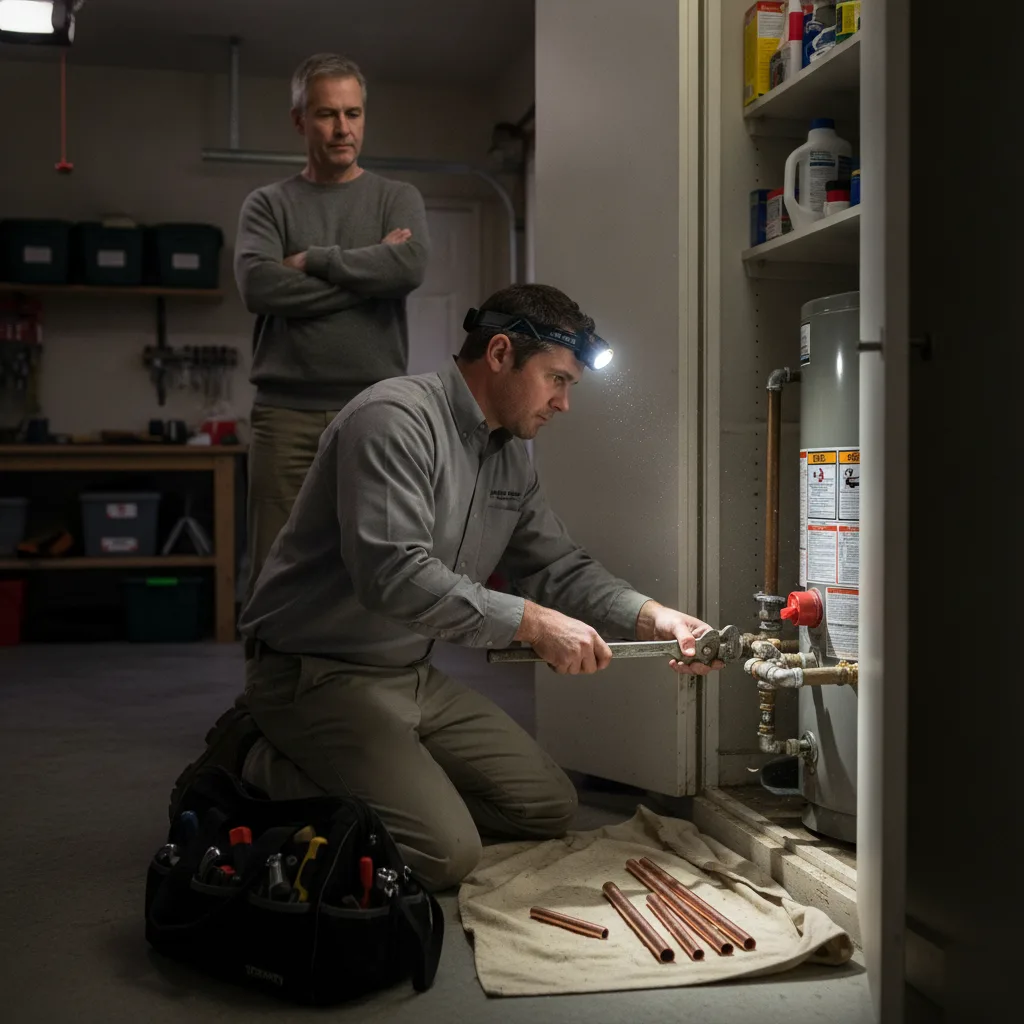
Before you start any plumbing work, you need the right tools in hand and a basic understanding of how to use them. Too often people jump into a project without either one — and that's when things go sideways fast.
This plays out constantly in Orlando area homes. A homeowner in Tuscawilla tries to fix a running toilet with just a pair of pliers and a YouTube video. Thirty minutes later there's water on the floor and they're calling a plumber. The actual repair wasn't complicated. The problem was starting without the fundamentals.
The Beginner's Plumbing Toolbox
You don't need a full truck of equipment. A small collection of tools covers most basic home plumbing tasks:
- An adjustable wrench for connecting supply lines and fittings
- A basin wrench for tightening faucet nuts underneath the sink
- Tongue-and-groove pliers (also called Channel-locks) for gripping and turning pipes
- A flange plunger — not the flat-bottomed kind you see in cartoons
- Teflon tape for sealing threaded connections
Those five tools will cover toilet repair, faucet installation, and minor leak fixes. You probably already have at least one of them at home.
Beginner Plumbing Skills Worth Learning First
The first skill you need to learn is how to shut off your home's water supply. Seriously. Every home has a main shutoff, and most fixtures have their own shutoff valves nearby. Find yours before you ever need it in a 2 a.m. pipe burst situation.
Then learn these skills in order:
- Shut off water at a fixture and at the main valve
- Replace a toilet flapper — the rubber part inside the toilet tank
- Swap out a faucet aerator to fix low water pressure
- Wrap threaded fittings with Teflon tape in the correct direction
- Clear a basic drain blockage with a plunger or hand auger
None of these involve pipe cutting or soldering. They're safe to try and will help you build a feel for how plumbing connections work.
One detail many beginners overlook: Orlando's hard water creates obstacles you won't see in most tutorial videos. Mineral deposits are a constant issue in Seminole County. The aerator you try to unscrew may be caked in calcium. A connection you expect to spin freely might be completely seized. Soaking parts in a vinegar bath for 20 minutes before removal prevents a lot of damage and frustration.
One more tip worth remembering — keep a bucket and rags nearby before you disconnect anything. Even after shutting off the water supply, there's still water inside the pipes ready to come out. It always finds its way out. Even after years of doing this work, we still grab the bucket before making the first move.
Once you're comfortable with these basics, you'll have a solid sense of how your home's plumbing is laid out. That knowledge helps you handle small repairs on your own — and ask the right questions when a professional is needed.
DIY vs. Expert: Simple Guidelines
You've watched the tutorial. You picked up the tools. Now you're standing in front of a dripping pipe wondering if this was actually a good idea. Here's how to know where the line is.
Situations Where DIY Is Probably Safe
A constantly running toilet is a great first-timer project. Most of the time the problem is a worn-out flapper or a fill valve that needs replacing. You can buy the parts for a few dollars at any hardware store near Orlando. Shut the valve behind the toilet, flush to empty the tank, make the swap. Homeowners in Tuscawilla and Alafaya Woods handle this one on weekends all the time with good results.
A bathroom sink that drains slowly is also a solid starting point. Remove the stopper mechanism, clear out the hair and debris — that usually solves it. If not, remove the P-trap under the sink by hand. Just put a bucket underneath first.
Changing a showerhead? That's as simple as plumbing gets. Unscrew the old one, wrap the threads with Teflon tape, and thread on the new one. Done in 10 minutes.
Scenarios That Seem Easy but Aren't
A dripping kitchen faucet sounds straightforward — but Orlando's hard water destroys cartridges and valve seats quickly. You remove the handle and find the internal parts so corroded they fall apart on contact. Now you've got a disassembled faucet, no water, and a real problem. We get these calls almost every week from homeowners around Waterford Lakes and Winter Springs who thought it would be a quick fix.
A jammed garbage disposal is another one. Sometimes you can use the hex wrench on the bottom of the unit to clear a blockage manually. But if the unit hums without spinning, or if water is leaking from the bottom, it needs professional garbage disposal repair. Forcing it risks burning out the motor or cracking the casing.
Scenarios You Should Never DIY
Some projects are simply off-limits — not just for your home's sake, but for your health and your wallet.
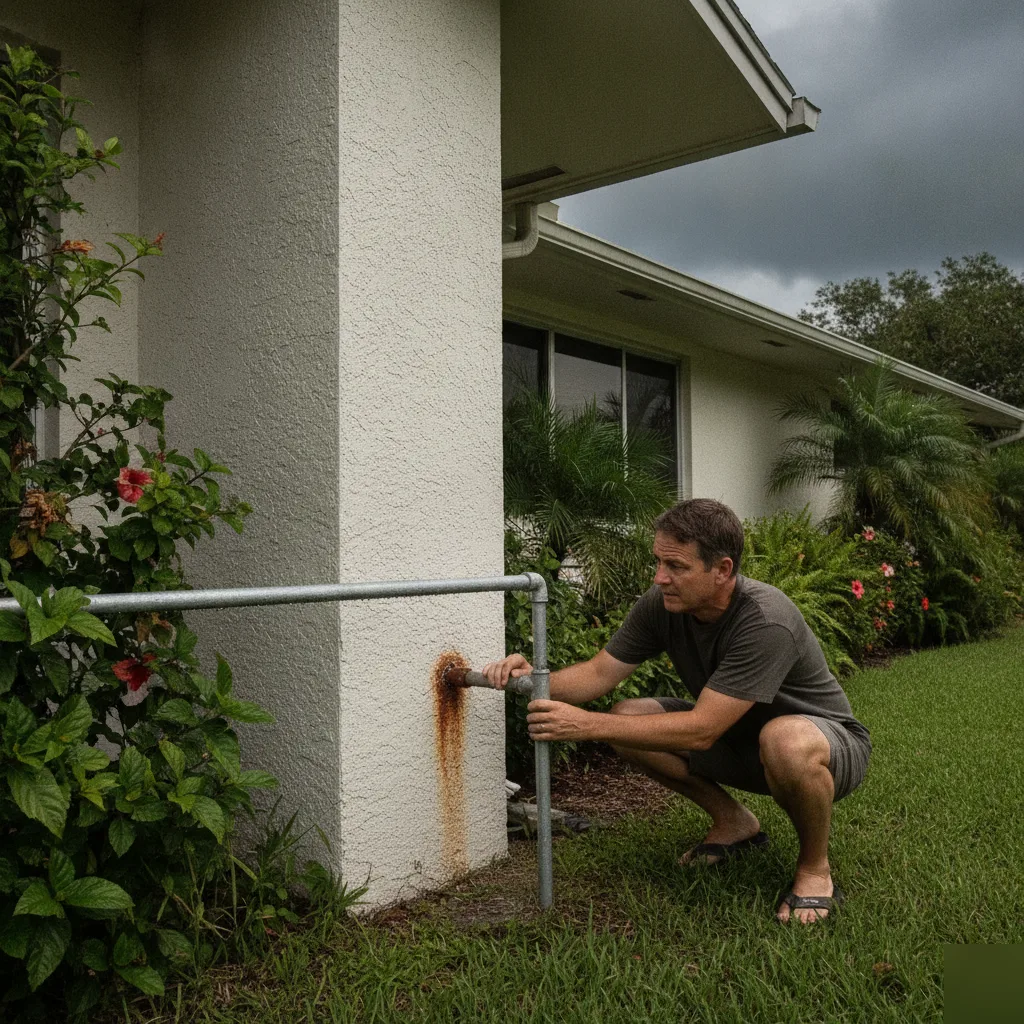
- Water heater installation or repair involves gas lines, electrical connections, and pressure relief valves. Done wrong, these can kill.
- Sewer line repair requires permits in Seminole County and can damage your yard — or your neighbor's yard.
- Water main repair involves a pressurized line running from the street into your home that never stops being under pressure.
- Any repair that requires opening your walls or cutting into the main drain stack on your property.
Florida requires a licensed plumber for these jobs. This isn't just about paperwork. Unpermitted plumbing work can cause serious problems when you sell your home and can void your homeowner's insurance on water damage claims.
Last month, a homeowner in Oviedo on the Park tried to fix a slab leak by plugging the spot where she saw water coming through the wall. The actual leak was about three feet away, under the foundation. By the time we arrived, mold had already started forming inside the drywall. A $400 repair had turned into a $4,000 repair.
If you catch yourself thinking "maybe I shouldn't do this one myself" — trust that instinct. Give Brightwater Plumbing of Oviedo a call. We'd much rather talk you through it before you start than show up after the ceiling has come down.
Get a Free Quote!
Terms and Conditions
Request a Quote
Terms and Conditions
Request a Quote
Terms and Conditions